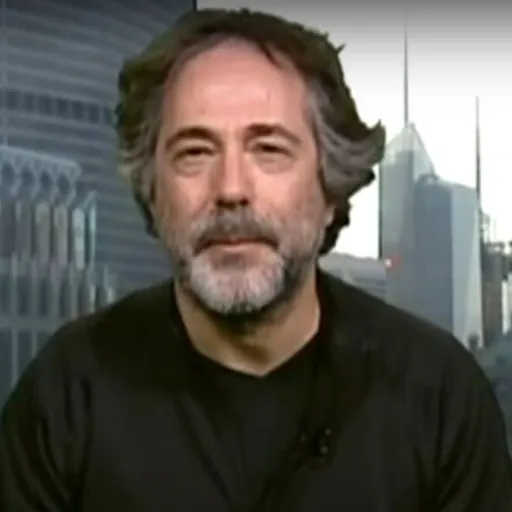
About Pepe Escobar
Born 1954. Pepe Escobar is a Brazilian journalist.
Emilio "Pepe" Escobar (born 1954 in São Paulo) is a Brazilian journalist.
He started as a music critic in Brazil where he has written for the newspapers Folha de S.Paulo, O Estado de S. Paulo and , the magazine CartaCapital, the online news portal Brasil 247 and has appeared as a commentator on .
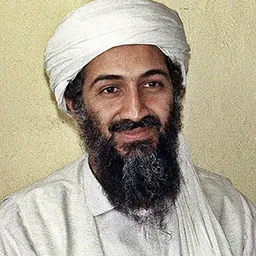
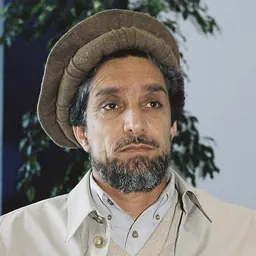
In the late 1980s, he started working as a foreign correspondent and has since written about Asia, the Middle East, Russia and U.S. foreign policy. He served as a correspondent from Afghanistan and Pakistan during the War in Afghanistan, writing about Osama bin Laden before 9/11 and interviewing Afghan leader Ahmad Shah Massoud prior to his assassination. He coined the term "Pipelineistan" which refers to the network of oil and gas pipelines in crucial geopolitical regions, especially Central Asia. He suggests that Western actions in these areas are largely driven by a desire to reduce Europe's dependence on Russian energy and Western dependence on OPEC. This theory has faced criticism, particularly regarding its application to the Syrian civil war.
Career
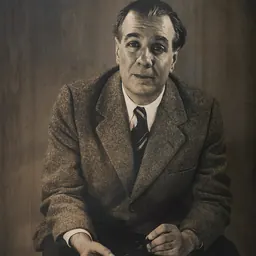
Music critic Escobar initially became known in his native Brazil as a music critic covering the 1980s pop and punk music scene of São Paulo, reporting on bands such as Ira! for Folha de S.Paulo and O Estado de S. Paulo. His career at the newspapers ended in disgrace after accusations of plagiarism and other ethical controversies surfaced. Lúcio Ribeiro, a journalist for Folha de S. Paulo, stated in his column that Escobar was fired from the publication in 1987 after a review for the David Bowie album Let's Dance was revealed by André Vítor Singer to have been entirely plagiarized from a rock book published by the Rolling Stone magazine. Escobar justified the act as a tribute to the "game of mirrors" by Jorge Luis Borges. In August 2000, the Taliban arrested Escobar and two other journalists and confiscated their film, accusing them of taking photos at a soccer match. On August 30, 2001, his column in Asia Times described the impact on US-Pakistani relations of the US campaign against Osama bin Laden - described as "the No 1 target of the CIA’s counterterrorism center": "inside Afghanistan today, where the Saudi Arabian lives in exile, Osama is a minor character. He is ill and always in hiding – usually "somewhere near Kabul." Once in a while he travels incognito to Peshawar. His organization, al-Qaeda, is split, and in tatters." The piece was called "prophetic" by KBOO.
In 2011, journalist Arnaud de Borchgrave described Escobar as "well known for breaking stories in the Arab and Muslim worlds."
According to de Borchgrave, during the 2011 Libyan Civil War Escobar wrote a piece "uncovering" the background of Abdelhakim Belhaj (whose military leadership against Muammar Gaddafi was being aided by NATO), including his training with al-Qaeda in Afghanistan.
Interviewed about his story by Radio New Zealand, Escobar said that Belhaj and his close associates were fundamentalists whose goal was to impose Islamic law once they defeated Gaddafi, and that Libya would slide into a civil war between Gaddafi loyalists and "Jihadist fundamentalists". Escobar's story was commented on by Muhammad Sahimi for PBS.
In 2014, Escobar participated in an international conference in Iran that also included several conspiracy theorists and Holocaust deniers. Journalist Gareth Porter said he would not have attended the event if he had known that some of the other participants held extremist views. Porter said that his representatives told him extremists would not be attending. He said that Escobar and Code Pink founder, Medea Benjamin, were equally upset by some of the presentations.
Pipelineistan "Pipelineistan" is a term coined by Escobar to describe "the vast network of oil and gas pipelines that crisscross the potential imperial battlefields of the planet," from the Middle East to East Asia and particularly Central Asia. Articles by Escobar about his "Pipelineistan" theory, many first published in TomDispatch, were re-published in Al Jazeera, Grist, Mother Jones, and The Nation.
Escobar argued in a 2009 article published by CBS News that running energy pipelines from the energy-rich nations near the Caspian Sea would let Europe be less dependent on the natural gas that it currently gets from Russia, and would potentially help the West rely less on OPEC. This situation results in an international conflict of interest over the region. Escobar wrote that "The New Great Game of the twenty-first century is always over energy and it's taking place on an immense chessboard called Eurasia".
In 2018, Paul Cochrane in Middle East Eye dismissed the "Pipelineistan" theory put forward in Escobar's Al-Jazaeera piece, "that the bloodshed in Syria is simply another war over Middle Eastern energy resources". Cochrane wrote that covert action by the US against Syria started in 2005, which was before any plan was put forward to run a gas pipeline from Qatar to Syria. Robin Yassin-Kassab called it a "conspiracy theory". Naser Tamimi said "If Syria and Iraq stabilise, and political relations with Saudi Arabia and Iraq improve ... after all of that, then you could think of a pipeline. But at the end of the day it's a pipe dream". A 2021 study which examined data on Russia's intervention in Syria concluded that "Russian intervention has a distinct ‘dual logic’ aimed at integrating the interests of key regional actors into a transnational energy network, while stabilising Russia’s regional dominance within this network".
Views and reception Russia Escobar has also been a commentator for RT.
In 2012, Jesse Zwick at The New Republic asked Escobar why he was willing to work with RT; Escobar replied, "I knew the Kremlin involvement, but I said, why not use it? After a few months, I was very impressed by the American audience. There are dozens of thousands of viewers. A very simple story can get 20,000 hits on YouTube. The feedback was huge.”
In a 2014 paper published by the European Council on Foreign Relations, Volodymyr Yermolenko wrote that Escobar was one of the "anti-Western intellectuals ... who suggest dividing Ukraine between Poland and Russia".
In the 2020s, according to the United States State Department's Global Engagement Center (GEC) several outlets that publish or republish work by Escobar are used by Russia for propaganda and disinformation. In 2020, the GEC stated that online journals, such as Strategic Culture Foundation, Globalresearch.ca, NewsFront, SouthFront, and New Eastern Outlook, where Escobar's work has appeared, acted as Russian fake news websites and are members of "Russia's disinformation and propaganda ecosystem." According to the GEC, "Pepe Escobar began writing articles for Global Research in 2005 and ten years later became an SCF author.
According to a European People's Party document, in 2022, The Spanish newspaper ABC wrote that some of Escobar's writings were "the usual ones of Russian disinformation: 'Yankee' imperialism, NATO excesses, Russian victimization".
COVID-19 According to , Escobar has promoted discredited COVID-19 treatments and conspiracies around them, such as the use of drugs like chloroquine and hydroxychloroquine advocated by Didier Raoult.
Don’t just read it —
keep it.
Full-length biographies made to live with: read them, listen on the way to work, watch them tonight.
- E-book
- Audio
- Video
Instant download · yours to keep · every purchase keeps this site free
Important facts
People in Pepe Escobar's life
Named in this biography and alive at the same time





Related people
Same field, nearest in time

Contemporaries
People whose lives overlapped Pepe Escobar's


Frequently asked questions
Who is Pepe Escobar?
Brazilian journalist and geopolitical analyst (born 1954)
When was Pepe Escobar born?
Pepe Escobar was born in 1954 in São Paulo.
What is Pepe Escobar's occupation?
Pepe Escobar is a journalist.
What nationality is Pepe Escobar?
Pepe Escobar is Brazilian.
Sources & further reading
Cite this page
APA: Biography.guide. (2026). Pepe Escobar. https://biography.guide/pepe-escobar/
MLA: "Pepe Escobar." Biography.guide, https://biography.guide/pepe-escobar/.
Chicago: "Pepe Escobar." Biography.guide. https://biography.guide/pepe-escobar/.
Data last updated: 2026-09-22 · Spot an error? Report a correction.
Portrait: Wikimedia Commons · author & licence
Page generated 2026-09-27 05:02 UTC