
About Pekko Käppi
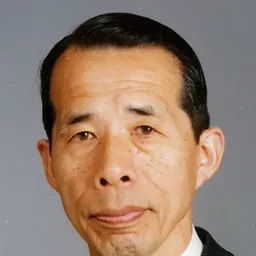
Born 1976. Pekko Käppi is a Finnish string player, composer and ethnomusicologist.
Pekko Käppi (born 1976) is a jouhikko musician from Tampere and a part-time teacher at the Sibelius Academy. He is also a composer, a producer and a researcher. He is trained as an ethnomusicologist, specializing in traditional folk music. He performs together with his band K:H:H:L, which stands for 'the bones of dead horses out of control'.
Early life In 1993–94, when he was 17 years old, Käppi spent a year in the United States as an exchange student. The son of his host family was a fan of Grateful Dead, and through him, Käppi became familiar with the band's music, which consisted of rock and improvised music based on folk music. This provoked his interest in the sources of that music, especially in Finnish folk music.
Another important influence for Käppi has been Värttinä, which caused him to look into the folk music collections of his local library. Since then he has released three more EPs and two albums of collaborations as well as three solo albums and three albums with K:H:H:L.
On his first full album, Jos ken pahoin uneksii ('If you have a bad dream'), Käppi "creates a laudable palette of songs. At first, it appears to be a pure folk music album, but that's not what it is. The first song, Mariainen, draws masterfully from the delta blues, and the final song, Vanhan virsikirjan virsi 277 ('Hymn 277 from the old hymnal') brings the listener back to Finnish traditions. During the rest of the songs, he goes through a rich variety of styles, which one would not first associate with a jouhikko player. Käppi's voice, which at times reminds one of that of Tuomari Nurmio, combined with traditional music, brings to one's mind The Incredible String Band. If it is allowed to be psychedelic in folk music, then Käppi is the leading figure in it in our country", wrote Jaan Wessman for the music journal Soundi.
The second album, Vuonna '86 ('In the year '86'), gave rise to the following critique: "It seems that in Tampere there exists some kind of version of the Star Trekian disturbance in the spacetime continuum. A lot of folk music of other dimensions has originated from there during the last few years. The new release by Pekko Käppi, too, draws partially from the same Ugric marsh as did the fine album Jos ken pahoin uneksii (2007), but from a great many other places as well."
The critique of the third album, Rammat Jumalat ('lame gods'), says that "on record or at a gig [Käppi's music] is not only easy to approach but simply irresistible. Rammat jumalat makes it even easier to approach with its stylish band approach, in which Käppi's multitoned jouhikko rock blends with a hypnotic sound frame reminiscent of the ragged blues of Tom Waits and Tuomari Nurmio. The tones of folk music are just one ingredient in his soulful and liberated kind of organic rock. The compositions are by Käppi, and in his lyrics traditional croaking blends with his lyricist's heavy message. The riffs swing and the melodies are catchy, and the songs are exceptionally strong. But in spite of this, the strongest ace of the record is Käppi's voice. He has a sound all of his own, full of touching soul and unpredictable power. His unusual phrasing sounds completely natural. One must look far in the history of Afro-American music to find similarly convincing performers who sing with the voice of a 'sensitive bad guy'. We have never before heard the likes of him in Finland."
Pekko Käppi & K:H:H:L. Since 2015, Käppi has released three albums with K:H:H:L, in which he was joined by Tommi Laine (guitars) and Nuutti Vapaavuori (bass), along with Jani Auvinen (drums and percussion) for his most recent gigs. The band emerged from the sessions of Rammat Jumalat, "and from the beginning it was clear that the next album would be a band effort. Sanguis Meus, Mama! managed to popularize Käppi voodoo concoction, cooked from folk music and blues, into a nearly perfect fit, suitable even for the radio waves.
The second album, Matilda, did not fare quite as well with the critics as the first one did. "If Sanguis Meus, Mama! leaned quite heavily to pop music, then Matilda did so even more heavily. However, Käppi's newest concoction causes one to wrinkle one's nose at it, as the album is not as good as its predecessor. … But Matilda is still quite a good record. It's only that Sanguis Meus, Mama! is so good that not many artists are able to create anything like it during their whole careers, so it is natural to feel disappointed here. One can safely say even now that Matilda is much better than most Finnish pop records will be this year. Käppi's voodoo pop is on its own orbit."
The third album was likewise reviewed positively. Soundi writes that "Pekko Käppi and his band make interesting music on their third album, and they are still rocking wildly. It feels strongly that the best elements of their previous efforts have now found their rightful places here. The first song, "Ikoni" ('Icon'), with its pop tones, makes one smile, and its mantra-like rhythm makes one's body move to it." Helsingin Sanomat writes that "at the start of the year we have a folk music hit. An incredibly catchy, intriguingly strange five-and-a-half-minute song, which one wants to listen to time and again. This is the song 'Ikoni' from the coming album by Pekko Käppi & K:H:H:L entitled Väärä laulu ('The wrong song')."
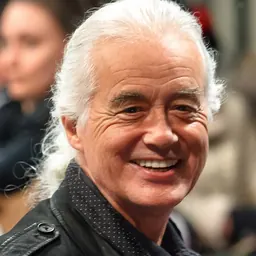
It has been said that the jouhikko sound on the last record is reminiscent of Jimmy Page's sound, especially when the latter played his guitar with a bow. Another influence has been Nirvana's MTV Unplugged in New York in which Käppi was impressed by the accordion playing of Krist Novoselić.
Discography EPs Kalastajia ja kaivostyöläisiä, Amerikan Peikko Records, Kuusi Pientä Kustantajaa, 2001. Бубнить Себе под нос, 267 lattajjaa, 2003. Minun päiväkunnissani, Imvated, 2004.
Solo albums Jos ken pahoin uneksii, Peippo, 2007. Vuonna '86, Singing Knives, 2010. Rammat Jumalat, Helmi Levyt, 2013. Finnish Folk Songs Vol. 1, Helmi Levyt, 2019.
Pekko Käppi & K:H:H:L. Sanguis Meus, Mama!, GAEA Records, 2015. Matilda, Svart Records, 2017. Väärä Laulu, Svart Records, 2019. Aamunkoi, Svart Records, 2021. Credo, Rockadillo Records, 2023.
Collaborations Claypipe, Pekko Käppi, The Blithe Sons: The Amazed Map, Music Fellowship, 2007. Petra Hartikainen & Pekko Käppi: Uni Uuhella Ajeli, Uulu Records, 2009. Pekko Käppi / Juhana Nyrhinen: Mun paras ystävä, Helmi Levyt, 2012. (EP) Maria Kalaniemi & Pekko Käppi: Tåreportens pärla. Åkerö Records, 2026.
Don’t just read it —
keep it.
Full-length biographies made to live with: read them, listen on the way to work, watch them tonight.
- E-book
- Audio
- Video
Instant download · yours to keep · every purchase keeps this site free
Important facts
People in Pekko Käppi's life
Named in this biography and alive at the same time


Related people
Same field, nearest in time



Contemporaries
People whose lives overlapped Pekko Käppi's


Frequently asked questions
Who is Pekko Käppi?
Jouhikko musician (b. 1976)
When was Pekko Käppi born?
Pekko Käppi was born in 1976.
What is Pekko Käppi's occupation?
Pekko Käppi is a string player, composer and ethnomusicologist.
What nationality is Pekko Käppi?
Pekko Käppi is Finnish.
Sources & further reading
Cite this page
APA: Biography.guide. (2026). Pekko Käppi. https://biography.guide/pekko-kappi/
MLA: "Pekko Käppi." Biography.guide, https://biography.guide/pekko-kappi/.
Chicago: "Pekko Käppi." Biography.guide. https://biography.guide/pekko-kappi/.
Data last updated: 2026-09-20 · Spot an error? Report a correction.
Page generated 2026-09-27 05:18 UTC