
About Peetie Wheatstraw
Lived 1902 – 1941 (aged 39). Peetie Wheatstraw was an American musician, singer, pianist, composer and blues musician.
William Bunch (December 21, 1902 – December 21, 1941), known as Peetie Wheatstraw, was an American musician, an influential figure among 1930s blues singers.
Early life and career William Bunch was born in Ripley, Tennessee, in 1902, There is some speculation Wheatstraw may have been born in Cotton Plant, Arkansas, where he was buried, and blues musician Big Joe Williams stated that this was his hometown.
The earliest biographical facts come from the musicians Henry Townsend and Teddy Darby, who remember Wheatstraw moving to East St. Louis, Illinois, He often performed at a club called Lovejoy in the East St. Louis area and at a juke joint over a barbershop on West Biddle Street. By the time Sunnyland Slim moved to St. Louis in the early 1930s, Wheatstraw was one of the most popular singers there, with an admired idiosyncratic piano style.
Wheatstraw began recording in 1930 and was so popular that he continued to record through the Great Depression, when the number of blues records issued was drastically reduced. The blues musician Charlie Jordan introduced Wheatstraw to recording, setting him up with both Vocalion Records and Decca Records. He recorded "Tennessee Peaches Blues" in a duet with an artist called Neckbones, in August 1930. Following this first recording, Wheatstraw was especially prolific, recording 21 songs in two years, including solos like "Don't Feel Welcome Blues," "Strange Man Blues," "School Days," and "So Soon". In the clubs of St. Louis and East St. Louis his popularity was outstanding, rivalled only by that of Walter Davis. Despite references to his touring, there is little evidence that he worked outside these cities, except to make records.
Persona By the time Bunch reached St. Louis, he had discarded his name and crafted a new identity. The name "Peetie Wheatstraw" was described by the blues scholar Paul Oliver as one that had well-rooted folk associations. Later writers have repeated this, while reporting that many uses of the name were copied from Bunch. Elijah Wald suggested that Bunch may have been the sole source of all uses of the name.
All but two of his records were issued under the names "Peetie Wheatstraw, the Devil's Son-in-Law" and "Peetie Wheatstraw, the High Sheriff from Hell". He composed several "stomps" with lyrics projecting a boastful demonic persona to match these sobriquets. There is some evidence that the writer Ralph Ellison knew him; Ellison used the name "Peetie Wheatstraw" and aspects of the musician's demonic persona (but no biographical facts) for a character in his novel Invisible Man. The blues critic Tony Russell updated the description: "Wheatstraw constructed a macho persona that made him the spiritual ancestor of rap artists."
Discography Wheatstraw recorded 161 sides on 78-RPM records for 1930 to the end of 1941. A compilation LP album was released by Flyright Records in 1975. Twenty-five years later a second volume was put together by Old Tramp Records. In 1994, Wheatstraw's complete recordings were issued on seven CDs by Document Records.
Peetie Wheatstraw: Complete Recorded Works in Chronological Order: Vol. 1, 1930–1932, Document Records DOCD-5241 Vol. 2, 25 March 1934 to 17 July 1935, Document Records DOCD-5242 Vol. 3, 17 July 1935 to 20 February 1936, Document Records DOCD-5243 Vol. 4, 20 February 1936 to 26 March 1937, Document Records DOCD-5244 Vol. 5, 26 March 1937 to 18 October 1938, Document Records DOCD-5245 Vol. 6, 18 October 1938 to 4 April 1940, Document Records DOCD-5246 Vol. 7, 4 April 1940 to 25 November 1941, Document Records DOCD-5247
Style Wheatstraw operated in a community of musicians in St. Louis and East St. Louis who knew and performed with each other. He was also a recording star subject to the demands of record producers and the challenges of other stars. These forces created a consistency in his instrumental styles, which later critics have found uninteresting. Samuel Charters, in The Country Blues, dismissed Wheatstraw and other recording stars of the period as tending to "a repetitious use of clichés and a monotonous accompaniment that was as unimaginative as their singing". Tony Russell, while much more appreciative, warned that "anybody listening to long stretches of his recordings is likely to go stir-crazy".
Against this generic style Wheatstraw had some instantly recognizable characteristics. Most of the records on which he played piano, including his accompaniments of other singers, begin with the same eight-bar introduction. Much more distinctive was his vocal style, often described as "lazy" because of his loose articulation, but better represented by Tony Russell as "gruff" and "clogged". Most distinctive of all was his strangled semi-falsetto cry "Ooh, well, well" (with variations) interjected in the break of the third line of a blues verse. According to Teddy Darby, one woman listener exclaimed, "Good God, why doesn't that man yodel and be done with it?"
Influence Wheatstraw's influence was enormous in the 1930s. Perhaps the most obvious example of his impact is in the lyrics and vocal stylings of Robert Johnson, often considered the most important blues figure of the era. Many of Johnson's recordings were reworkings of songs by other popular artists of the time, and he drew heavily from Wheatstraw's repertoire. For example, Wheatstraw's "Police Station Blues" forms the basis for Johnson's "Terraplane Blues". His nickname "Devil's Son-in-Law" also resonated with Johnson's similar image.
Wheatstraw, along with Leroy Carr, was one of the earliest blues singers who played the piano. Elements of his style can be seen in later artists, like Champion Jack Dupree, Moon Mullican and Jerry Lee Lewis. He also made many recordings with the influential Kokomo Arnold, who wrote the blues standard "Milk Cow Blues".
The Rudy Ray Moore film Petey Wheatstraw is about an entertainer who promises to marry the Devil's daughter, making him "Devil’s son-in-law" like one of Wheatstraws's hit songs.
Death Wheatstraw was riding the crest of his success at the time of his premature death. The songs "Mister Livingood" and "Bring Me Flowers While I'm Living" were his last known recordings, from his final recording session, on November 25, 1941. They tried to entice Wheatstraw's friend, the blues singer Teddy Darby, to come with them, but Darby's wife refused to let him. Wheatstraw got into the car with Big Joe Williams and two other friends, one of whom was driving. Luckily for him, Williams asked to be dropped off downtown to catch a streetcar to his home in St. Louis. Traveling at a high speed just a block from Wheatstraw's house, the Buick they were riding in struck a standing freight train, throwing all three men from the car. Wheatstraw's two companions were killed instantly, and he died of head injuries in the hospital five hours later. Wheatstraw was buried in Crowder Cemetery, near Cotton Plant, Arkansas.
Don’t just read it —
keep it.
Full-length biographies made to live with: read them, listen on the way to work, watch them tonight.
- E-book
- Audio
- Video
Instant download · yours to keep · every purchase keeps this site free
Important facts
People in Peetie Wheatstraw's life
Named in this biography and alive at the same time


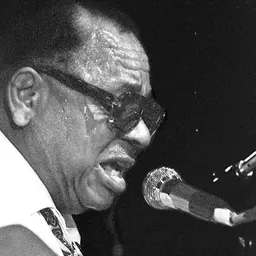


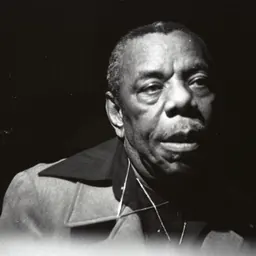
Related people
Same field, nearest in time
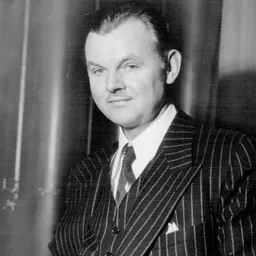
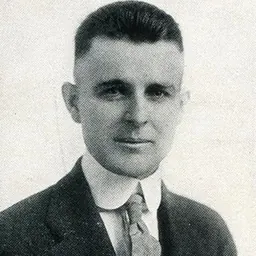


Contemporaries
People whose lives overlapped Peetie Wheatstraw's


Frequently asked questions
Who was Peetie Wheatstraw?
American country blues musician (1902-1941)
When was Peetie Wheatstraw born?
Peetie Wheatstraw was born on 21 December 1902 in Ripley.
When did Peetie Wheatstraw die?
Peetie Wheatstraw died on 21 December 1941 in St. Louis.
What was Peetie Wheatstraw's occupation?
Peetie Wheatstraw was a musician, singer, pianist, composer and blues musician.
What nationality was Peetie Wheatstraw?
Peetie Wheatstraw was American.
Sources & further reading
· Wikipedia: Peetie Wheatstraw
Cite this page
APA: Biography.guide. (2026). Peetie Wheatstraw. https://biography.guide/peetie-wheatstraw/
MLA: "Peetie Wheatstraw." Biography.guide, https://biography.guide/peetie-wheatstraw/.
Chicago: "Peetie Wheatstraw." Biography.guide. https://biography.guide/peetie-wheatstraw/.
Data last updated: 2026-09-20 · Spot an error? Report a correction.
Page generated 2026-09-27 05:13 UTC