
About Pedro Morales
Lived 1942 – 2019 (aged 76). Pedro Morales was an American professional wrestler.
Early life Morales was born on October 22, 1942, in the municipality of Culebra, an island off the shore of Puerto Rico's main island. He was a member of a large family, with 85 cousins just on his mother's side. Morales once claimed that sixty five percent of Culebra's population had some bloodline connection to him. In New York, he also became a professional wrestling fan, witnessing the tag team of Miguel Pérez, Sr. and Antonino Rocca. After this, Vittorio Apollo became his mainstay tag team partner, with whom he challenged The Fabulous Kangaroos, Johnny Barend and Buddy Rogers on several occasions. Morales finished the year by teaming with Pérez, earning three victories over the Fabulous Kangaroos.
On March 12, 1965, Morales defeated "The Destroyer" Dick Beyer to win the WWA World Heavyweight Championship in a three-fall match. He continued earning singles victories over Horst Wessel, Kurt Von Stroheim, Al Marshall, Broadway Venus, Bill Cody and in a rematch against The Destroyer, while teaming along Hernandez to wrestle multiple combinations. He became involved in a feud against The Assassins and The Butcher, steadily gaining the upper hands both individually and in tag matches. Morales responded by defeating Graham in a three-fall chain match less than a month later, in the process winning a Brass Knuckles Championship. Meanwhile, his team with Hernandez won three consecutive matches against The Assassins by disqualification. Subsequently, a revival of his previous feuds with The Butcher and The Assassins became intertwined with the current involving Graham, leading to a series of matches featuring different combinations during the following months.
In the final months before making a tour to Japan, Morales defeated Mark Lewin and Indio Joe, but also lost to Lyons and Mark Lewin. At his first show in Tokyo, he had a draw against Don Lewin. He also reformed his tag team with Luis Hernandez, finding success in this division as well by winning the WWA World Tag Team Championship on June 24, 1966, being a dual champion for over a month.
Morales began 1967 by also teaming with Ricky Romero, Mr. Moto and Pepper Gomez, gathering victories along all of them. In singles, he remained in the top of the card, defeating Paul Diamond, El Shereef, Killer Karl Kox, K.O. Murphy and Johnny Vander, while wrestling Haggerty and The Mad Russian to draws. Morales and Rivera won the last encounter on August 16, 1967, then migrating to another rivalry against Freddie Blassie & Buddy Austin. Despite earning wins over several other teams, they were unable to best Blassie and Austin during this feud, only recording a single win. Individually, Morales gained victories over Tony Nero and Tony Altomare, both of whom eventually teamed and lost to the Puerto Rican team. Antonio Pugliese reappeared on May 4, 1968, only to drop the WWA World Tag Team Championship to The Medics. A week later, Morales and Gomez also lost the AWA World Tag Team Championship to Kinji Shibuya & Masa Saito, but regained them on June 8, 1968.
50th State Big Time Wrestling (1967–1970) Now a full-time performer for 50th State Big Time Wrestling in Hawaii, he quickly entered a successful run with victories over Dave Ruhl, Austin and Tank Morgan. This resulted in Morales defeating Curtis Iaukea for the NWA Hawaii Heavyweight Championship on May 21, 1969, and Kiniski for the NWA North American Heavyweight Championship less than a month afterwards. During this timeframe he also teamed with several wrestlers, including Gomez, Don Leo Jonathon, Dory Dixon and Ed Francis. Morales went on to defeat Austin and Kiniski in rematches, interrupting this run by unsuccessfully challenging Pat Paterson for the NWA United States Heavyweight Championship in California. Morales recovered by winning a match over Mac MacFarland and teaming with Bing Ki Lee to win the Hawaii Tag Team Championship from Barend and Ripper Collins. The team was successful in their next encounter against Kinji Shibuya and Mitsu Arakawa. After defeating Barend in a stretcher match, Morales defeated Les Roberts and advanced to the second round of the Strelich Tournament, a single-knockdown competition for the Strelich Perpetual Trophy, with a win over Woody Farmer. After snapping this streak with a win over Abdullah the Butcher, he dropped the North American Heavyweight Championship to The Destroyer. In his final two matches in the MPP, Morales bested Jack Armstrong in a three-fall match and lost a 4-on-4 against Collins, Barend and The Destroyer while teaming with Sam Steamboat, Billy Robinson, Frank Allman and Hahn Lee. Returning to California, Morales began by defeating El Lobo on several encounters, also scoring wins over The Texan and John Tolos before losing the final of a one-night tournament for the NWA Pacific Coast Heavyweight Championship to Tony Rocca. A team-up with Gorilla Monsoon also took place in two draws involving The Mongols.
On February 8, 1971, Morales defeated Ivan Koloff to win the WWWF World Heavyweight Championship only a month after winning his first individual title within the promotion. The move also vacated the United States Championship. This ignited a series of wins over the likes of Jack Evans and his previous opponents The Black Demon and Bulldog Brower. Subsequently, a series of victories in tag team matches involving Blackjack Mulligan evolved into a feud of single encounters, in which Morales won half a dozen events, before scoring two more team victories along Moonson. Different tag teams along with Monsoon, Jay Strongbow and Manuel Soto experienced similar success. During August 1971, Morales scored several victories over Graham and Tyler, also besting them as a tag team and in a 3-on-3 match that included Lou Albano. Graham, Valiant and Toru Tanaka served as enhancement talents. On February 18, 1972, Morales and Rivera defeated The Rugged Russians, continuing this parallel rivalry. March featured several different matchups, in which he emerged victorious against "Baron" Mikel Scicluna, Smasher Sloan and Rugged Russian #2, while consistently teaming with Rivera against Curtis Iaukea and Scicluna, both of whom he defeated individually throughout April. The following month featured feuds which ended in Morales earning several victories over Pampero Firpo, Tanaka, Iaukea and Albano. After disposing of Valiant, Graham, Scicluna and Graham again, the feud against Albano continued with wins in regular and steel cage matches. During June 1972, Morales also bested other notable opponents, including Nikita Mulkovitch, Blue Demon and Ernie Ladd. The crowd favored him, despite Sammartino's large fan base in the city of New York. After 75 minutes of wrestling featuring several near-falls, the contest ended in a draw, when the city's curfew entered into effect. Subsequently, both performers embraced, signifying the end of their rivalry and the reformation of the tag team. However, the lack of a resolution was not well received, the fans were noticeably angry, and some jumped into the dugouts to shake their fists at the wrestlers.
This was followed with a rematch, this time teaming with André the Giant. The Spoiler remained Morales most common adversary during the following months, which resulted in wins over him and his partner, Buddy Wolfe. Other wrestlers to fail in their attempts to defeat Morales were Ernie Ladd, The Sheik and Ray Stevens. To close the year, Morales defeated Tanaka individually and in tag team action, before going on to defeat Wolfe on several occasions. On December 2, 1972, he rejoined Rivera in a win. During the first months of 1973, Morales bested Mr. Fuji, Buddy Wolfe and Lonnie Mayne, as well as Hans Schmidt, Lonnie Mayne and Curtis Iaukea. He followed this by entering a feud with Stasiak which featured mixed results, but concluded with him dropping the WWWF Heavyweight Championship on December 1, 1973. Morales' title run lasted 1,027 days, remaining to this date the longest reign by any Latino and the fifth longest overall. His reign was featured in the independent film The Wrestler, where footage of him was shown while two characters remarked "C1: Morales... Eastern league champion. C2: And he is young. C1: He sure is good..." as part of a discussion of dangerous adversaries that could be possible opponents for an aging wrestler.
Following this, he returned in two tag team matches, before defeating Stasiak twice in three rematches. One of these matches was promoted by Sponsham wrestling and held at Roberto Clemente Coliseum. Morales remained successful as a singles wrestler, gathering wins over Fuji, Eddie Sullivan, Otto Von Heller, Johnny Rodz and Black Gordman during the first half of 1974. During the second half of the year, he bested Nikolai Volkoff and Strong Kobayashi, before exchanging results in a long-running feud against Killer Kowalski. In his final phase of this run for the promotion, Morales was victorious over Butcher Vachon, wrestling his final match on March 1, 1975. To open 1977, he continued to trend in matches including Tom DeMarco, Mike Soma, Mad Dog Vachon, Baron Von Raschke, Poisson, Bobby Duncum, Moose Morowski and Jim Brunzell, also winning a battle royale and drawing in a series against The Super Destroyer. His streak continued the following month, this time over Bob Arnel and The Strangler, going on to include matchups against the opponents that he had already defeated. Afterwards, Koloff joined Mr. Saito as his main partner in the ongoing team feud, but both of the combinations with Johnson and Muraco were able to best them. Morales then teamed twice with Dusty Rhodes in a draw and a win against Lars Anderson & Killer Karl Kox, also teaming with Muraco one last time to defeat Koloff and Saito. This was followed by three new partners, Tiger Conway, Jr., with whom he won four consecutive bouts, Joe Azzari, which led to two losses, and Jerry Brisco, who wrestled with him in two draws. On November 8, 1979, Morales returned to NJPW, besting Kengo Kimura, Kuniaki Kobayashi, drawing with Tatsumi Fujinami and losing to Antonio Inoki. He also teamed with Singh and Bob Backlund in wins that included victories over both Fujinami and Inoki, but lost along with Greg Valentine in return matches. To open the following year, Morales relocated to Canada, where he defeated David Patterson, Mr. X #1, The Scorpion, Doug Somers and Brute Bernard, but lost a series to Ox Baker in alternate dates at South and North Carolina. However, they had to forfeit the championship belts the following day, due to a rule stating that no heavyweight champion could hold a second title at the same time. During the following month, Afa and Kamata served as enhancement talent, while Morales also participated in a battle royale. Afterwards, he went on to defeat several adversaries, including Larry Zbyszko, Scicluna, Afa, Rodz and The Hangman. A series with Ken Patera intensified after a loss, with Morales recovering to defeat him to win the WWF Intercontinental Heavyweight Championship on December 8, 1980. With this win, he became the first man in history to win the Triple Crown Championship, which along his United States Championship reign also meant holding all of the promotion's titles during his era, a recognition that only he held for almost two decades. Morales also feuded with Sgt. Slaughter, defeating him by disqualification. During the early months of 1981, he continued defeating the likes of The Hangman, Ron Shaw, Jose Estrada and Zbyszko, but tied in contests against St. Slaughter and Stan Hansen.
Jerry Johnson and Johnny Rodz served as jobbers during this run. After participating in a battle royale won by Angelo Mosca, the two entered a feud, from which Morales emerged victorious. During the month of June, he also scored consecutive wins over his former rivals Killer Khan and Sgt. Slaughter, ending their respective storylines. This led to a feud against Don Muraco, to whom Morales dropped the Intercontinental Heavyweight Championship on June 20, 1981. Two subsequent rematches ended in one win, three losses and a draw. Morales began wrestling and defeating other adversaries, including George Steele, The Executioner and Larry Sharpe, besides the usual low card talents that he had consistently bested previously. The feud with Muraco continued and he earned two wins and a draw, leading to a titular rematch between them. He was successful in four rematches against Muraco, with Valentine systematically becoming his main adversary. In his first bout of 1982, Morales defeated Valentine by disqualification. To continue, Morales won two consecutive contests, including a Brass Knuckles Alley Fight, but got disqualified in the third. This was momentarily interrupted with a short program against Mr. Fuji, Mr. Saito and Lou Albano, which also featured wins over Rodz and Adrian Adonis. Morales continued his feud with Buddy Rose, defeating him by disqualification. Two more matches against Graham ended in a draw and a disqualification loss. Afterwards, Morales was involved in a no contest and a double disqualification draw with Rose, going on to close with two consecutive wins.
Puerto Rican tours (1983–1984) On April 23, 1983, Morales began a tour in his native Puerto Rico performing for Capitol Sports Promotions (CSP), now known as the World Wrestling Council, challenging Ric Flair for the NWA World Heavyweight Championship in his first appearance. Morales entered the 1985 King of the Ring tournament, besting Johnny V in the opening contest before receiving a bye during the quarterfinals. However, he was eliminated by Muraco in the semifinals. During this time-frame, Tito Santana became his occasional tag team partner. Individually, Morales went on to defeat Mr.X several times, Gibbs, Lombardi and Barry O twice, Rene Goulet four times and Tiger Chung Lee. He was also successful in two team matches along Santana. Contests including Moondog Spot, Thorton and Lee ended in the same fashion, with Morales going on to win a rematch over Orton. On December 12, 1985, Goulet scored a rare win over him. In turn, Morales ended the year with wins over Matt Borne, The Spoiler, Smirnoff, Barry O and Mike Sharpe, in the process successfully teaming with Santana. After two tag team victories along Santana, Morales defeated Hercules and Beefcake among others. This was followed by a prolonged series with both members of the Moondogs, from which he emerged victorious. Like the year before, he entered the King of the Ring tournament, advancing with a win over Rudy Diamond. Morales advanced further by besting Mike Rotundo in the quarterfinals and Nikolai Volkoff in the semifinals, but lost the final to Harley Race. The following months brought mixed results, with wins over Muraco and Jim Neidhart but losses to Hercules and Adrian Adonis. At 44 years old, Morales was entering his final year as an active wrestler, now being moved back in the card. He lost a series of matches against Bravo, but, bested Muraco before entering a feud with Nick Kiniski that featured several draws before he gained the upper hand in the final bout. May was marked by several unsuccessful matches that formed part of a rivalry with Ron Bass, but finished with a win over Lombardi. Morales and Santana teamed twice more, but were unable to overtake the team of Haku and Tama, however, he subsequently joined Jim Brunzell, in emerging victorious over The Hart Foundation which in its original incarnation as cited here was made up of Bret Hart and Jim Neidhart. This accomplishment has since been duplicated by Jack Meléndez and Willie Urbina.
Morales made few wrestling related appearances since his WCW days, with his last appearances being at autograph signings in fan conventions. He appeared at Wrestling Reunion III in 2005 and Wrestling Reunion 5 in 2007, reuniting with Sammartino at the latter. Despite living a low profile life following his retirement, he was the inspiration for homages and mentions throughout the decades which followed. A self-proclaimed "old school" wrestler, he was not interested in the overselling of gimmicks and spectacle that is seen in modern professional wrestling, despite admitting the economic success of the "sports entertainment" formula.
Legacy Morales was inducted into the WWF Hall of Fame as part of the class of 1995. Terry Funk, Stan Hansen, Greg Valentine and Magnificent Muraco have expressed having enjoyed working matches with Morales. Fernwood Gold III and Thor Jensen of UGO Networks listed him as the 36th best face wrestler in history, noting how he appealed to the fanbase in New York. His run as the first Latin American Intercontinental Champion is often lauded. Bill Barnwell of IGN Sports also included Morales in the site's list of Top Intercontinental Champions, placing him in the sixth slot. Jeremy Thomas of 411.com ranked him fifth as part of a debate among the website's staff. In a similar discussion held at Slam! Sports, writer Greg Oliver considered him the best wrestler to hold the belt, stating that when "he held the title, there was a sense of honour and pride with it". WWE itself ranked Morales in the ninth spot in the "Intercontinental Champions" entry of their Top 25 series. As merits for this recognition, the promotion mentioned him being the first wrestler to win the title twice and holding it for a combined total of over 600 days. His combined total stood as the record until he was surpassed by Gunther in February 2024. WWE also included him in a compendium titled "Top 50 Good Guys in Wrestling History", which featured wrestlers that performed as fan favorites during their careers. In September 2016, the promotion joined NBC Universo to commemorate National Hispanic Heritage Month, creating a series highlighting the career of several wrestlers including Morales.
Outside of the WWE, he has received recognition as a Latin American and Hispanic pioneer in other promotions. In mid-1996, Morales appeared at an event of the short lived American Wrestling Federation, in the championship match between Bob Orton, Jr. and Tito Santana, along with other superstars and legends like Sgt. Slaughter, Chris Adams, and special guest referee Jim Brunzell. On August 31, 2006, as part of a Total Nonstop Action Wrestling taping, Morales was mentioned by Konnan along fellow Hall of Famers Carlos Colón, Santana, Mil Máscaras and the Guerrero family, being acknowledged as Latinos that paved the way within the wrestling industry. In reality, Konnan credits him with "[teaching] a lot" about the politics of wrestling and "the things you need to do in the ring to be a success in this business" during his time in WCW. From 2003 onwards, the World Wrestling Council approached Morales and offered holding an Aniversario event in his honor, but he declined the invitations for ten years. In 2013, Morales accepted being the honoree of Aniversario 40. He was the centerpiece of the International Pedro Morales Fan Club, an independent organization that ran during the 1970s and that recruited members through wrestling magazines. In 2000, The Ring Chronicle inducted Morales into its own version of the Professional Wrestling Hall of Fame. Modern fan reaction has also been positive in regards to the historical significance of his accomplishments. Nate Scaccia, a contributor to the website Bleacher Report, considers Morales the best Intercontinental champion of all time, ranking first in the title's entry at the website's WWE Champion Series. Michael Robinson and Will Baker, amateur writers for the same site, also consider him the 31st best WWE wrestler in history and 11th greatest WWE Champion respectively. He repeated at the ninth place in a subsequent interpretation. Besides the wrestling and sports media, the mun2 network also featured Morales in an article that listed their selection for the "20 of the most memorable Latino wrestlers in WWE history" which was published in 2012. When compiling a list based on the "[wrestler's] impact on the [Puerto Rican] fanbase", Raúl Álzaga of Primera Hora listed him third overall.
As a trainer, Morales was involved in the instruction of Dory Funk Jr., a former NWA World Heavyweight Champion who in 2009 was inducted into the Hall of Fame as part of The Funks. In 2022, his estate signed a deal to appear in Greg Gagne’s AWA-inspired PowerTown action figure line.
Personal life and death Morales' mother Teodora was a businesswoman, who continued to advise him on economic decisions throughout his life. He met Karen Johnson in 1965, when she attended an event at Long Beach where he was performing. By this point his health had deteriorated, with the emergence of cardiac afflictions and cancer as well. He was survived by his wife, with their son predeceasing them in 2014. Cauliflower Alley Club Other honoree (1994) Championship Wrestling from Florida NWA Florida Tag Team Championship (1 time) – with Rocky Johnson Pro Wrestling Illustrated Wrestler of the Year (1972) PWI ranked him No. 111 of the 500 best singles wrestlers during the "PWI Years" in 2003. Worldwide Wrestling Associates WWA World Heavyweight Championship (2 times) and Victor Rivera (1)
Don’t just read it —
keep it.
Full-length biographies made to live with: read them, listen on the way to work, watch them tonight.
- E-book
- Audio
- Video
Instant download · yours to keep · every purchase keeps this site free
Important facts
People in Pedro Morales's life
Named in this biography and alive at the same time
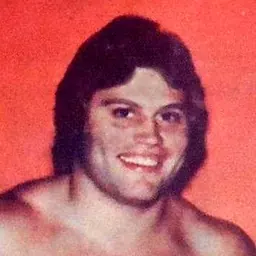


Related people
Same field, nearest in time


Contemporaries
People whose lives overlapped Pedro Morales's


Frequently asked questions
Who was Pedro Morales?
Puerto Rican professional wrestler (1942–2019)
When was Pedro Morales born?
Pedro Morales was born on 22 October 1942 in Culebra.
When did Pedro Morales die?
Pedro Morales died on 12 February 2019 in Perth Amboy.
What was Pedro Morales's occupation?
Pedro Morales was a professional wrestler.
What nationality was Pedro Morales?
Pedro Morales was American.
Sources & further reading
Cite this page
APA: Biography.guide. (2026). Pedro Morales. https://biography.guide/pedro-morales/
MLA: "Pedro Morales." Biography.guide, https://biography.guide/pedro-morales/.
Chicago: "Pedro Morales." Biography.guide. https://biography.guide/pedro-morales/.
Data last updated: 2026-09-20 · Spot an error? Report a correction.
Page generated 2026-09-27 05:26 UTC