
Pedro Madruga
European feudal knight
About Pedro Madruga
Lived 1430 – 1486 (aged 55–56).
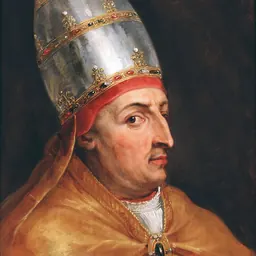
Pedro Álvarez de Soutomaior (c. 1430– 1486), known by the sobriquet Pedro Madruga, was a Galician nobleman and knight. He was a notable figure in Galicia where he exerted certain influence in the Portuguese court, as well as spending time in that of Castile. He was one of the leading lords who suppressed the Irmandiño peasant revolts in the 1460s, and also fought in favor of the Portuguese-backed claimant to the Castilian throne, Joanna la Beltraneja, in the War of the Castilian Succession.
Family Pedro was the illegitimate son of Fernán Eanes de Soutomaior; his mother has never been identified for certain. When Fernán died, his estates passed to his legitimate son, Alvaro. However, Alvaro died whilst still unmarried, and although the next legal heir was Alvaro's aunt, provision was made with her agreement to allow Pedro to inherit the estates instead. Cristóbal would become governor of Puerto Rico. According to legend he first gained the nickname as a result of a dispute with the Count of Ribadavia concerning the boundaries of their respective lands. To settle the dispute the two men agreed to rise at the first cockcrow, mount their horses, and ride toward each other's castle. Their meeting point would mark the new boundary. Instead of waiting until dawn Pedro Álvarez decided that first cockcrow was at midnight, and so rode through the night until he reached his rival's castle. When the Count emerged on hearing the dawn cockcrow, he found don Pedro standing at his door, and exclaimed "Madrugas Pedro, madrugas!" (You're an early riser, Pedro; An early riser!).
Career Pedro Madruga was a figure in the court of Henry IV of Castile, and the king entrusted him with the role of keeping the powerful Bishop of Santiago de Compostela, Alonso de Fonseca, under control.
Reputation Pedro Madruga's reputation is that of "a turbulent magnate who plowed a deep furrow in Galicia's troubled fifteenth century". proposed the theory that Christopher Columbus was of Galician origin. Although briefly popular, the theory had fallen out of favour by the late 20th century. However, in recent years it has been proposed that Pedro Madruga and Christopher Columbus were the same person. According to this theory, Madruga did not die in 1486 but changed his identity to disguise a pact between his former enemies, the Catholic Monarchs, and himself. This thesis is based on several lines of evidence: such as Columbus naming coastal features of the West Indies with the names of more than 100 localities of the Pontevedra estuary (near Soutomaior in Galicia); and the similarity of the handwriting of Columbus and Pedro Madruga. One argument against is a will drafted in 1491 by Alvaro de Soutomaior, eldest son of Pedro Madruga. In this document, Alvaro stipulates that "the bones of my parents [...] be brought to be interred in the chapel of S. Obispo D. Juan in the Tui Cathedral," although this document implies that Pedro Madruga was dead in 1491 rather than 1486.
Titles
1st Count of Caminha Viscount of Tui Marshall of Baiona Lord of Crecente Lord of Fornelos
Don’t just read it —
keep it.
Full-length biographies made to live with: read them, listen on the way to work, watch them tonight.
- E-book
- Audio
- Video
Instant download · yours to keep · every purchase keeps this site free
Important facts
People in Pedro Madruga's life
Named in this biography and alive at the same time


Contemporaries
People whose lives overlapped Pedro Madruga's

Frequently asked questions
Who was Pedro Madruga?
European feudal knight
When was Pedro Madruga born?
Pedro Madruga was born in 1430 in Pontevedra.
When did Pedro Madruga die?
Pedro Madruga died on 16 October 1486 in Alba de Tormes.
Sources & further reading
Cite this page
APA: Biography.guide. (2026). Pedro Madruga. https://biography.guide/pedro-madruga/
MLA: "Pedro Madruga." Biography.guide, https://biography.guide/pedro-madruga/.
Chicago: "Pedro Madruga." Biography.guide. https://biography.guide/pedro-madruga/.
Data last updated: 2026-09-20 · Spot an error? Report a correction.
Page generated 2026-09-27 05:19 UTC