
Pawel Jasienica
Polish historian, journalist and soldier
About Pawel Jasienica
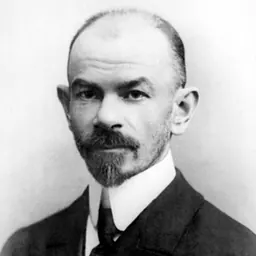
Lived 1909 – 1970 (aged 60). Pawel Jasienica was a Polish journalist, historian and prose writer.
Paweł Jasienica was the pen name of Leon Lech Beynar (10 November 1909 – 19 August 1970), a Polish historian, journalist, essayist and soldier.
During World War II, Jasienica (then, Leon Beynar) fought in the Polish Army, and later, the Home Army resistance. Near the end of the war, he was also working with the anti-Soviet resistance, which later led to him taking up a new name, Paweł Jasienica, to hide from the communist government of the People's Republic of Poland. He was associated with the Tygodnik Powszechny weekly and several other newspapers and magazines. He is best known for his 1960s books on Polish historyon the Kingdom of Poland under the Piast dynasty, the Jagiellon dynasty, and the elected kings of the Polish–Lithuanian Commonwealth. Those books, still popular, played an important role in popularizing Polish history among several generations of readers.
Jasienica became an outspoken critic of the censorship in the People's Republic of Poland, and as a notable dissident, he was persecuted by the government. He was subject to significant invigilation (oversight) by the security services, and his second wife was in fact an agent of the communist secret police. For a brief period marking the end of his life, his books were prohibited from being distributed or printed.
Life
Youth Beynar was born on 10 November 1909 in Simbirsk, Russia, to Polish parents, Mikołaj Beynar and Helena Maliszewska. His paternal grandfather, Ludwik Beynar, fought in the January Uprising and married a Spanish woman, Joanna Adela Feugas. His maternal grandfather, Wiktor Maliszewski, fought in the November uprising. After a brief stay in Warsaw, during the Polish–Soviet War, his family settled in Opatów, and in 1924, moved to Grodno. At the university he was an active member of several organizations including Klub Intelektualistów (Intellectuals' Club) and Akademicki Klub Włóczęgów (Academic Club of Vagabonds). After graduating, he finished training for the officer cadet (podchorąży) in the Polish Army. In the resistance he had the rank of lieutenant, worked in the local Wilno headquarters and was an editor of an underground newspaper "Pobudka". In July 1944 he took part in the operation aimed at the liberation of Wilno from the Germans (Operation Ostra Brama). In the wake of this operation, around 19–21 August, his partisan unit, like many others, was intercepted and attacked by the Soviets. His essays were published in Dziś i Jutro, Słowo Powszechne, Życie Warszawy, Po Prostu. His book on Jagiellonian Poland was recognized as the best book of the year by the readers. In the aftermath of the 1968 events, Polish communist media, and communist leader, Władysław Gomułka, on 19 March 1968, alleged that in 1948 Jasienica was freed because he collaborated with the communist regime; this allegation caused much controversy and damaged Jasienica's reputation. He was subject to much invigilation (oversight) by the security services. From 1968 until his death, his books were prohibited from being distributed or printed. He is buried in Warsaw's Powązki Cemetery. and popular
His (Two ways, 1959) about the January Uprising of the 1860s represent the latest historical period he has tackled. His other popular historical books include , (Three chroniclers; 1964), a book about three medieval chroniclers of Polish history (Thietmar of Merseburg, Gallus Anonymus and Wincenty Kadłubek), in which he discusses the Polish society through ages; British historian Norman Davies, himself an author of a popular account of Polish history (God's Playground), notes that Jasienica, while more of "a historical writer than an academic historian", had "formidable talents", gained "much popularity" and that his works would find no equals in the time of communist Poland. Both Michnik and Samsonowicz note how Jasienica's works contain hidden messages in which Jasienica discusses more contemporary history, such as in his Rozważania....
Don’t just read it —
keep it.
Full-length biographies made to live with: read them, listen on the way to work, watch them tonight.
- E-book
- Audio
- Video
Instant download · yours to keep · every purchase keeps this site free
Important facts
People in Pawel Jasienica's life
Named in this biography and alive at the same time


Related people
Same field, nearest in time


Contemporaries
People whose lives overlapped Pawel Jasienica's



Frequently asked questions
Who was Pawel Jasienica?
Polish historian, journalist and soldier (1909–1970)
When was Pawel Jasienica born?
Pawel Jasienica was born on 10 November 1909 in Ulyanovsk.
When did Pawel Jasienica die?
Pawel Jasienica died on 19 August 1970 in Warsaw.
What was Pawel Jasienica's occupation?
Pawel Jasienica was a journalist, historian and prose writer.
What nationality was Pawel Jasienica?
Pawel Jasienica was Polish.
Sources & further reading
Cite this page
APA: Biography.guide. (2026). Pawel Jasienica. https://biography.guide/pawel-jasienica/
MLA: "Pawel Jasienica." Biography.guide, https://biography.guide/pawel-jasienica/.
Chicago: "Pawel Jasienica." Biography.guide. https://biography.guide/pawel-jasienica/.
Data last updated: 2026-09-20 · Spot an error? Report a correction.
Page generated 2026-09-27 05:25 UTC