
About Pavel Nikonov
Lived 1930 – 2025 (aged 95). Pavel Nikonov was a Russian painter and artist.
Pavel Fedorovich Nikonov (; 30 May 1930 – 8 November 2025) was a Russian painter, graphic artist, teacher and academic, and one of the founders of the Severe style in Soviet painting. His 1962 painting Geologists became a central target of criticism when Nikita Khrushchev denounced the works on show at the 1962 Manege exhibition. Nikonov was an academician of the Russian Academy of Arts (2000; corresponding member 1997), a People's Artist of the Russian Federation, and a two-time laureate of the State Prize of the Russian Federation (2001, 2021).
Early life and education Nikonov was born in Moscow to Fyodor Pavlovich Nikonov, a Red Army officer and one of the founders of the Academy of the General Staff, and Zinaida Fisher, a former student of the Smolny Institute who later worked as a librarian at the General Staff. In 1929 his father was arrested in the Soviet political repressions and exiled to Kazakhstan, returning to Moscow only in 1938; it was his father, wary of any career tied to politics, who most encouraged Nikonov toward art.
From 1943 to 1949 he studied at the Moscow Secondary Art School, evacuated during the war to the village of Voskresenskoye in Bashkortostan, alongside future painters including Viktor Ivanov and Geliy Korzhev. From 1949 to 1956 he studied at the Surikov Moscow Art Institute, where a new rector, Fyodor Modorov, was tightening ideological control over teaching amid a campaign against "formalism". Nikonov later described the two halves of his training in starkly different terms: a "very high-quality" art-school education under teachers of the old culture, followed by what he called "anti-education" at the institute.
His diploma painting October (1956) won a medal at the 1957 World Festival of Youth and Students in Moscow, earning him a study trip to Czechoslovakia in 1958, where he found émigré magazines hidden under his host's bed and first encountered the work of Marc Chagall and Boris Grigoriev. To keep his fee, Nikonov then signed a statement calling it a "creative failure" and began stripping the canvas from its stretcher for reuse.
Rediscovering the 1920s and the "Left MOSKh" Nikonov also helped prepare the same 1962–63 exhibition's rediscovery of painters purged from Soviet artistic life in the 1930s, touring museum storerooms and private flats with fellow artists to recover works by figures such as Alexander Drevin and Boris Golopolosov, whose canvases had for decades been kept hidden by their owners, including under sofas — giving rise to the term "sofa painting". The controversy split the Union of Artists into a conservative wing based in the Academy of Arts and a reform-minded "Left MOSKh" that included Nikonov, Viktor Popkov, Viktor Elkonin, Nikolai Andronov and Andrei Vasnetsov; in the affair's aftermath the painter Vladimir Serov became president of the Academy of Arts, an institution Nikonov later described as embodying "everything most reactionary and opportunistic" in Soviet art.
With his brother Mikhail, Nikonov was also a member of the "Nine", an informal group of nonconformist-leaning painters that included Nikolai Andronov, Boris Birger, Vladimir Weisberg and Natalya Yegorshina; the group held five exhibitions between 1961 and 1978. Its first, nominally "closed" show in 1961 drew such crowds — despite being restricted to Union members — that it turned into a de facto protest for artists' right to exhibit freely. For the 1975 "Soviet Russia" exhibition marking the 25th Communist Party Congress, he painted Moscow Festive (1974–75) as a pendant to Eduard Bragovsky's Moscow at Work. Between the late 1950s and mid-1980s he also travelled on creative commissions to the White Sea, Mordovia, Soviet Central Asia, Azerbaijan and Bulgaria, producing among other works a watercolour cycle known as the Mordovian Album. The art historian Dmitry Sarabyanov wrote that Nikonov achieved "such dramatic tension in depicting the Russian village" as had not been reached before, presenting it as the artist's "great but terrible" universe. From the late 1990s he also painted biblical subjects, including several versions of Carrying the Cross. Nikonov continued to follow his former students' careers after leaving the institute in 2006. In 2010–2011 the Russian Academy of Arts hosted Dialogue: Pavel Nikonov and Young Artists, showing work by Nikonov alongside his former students, and in 2024 the academy's museum staged The Right to Make Mistakes: Pavel Nikonov's Workshop, marking the studio's 30th anniversary with 28 of the workshop's former students.
Nikonov died on 8 November 2025, at the age of 95. He was buried at the Nikolo-Arkhangelskoye Cemetery in Balashikha, Moscow Oblast.
Family His elder brother, Mikhail Nikonov (1928–2010), was also a painter. Nikonov's wife was Viktoria Staritsyna; their daughter, Viktoria Nikonova (1968–2008), was a painter in her own right — the two shared a posthumous joint exhibition, Substance of Existence, at the Platonov Arts Festival in Voronezh in 2021 — and their son, Andrei Nikonov, became a physician. He was named People's Artist of the Russian Federation in 1994 "for great services in the field of fine art" He was twice awarded the State Prize of the Russian Federation: for 2001, for his "Village Cycle", decreed in 2002, and for 2021, for his contribution to Russian and world fine art, decreed in 2022.
Selected solo exhibitions 2005 — Pavel Nikonov: Painting and Graphics, 1980–2004, Tretyakov Gallery, Moscow 2008 — Pavel Nikonov, Russian Museum, Saint Petersburg 2013 — Then and Now, Kovcheg Gallery, Moscow 2018 — The New Nikonov, Pushkin State Museum exhibition halls, Moscow 2020 — The Nikonovs: Three Artists, Tretyakov Gallery, Moscow
Don’t just read it —
keep it.
Full-length biographies made to live with: read them, listen on the way to work, watch them tonight.
- E-book
- Audio
- Video
Instant download · yours to keep · every purchase keeps this site free
Important facts
People in Pavel Nikonov's life
Named in this biography and alive at the same time



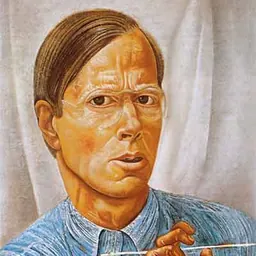

Related people
Same field, nearest in time
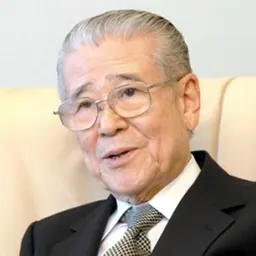
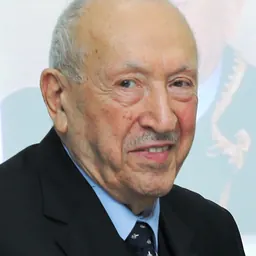
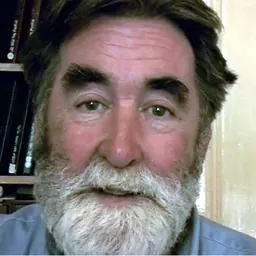


Contemporaries
People whose lives overlapped Pavel Nikonov's



Frequently asked questions
Who was Pavel Nikonov?
Russian painter
When was Pavel Nikonov born?
Pavel Nikonov was born on 30 May 1930 in Moscow.
When did Pavel Nikonov die?
Pavel Nikonov died on 8 November 2025.
What was Pavel Nikonov's occupation?
Pavel Nikonov was a painter and artist.
What nationality was Pavel Nikonov?
Pavel Nikonov was Russian.
Sources & further reading
Cite this page
APA: Biography.guide. (2026). Pavel Nikonov. https://biography.guide/pavel-nikonov/
MLA: "Pavel Nikonov." Biography.guide, https://biography.guide/pavel-nikonov/.
Chicago: "Pavel Nikonov." Biography.guide. https://biography.guide/pavel-nikonov/.
Data last updated: 2026-09-20 · Spot an error? Report a correction.
Page generated 2026-09-27 05:18 UTC