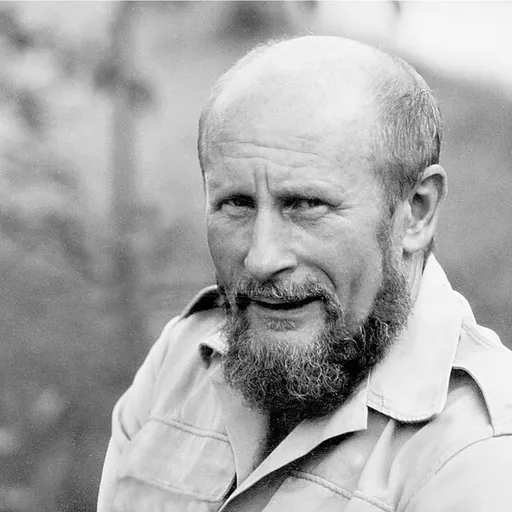
Pavel Nešleha
Czech photographer, graphic and painter
About Pavel Nešleha
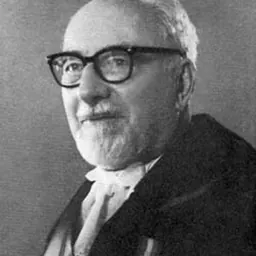
Lived 1937 – 2003 (aged 66). Pavel Nešleha was a Czech photographer, graphic designer, painter, graphic artist and teacher.
Pavel Nešleha (19 February 1937 – 13 September 2003) was a Czech painter, draughtsman, printmaker, photographer and creator of light objects. He received a number of important awards for his graphic and drawing work. He has exhibited individually since 1967 and participated in collective exhibitions since 1965. After the Soviet occupation in August 1968 and during the subsequent normalization, he was not allowed to exhibit freely. During the communist regime he was a member of the informal groups "Somráci (Vagabonds)" and "Zaostalí (the Backwards)". After 1990 he was a professor of painting at the Academy of Arts, Architecture and Design in Prague.
Life He was born in Prague, where he also attended primary school. His interest in art was inspired by the painter Vladimír Šebík, a pupil of Martin Salcman, who led an art club at the school. He continued his studies at the Václav Hollar Art School (1952–1956), where he also met his future friends: Zdeněk Beran, Antonín Málek, Kateřina Černá, Petr Bareš and Václav Křížek. Professors Zdeněk Balaš and Karel Tondl, under whom he studied, encouraged their students to learn about Czech modern art. During his studies he had an opportunity to get acquainted with the private collection of art historian Vincenc Kramář, visited the studio of Emil Filla and saw the works of the Osma art group in Brno private collections. At the end of his studies, he attended public lectures by Prof. Jaromír Pečírka on the trends of modern art. During his studies, he attended meetings of young, avant-garde-oriented dissatisfied artists held in Antonín Tomalík's studio in Prague. Here he met artists from the future Confrontation circle as well as generationally related art history students František Šmejkal and Zdenek Felix. Together with Tomalík, Málek, Sion, Beran, Putta, Barborka, Steklík and others, he belonged to an informal group formed in pubs that called themselves "Somráci" (Vagabonds). They were united by a sense of defiance against the lack of freedom of the 1950s, a consciousness of being excluded and by radical attitudes.
He served his compulsory military service from 1962 to 1964 in Kolín, where he became acquainted with the work of Zdenek Rykr at the local museum.
At the beginning of the 1970s he was approached by the architect Miroslav Hrubý to design lighting for the vaulted Baroque space of the castle. Since 1971 he has been devoted to spatial lighting objects, for which he received a patent. He used them for the set of the Liberec theatre Ypsilonka for the performance Depeše psané na kolečkách. He exhibited some of the objects of the Light Twelve-hedron (1972–1973) and large-scale drawings from the Chairs series (1972) at a solo exhibition at the Baukunst Gallery in Cologne in 1974, but was not allowed to travel there. He made several light objects in the Iranian pavilion at the World Oceanographic Expo in Okinawa, Japan in 1974, from where he made a short study tour of Japan (Tokyo, Nara, Kyoto). He subsequently used the architectural project of a luminous Twelve-hedron with the symbolism of hand reliefs partly for an installation in the Marble Palace in Tehran (1976). During his stay in Iran he had the opportunity to visit other cities - Persepolis, Ifsahan, Meshed, Shiraz and some smaller towns in the desert. The monumental pathos of the Iranian landscape made Nešleha to return to painting and colour.
In 1977 the Nešleha family had a daughter, Johanna. In the late 1970s he returned to painting. In 1979, he was in the Premio internazionale exhibition in Biella, Italy, in a selection of 20 world graphic artists. In the same year, Jan Kříž managed to prepare an exhibition of 10 x 5 drawings in Valašské Meziříčí, where, in addition to Nešleha, Beran, Lamr, Mergl, Načeradský, Nepraš, Sion, Sopko, Steklík and Šimotová exhibited. and was represented at the prestigious show Dessins tchèques du 20e siècle at the Centre Georges Pompidou. On that occasion, he was able to travel for the first time in a long time and visited Paris.
In 1984-1986 he worked on environments with painting and photography. In 1986, Jiří Valoch organized Nešleha's retrospective in Brno at the House of the Lords of Kunštát. In a joint exhibition with Hugo Demartini in Zižkov Atrium Gallery he exhibited some door objects from the series Illusions in Privacy. In the summer of 1986 the Nešleha family moved to Braník. Since 1987 Pavel Nešleha was a member of the association New Group.
During the preparation of a joint installation at the unofficial intergenerational exhibition Forum '88 in the Holešovice marketplace in Prague, a group with the ironic name Zaostalí (The Backwards) emerged from a friendly and opinionated group (Dlouhý, Demartini, Beran, Nešleha). Subsequently, they invited the composer Jan Klusák (as a theoretician) and the architect Karel Kouba for an upcoming unofficial multimedia exhibition, which was to take place in People's House in Vysočany at the end of 1989. After the collapse of the communist regime, it was never held and The Backwards were given the opportunity to exhibit in the Nová síň Gallery and in the Mánes Building of the Society of Visual Artists. In autumn 1989 Pavel Nešleha made a study trip to Italy (Venice, Florence, Rome), where he became more familiar with Caravaggio's and Tintoretto's paintings.
In 1990, Nešleha received a creative grant from The Pollock-Krasner Foundation, and from the same year until 2002 he was the head of the painting studio at the Academy of Arts, Architecture and Design in Prague. In 1991 he was appointed professor. He prepared a number of study trips abroad for his students (Italy, Germany, Spain, France). Since 1991 he has participated in Czechoslovak art shows abroad (Bonn, Osnabrück, Bochum, Vienna, Paris, Sarajevo, Tuzla). In 1992 he took part in the international creative symposium Baroque and Today in Litoměřice. On the occasion of the AICA Congress in Prague, The Backwards installed their individual artefacts, created at the end of the communist regime, in Mánes as a joint work under the title "Pile". The last exhibition of the group The Backwards (Zaostalí) took place in 2007 in the gallery of the Municipal Library in Prague.
Artwork Pavel Nešleha belonged to the generation of Czech non-conformist art of the 1960s and to the circle of artists close to Jindřich Chalupecký. He was a Romantic and Expressionist artist with a strong pictorial vision. More important to him than the artistic processes themselves was the inner content, transformed into the existential pathos of his works. He was gifted with a sense of the right choice of artistic means to communicate his ideas and intentions. In addition to paintings, prints, drawings and pastels, his thematically rich oeuvre also includes spatial objects, collages, light installations, photographs and large-scale digital prints.
From the expressive paintings of the late 1950s, inspired by Kubišta, in the early 1960s his painting gradually simplified into a flat sign expressing the existential situations of human life under the influence of Georges Rouault (Figure, 1959, 1960). The inspiration came also from biblical motifs and literary themes of Edgar Allan Poe or Shakespeare's Hamlet. At the turn of 1959/1960, he became familiar with the works of Antoni Tàpies, Jean Dubuffet, Alberto Burri and Vladimír Boudník and, like most of his generational contemporaries, he devoted himself to structural abstraction in graphic art and painting (Untitled, mixed media, 1959). He used a paper base on which he glued additional layers of paper or fine synthetic fabric and after transferring it to canvas, finished the structure with oil paint (Untitled I and II, 1960). Pertinax plates served as printing material and Nešleha created structural prints by burning their surface (Structural Graphics, 1962). His diploma thesis, designed for the space of the Theatre of Music in Hradec Králové in 1961, was also abstract in concept. During his military service he printed some structural prints from the cycles Studies for Hamlet (1962–1964) and Fragments (1962–1963) in a manual laundry dryer.
From the mid-1960s onwards, hints of figuration were reasserted in his work. Photographic details of autotype plates, which Nešleha deformed by burning and incorporated into graphic matrices, played a part in this. Attracted by the images of the obtained plates, he taught himself to take photographs. Pavel Nešleha's immediate reaction to the sudden end of hope after the Soviet occupation in August 1968 was a series of wild drawings and paintings with fragments of deformed human faces and limbs, which he created as personal art therapy (paintings Head; Roar; Dinner all from 1969).
During 1969-1970 he took detailed photographs of hand gestures. The photographic experience increased the artist's attachment to the reality he saw and in the late 1960s gave rise to large-scale drawings with exaggerated detail accentuating the senses of the human body (Senses I - III 1969; Palm, 1969–1970). The interest in the precisely seen object also influenced the methods of artistic communication. In 1969, he began to etch his own photographic images into graphic matrices, which he combined with the drypoint technique. Unexpectedly, with his graphic sheets (the series History of the Human Hand, 1969–1972; The Great Demolition, 1970, etc.), he entered the artistic movement of photorealism (hyperrealism), which was then taking shape in the USA. The History of the Human Hand series began as a reflection on the early imprints of human existence in prehistoric caves, but gradually became a metaphor for human suffering, misery and aggression. Playing with photographic and later television images brought new themes and transformation to the grotesque presentation of human downfall in response to the trauma of occupation. He exhibited some of the objects of the "twelve-hedron" at a solo exhibition at the Galerie Baukunst in Cologne in 1974, but was not allowed to attend the opening. He made several light objects for the Iranian pavilion at the World Oceanographic Expo in Okinawa, Japan in 1974. Based on architectural design of the luminous twelve-hedron was the design of the oval space, consisting of walls of artificial stone with hand-shaped reliefs and combined with mirrors, inserted into the large hall of the Marble Palace in Tehran (1976).
The relationship to the real motive has no longer deserted his mind. The veristically processed element was at first critically permeated by the ironic grotesqueness and absurdity with which Nešleha reacted to the manipulation and unfreedom of the incipient normalisation, perceived as a "horrible nightmare".
Frequent trips to the countryside associated with photography, the extremes of rugged mountain landscapes, or historic works that create a "memory of place" have been his frequent inspirations. His imagination was enriched by the roots of the Šumava primeval forests, the erosion of sandstone rocks, the statues of Matthias Bernard Braun in Kuks, or the heads and masks of Václav Levý near Liběchov. He reflected on Romanticism and its attempt to capture the human condition in relation to nature and its unbridled forces. In the mid-1980s, the original idea led to the creation of a monumental environment consisting of four monochrome triptychs in the basic scale of Goethe's system, forming an enclosed space 7 m in diameter around the viewer (Elements, 1983–1984). During the 1980s, he began to incorporate the paradox of combining illusory painting with real elements into the conception of his works; he created large-scale objects of doors (the series Illusion in Privacy, 1985–1988),
Representation in collections Musée national d'art moderne – Centre Georges Pompidou Musée d'art moderne de la Ville de Paris Museum of Drawing and Graphic Art, Washington Museum Bochum Sonnenring Galerie, Münster Baukunst Galerie, Cologne Museum Sztuki, Łódž Muzej suvremene umjetnosti, Beograd Moderna galerija Ljubljana Umjetnička galerija BiH, Sarajevo Czech Republic: National Gallery Prague, Moravian Gallery in Brno, Aleš South Bohemian Gallery in Hluboká, Gallery of Art, Karlovy Vary, North Bohemian Gallery of Fine Arts in Litoměřice, West Bohemian Gallery in Plzeň, Klatovy / Klenová Gallery, Gallery of Modern Art in Roudnice nad Labem, Gallery of Modern Art in Hradec Králové, Gočár Gallery in Pardubice, Gallery of the Central Bohemian Region in Kutná Hora (GASK), Museum of Art, Olomouc, Regional Gallery in Liberec, Regional Gallery in Jihlava, Benedikt Rejt Gallery at Louny, Museum of Czech Literature in Prague, Terezín Memorial, Museum Kampa – Foundation of Jana and Meda Mládek, Prague, Zlatá husa Gallery, Prague, COLLETT Prague/Munich
Exhibitions (selection) 1967 Gallery of Young, Mánes, Prague 1974 Handzeichnungen und Druckgraphik, Baukunst, Cologne 1979 Minigalerie - Research institute of veterinary medicine, Brno 1980 Sonnenring Galerie, Münster 1983 Obrazy a kresby z let 1978-1983 / Paintings and drawings from 1978 to 1983, Regionální muzeum v Kolíně 1983 Kresby a obrazy z let 1976-1983 / Drawings and paintings from 1976-1983, Staroměstská radnice, Prague 1986 Obrazy, kresby, fotografie / Paintings, drawings, photographs, Dům pánů z Kunštátu, Brno 1992 Galerie Nová síň, Prague 1994-1995 Galerie moderního umění, Hradec Králové, České muzeum výtvarných umění, Prague, Severočeská galerie výtvarného umění v Litoměřicích 1997 Práce z poslední doby / Recent works, Mánes, Prague 2001 Sedimenty paměti / Sediments of memory (Česká kresba 14), Galerie umění Karlovy Vary 2001 Sedimenty paměti II. - Malby, kresby, fotografie / Sediments of memory II, Paintings, drawings, photographs, Galerie Klatovy / Klenová 2002 Sedimenty paměti III. - Přírodní elementy / Sediments of memory III - Natural elements, Pražákův palác, Brno 2003-2004 Záznamy světla / Records of light, Galerie moderního umění, Roudnice nad Labem, Letohrádek Hvězda, Prague 2008 Nejen o zemi. Z cyklů kreseb, fotografií a pastelů / Not just about the country. From cycles of drawings, photographs and pastels, Dům pánů z Kunštátu, Brno 2012 Fotografická tvorba / Photographic work, Galerie města Pardubic (GAMPA) 2013 Sedimenty paměti IV / Sediments of memory IV, Wortnerův dům Alšovy jihočeské galerie, České Budějovice 2016 Via Canis, Museum Kampa - Nadace Jana a Medy Mládkových, Prague 2020 Vidět jinak / To See Differently, Dům umění, Ostrava
Don’t just read it —
keep it.
Full-length biographies made to live with: read them, listen on the way to work, watch them tonight.
- E-book
- Audio
- Video
Instant download · yours to keep · every purchase keeps this site free
Important facts
People in Pavel Nešleha's life
Named in this biography and alive at the same time


Related people
Same field, nearest in time


Contemporaries
People whose lives overlapped Pavel Nešleha's




Frequently asked questions
Who was Pavel Nešleha?
Czech photographer, graphic and painter (1937-2003)
When was Pavel Nešleha born?
Pavel Nešleha was born on 19 February 1937 in Prague.
When did Pavel Nešleha die?
Pavel Nešleha died on 13 September 2003 in Prague.
What was Pavel Nešleha's occupation?
Pavel Nešleha was a photographer, graphic designer, painter, graphic artist and teacher.
What nationality was Pavel Nešleha?
Pavel Nešleha was Czech.
Sources & further reading
Cite this page
APA: Biography.guide. (2026). Pavel Nešleha. https://biography.guide/pavel-nesleha/
MLA: "Pavel Nešleha." Biography.guide, https://biography.guide/pavel-nesleha/.
Chicago: "Pavel Nešleha." Biography.guide. https://biography.guide/pavel-nesleha/.
Data last updated: 2026-09-23 · Spot an error? Report a correction.
Portrait: Wikimedia Commons · author & licence
Page generated 2026-09-27 05:08 UTC