
Paulo Roberto Falcão
Brazilian association football player and manager
About Paulo Roberto Falcão
Born 1953. Paulo Roberto Falcão is a Brazilian association football player, journalist and association football coach.
Paulo Roberto Falcão (; born 16 October 1953), usually known as simply Falcão, is a Brazilian former footballer and football manager. He is universally considered one of the greatest Brazilian players of all time and one of the greatest midfielders in football history, and one of the best players in the world in his position at his peak in the 1980s.
Falcão is widely considered one of the best players in Internacional and Roma history, playing also for São Paulo. At one stage, he was the world's highest paid footballer.
Due to his success and performances with Roma, Falcão earned the nickname "the eighth King of Rome" from the fans, like Amedeo Amadei before him, and was inducted into the club's Hall of Fame in 2013.
For the Brazil national team, Falcão was capped 34 times between February 1976 and June 1986. He appeared at the 1982 FIFA World Cup, playing in midfield alongside Zico, Sócrates and Éder, considered one of the greatest Brazilian national teams ever. He was named by Pelé one of the 125 Greatest Living Footballers at a FIFA Awards ceremony in 2004. Colombian forward Radamel Falcao's father was a footballer and football fan and named him after Falcão.
Club career
Internacional
Falcão began his professional career at Internacional of Porto Alegre, in Rio Grande do Sul, where he played from 1972 to 1980, winning three Brazilian National Championships (1975, 1976, 1979) and reaching the finals of the 1980 Copa Libertadores, eventually losing to Nacional. During his time at Internacional, he was surprisingly left out of the Brazil squad for the 1978 World Cup in Argentina, though he made the shortlisted pre-tournament 40.
Falcão won Golden Ball magazine's Placar twice as the best player in the Brazilian championships of 1978 and 1979. In 1979, Falcão achieved the highest score in the history of the Golden Ball.
Roma In 1980, Falcão transferred to Serie A club Roma for £650,000. In his first season in Italy (1980–81), he was able to master the language and had his mother and sister living with him to help settle him in. He played well, scoring three goals in his 25 games as Roma finished second in Serie A to Juventus. This was a controversial championship, as Roma had a goal ruled out for an unclear offside against Juventus during a defining draw in Turin. Consolation came with a Coppa Italia win for Roma, beating Turin in the final on penalties – Falcão himself scored the decisive spot kick.
Although Roma slipped to third in his second season (1981–82), personally for Falcão it was better than the first, with six goals in 24 games, becoming one of the foreign stars in Serie A. At the end of this season, he was called up for the 1982 World Cup finals in Spain.
After the World Cup, Falcão inspired Roma to win their second league title ever during the 1982–83 season, scoring seven times in 27 games, and creating numerous others. Although Juventus's Michel Platini finished as top scorer in the league, and despite Juventus beating Roma in both league games, he was acknowledged as the star man in Serie A that season, also performing well as Roma reached the quarter-finals of the UEFA Cup. At the end of this season, Falcão had earned the nickname "the eighth King of Rome".
In 1983–84, Juventus won the title from Roma, who finished second, but it was only won on the final day of the season. Falcão scored five goals in his 27 games. Roma's main goal that season, however, was the European Cup, especially as the final was to be played at Roma's own Olympic Stadium. He played every game, as Roma swept past IFK Gothenburg, CSKA Sofia and Dynamo Berlin to reach the semi-finals against Dundee United.
In a previous Serie A game, Falcão injured his knee, so he missed the first leg of the semi-final, as Roma lost 2–0 in Dundee. He returned for the second leg as Roma won 3–0 to reach the final, but again injured his knee in the process. He was fit enough for the final against Liverpool, but played poorly as Roma were eventually defeated on penalties after a 1–1 draw, with Falcão declining to even take a spot kick. This was a marked turning point in his relationship with the club, and the beginning of the end of his time in Rome. Roma again won the Coppa Italia, but despite nearly winning the treble, the mood around the city was not a happy one.
In the 1984–85 season, Falcão was more famous for his off field antics than his on field ones. Due to his knee troubles, he only managed four games and one goal in the league as Roma slumped to eighth place in the championship. Falcão then flew off to New York City for an operation on his knee that was unauthorized by the club's doctors, and Roma subsequently terminated his contract. He went back to Brazil after five years in Rome.
São Paulo Falcão then signed a contract with São Paulo.
While playing for São Paulo, Falcão won two titles. The first was a Campeonato Paulista in 1985 beating Portuguesa in the final with an aggregate score of 5–2, and the second one a Taça dos Campeões Estaduais Rio – São Paulo, also in 1985, where he scored his one and only goal for the club in the second leg against Fluminense.
Falcão retired from professional football after the 1986 World Cup. He is one of eleven members to have been inducted into the Roma Hall of Fame. He was a member of the side that finished third at the 1979 Copa América, scoring his only goal of the tournament in the second leg of the semi-finals, a 2–2 draw against eventual champions Paraguay, although the latter nation advanced to the final 4–3 on aggregate. He was surprisingly left out of Brazil's 1978 World Cup squad, despite being included on the 40–player shortlist before the tournament. This happened because, influenced by national teammate Emerson Leão (who claimed to have done the same with Zagallo four years earlier), Falcão unsuccessfully demanded from manager Cláudio Coutinho a definition about his situation in the team.
Falcão was a key part of Brazil's celebrated 1982 World Cup team, playing along with Toninho Cerezo, Zico, Éder and Socrates in a 4–2–2–2 formation. Initially expected to serve as a substitute during the tournament, Falcão entered the starting lineup after Cerezo's suspension, winning 2—1 against the Soviet Union. , plus another goal in the decisive 4–0 win over New Zealand.
In the second phase of the World Cup, in the so-called "Group of Death," Brazil obtained a 3–1 win against the reigning World Champions and rivals Argentina, meaning that the Brazilians needed only a draw in their next game against Italy to advance to the semi-finals. However, Brazil were beaten by a Paolo Rossi hat trick as Italy won 3–2, advancing in their place. Falcão scored Brazil's second equaliser with a long-range strike that deflected off Italian defender Giuseppe Bergomi. The defeat and resulting elimination affected Falcão and several of his teammates heavily; after the match, he was said to be so distressed that he wanted to give up football. Nevertheless, Falcão was elected as the tournament's second best player, winning the Silver Ball.
Although his form had declined after an injury requiring surgery in 1985, Falcão was called up for the Brazil 1986 World Cup squad. During the World Cup in Mexico, Falcão played in two games, coming on as substitute against both Spain and Algeria. After Brazil's elimination in the quarterfinals, Falcão retired from football.
Coaching career From 1990 to 1991, Falcão was the manager of the Brazil national team, leading the team to a second place finish at the 1991 Copa América, behind rivals Argentina. His second and longest coaching experience was with América from 1991 to 1993. He also coached Internacional in 1993. After a brief hiatus, in 1994, he was appointed manager of the Japan national team. In April 2011, after 16 years without managing a club, he was signed by Internacional, replacing Celso Roth. Following three consecutive defeats in the Brazilian league, he was sacked in July.
In February 2012, Falcão returned into management, signing an eleven-month deal as head coach of Bahia. He only returned to coaching duties in September 2015, being appointed manager at Sport.
Falcão returned to Internacional in July 2016, but was sacked after three losses and two draws, only one month later. On 17 November 2022, he joined Santos as a sporting coordinator.
On 4 August 2023, Falcão left his role at Santos.
Style of play An elegant and technically gifted player, with an eye for goal from midfield, and an ability to orchestrate his team's attacking moves, Falcão usually functioned in a holding role as a deep-lying playmaker (regista), although he was capable of aiding his team defensively, as well as creatively and offensively, due to his physique, work-rate, and tenacity. He was known in particular for his flair, control, vision, passing and long-range shooting ability, as well as his tactical intelligence, organisational ability and leadership.
Personal life Falcão was born in Abelardo Luz, in the Southern Brazilian state of Santa Catarina. His father is Portuguese-Brazilian and his mother Azize has Italian origins, from Calabria.
In 1993, Falcão married attorney Rosane Leal Damazio, with whom he had a son, Paulo Roberto Falcão Filho, born on July 21, 1993. Since 2003, Falcão has been married to the journalist Cristina Ranzolin, with whom he has a daughter, the actress Antônia Ranzolin Falcão, born in the following year (2004).
He also worked for many years as a football commentator for Rede Globo and for its sports oriented channel SporTV.
On 4 August 2023, Falcão was accused of sexual harassment by an employee of the apartment hotel where he lived in Santos.
On 21 October 2023, the case against Falcão was closed due to a lack of evidence.
Philanthropy and community work In 1998, Falcão co-founded the Instituto da Criança com Diabetes do Rio Grande do Sul (ICDRS), a nonprofit organization dedicated to supporting children and adolescents with Type 1 diabetes. He has remained involved with the institution since its foundation and serves as President of its Board of Administration. In April 2026, Falcão participated in a retrospective videocast marking nearly three decades of the institute's work and discussing the importance of diabetes treatment and public awareness.
During the COVID-19 pandemic in 2020, Falcão joined Zico, Júnior, Cerezo, Careca and other former Brazil internationals in a fundraising campaign supporting favela communities through the Central Única das Favelas (CUFA).
Career statistics Club
International
Managerial statistics
Honours Internacional Campeonato Brasileiro Série A: 1975, 1976, 1979 Campeonato Gaúcho: 1973, 1974, 1975, 1976, 1978 Copa Libertadores runner-up: 1980
Roma Silver ball South American Player of the Year: 1982 Onze de Bronze: 1982 World Soccer World XI: 1982, 1983 Guerin Sportivo All-Star Team: 1982, 1983 Serie A Team of The Year: 1982, 1983, 1984 Onze d'Argent: 1983 FIFA 100: 2004 A.S. Roma Hall of Fame: 2012 Italian Football Hall of Fame: 2016 Brazilian Football Museum Hall of Fame Golden Foot: 2019, as football legend
Don’t just read it —
keep it.
Full-length biographies made to live with: read them, listen on the way to work, watch them tonight.
- E-book
- Audio
- Video
Instant download · yours to keep · every purchase keeps this site free
Important facts
People in Paulo Roberto Falcão's life
Named in this biography and alive at the same time



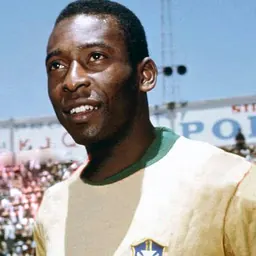

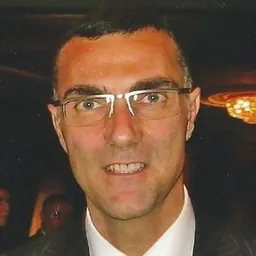
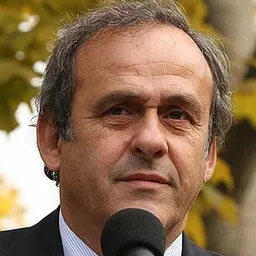
Related people
Same field, nearest in time
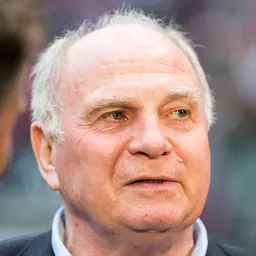





Contemporaries
People whose lives overlapped Paulo Roberto Falcão's


Frequently asked questions
Who is Paulo Roberto Falcão?
Brazilian association football player and manager
When was Paulo Roberto Falcão born?
Paulo Roberto Falcão was born on 16 October 1953 in Abelardo Luz.
What is Paulo Roberto Falcão's occupation?
Paulo Roberto Falcão is an association football player, journalist and association football coach.
What nationality is Paulo Roberto Falcão?
Paulo Roberto Falcão is Brazilian.
Sources & further reading
· Wikipedia: Paulo Roberto Falcão
· DBpedia: Paulo Roberto Falcão
Cite this page
APA: Biography.guide. (2026). Paulo Roberto Falcão. https://biography.guide/paulo-roberto-falcao/
MLA: "Paulo Roberto Falcão." Biography.guide, https://biography.guide/paulo-roberto-falcao/.
Chicago: "Paulo Roberto Falcão." Biography.guide. https://biography.guide/paulo-roberto-falcao/.
Data last updated: 2026-09-20 · Spot an error? Report a correction.
Page generated 2026-09-27 05:24 UTC