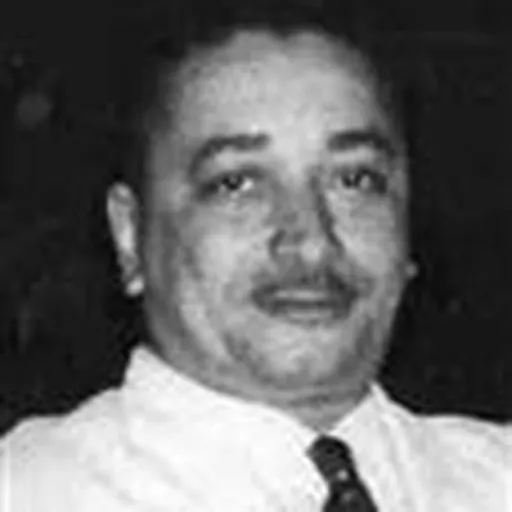
About Paulo Lauro
Lived 1908 – 1983 (aged 74). Paulo Lauro was a Brazilian jurist, lawyer, professor and journalist.
Paulo Lauro (19 November 1907 – 5 August 1983) was a Brazilian lawyer and politician who was the mayor of São Paulo from 1947 to 1948. He was the first Black mayor of the city. He later became a federal deputy representing the state of São Paulo in the 1950s and 1960s.
Biography Lauro was born on 19 November 1907, in Descalvado, São Paulo to Alfredo Gonçalves Lauro and Leopoldina Lauro. He was a Roman Catholic. He graduated with a law degree from the University of São Paulo in 1932. He became a criminal defense attorney in São Paulo while also teaching in local schools. He later worked as a journalist, becoming a director of two newspapers. He was married to Diva da Fonseca and had two children, Paulo Lauro Júnior and Dora Aparecida.
During his career as a lawyer, he achieved fame in both the public and legal spheres in 1938 after he represented the defendant in what was dubbed the "Chinese restaurant massacre" case. The case involved the murders and attempted robbery of 4 people, the owners of a Chinese restaurant in São Paulo and two of their waiters, as part of a revenge plot by a maltreated former employee, Arias de Oliveira. Oliveira was acquitted in the first of two trials after Lauro convinced the jury to rule in his favor despite police evidence and a signed confession by Oliveira himself. He was later convicted in a second trial and was sentenced to thirty years in prison.
A colleague of Adhemar de Barros, Lauro was a member of the iteration of the Progressive Republican Party that Barros founded in 1945 until its merger with the Social Progressive Party (PSP) a year later. Lauro went on to join the newly formed party. He went to become leader or vice-leader of the PSP parliamentary group at various points. He also was a member of the Constitution and Justice and Education and Culture commissions. Lauro went on to oppose much of president Jânio Quadros' policies as a member of Congress, contributing to the turbulent political climate that led to his resignation. He also opposed the normalization of relations with the Soviet Union by Quadros' successor João Goulart, as well as further state intervention in public utilities. After the 1964 Brazilian coup d'état and the establishment of the military dictatorship, he became a member of ARENA and ran again for Congress in 1966, but was not elected.
After retiring from politics, he returned to practicing law and later became an economics professor. He died on 5 August 1983 in São Paulo. A section of highway SP-215, from Descalvado to São Carlos, was named in his honor.
Don’t just read it —
keep it.
Full-length biographies made to live with: read them, listen on the way to work, watch them tonight.
- E-book
- Audio
- Video
Instant download · yours to keep · every purchase keeps this site free
Important facts
People in Paulo Lauro's life
Named in this biography and alive at the same time
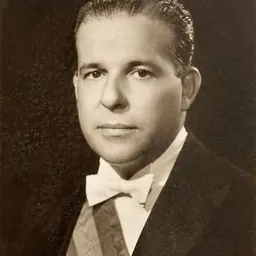
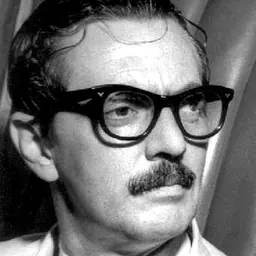
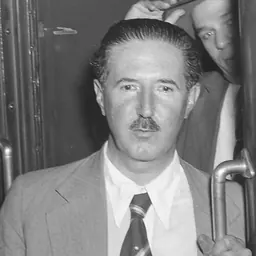

Related people
Same field, nearest in time

Contemporaries
People whose lives overlapped Paulo Lauro's


Frequently asked questions
Who was Paulo Lauro?
Brazilian politician (1908-1983)
When was Paulo Lauro born?
Paulo Lauro was born on 19 November 1908 in Descalvado, São Paulo (state).
When did Paulo Lauro die?
Paulo Lauro died on 5 August 1983 in São Paulo.
What was Paulo Lauro's occupation?
Paulo Lauro was a jurist, lawyer, professor and journalist.
What nationality was Paulo Lauro?
Paulo Lauro was Brazilian.
Sources & further reading
Cite this page
APA: Biography.guide. (2026). Paulo Lauro. https://biography.guide/paulo-lauro/
MLA: "Paulo Lauro." Biography.guide, https://biography.guide/paulo-lauro/.
Chicago: "Paulo Lauro." Biography.guide. https://biography.guide/paulo-lauro/.
Data last updated: 2026-09-20 · Spot an error? Report a correction.
Portrait: Wikimedia Commons · author & licence
Page generated 2026-09-27 04:57 UTC