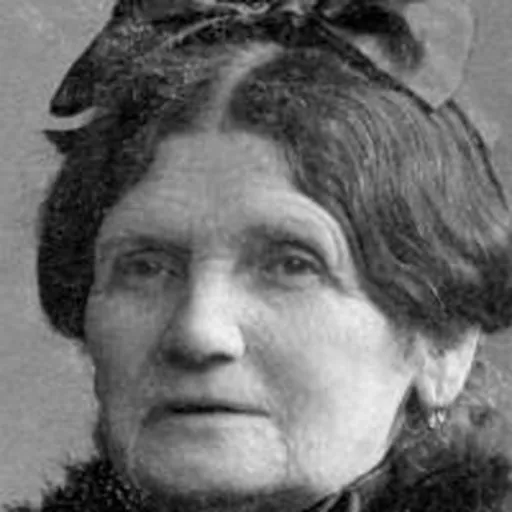
About Pauline Wengeroff
Lived 1833 – 1916 (aged 82–83). Pauline Wengeroff was a Russian writer.
Pauline Wengeroff (1833–1916), born Pesya Epstein, was the author of a first-of-its kind memoir by a Jewish woman, in which she refracts a period in Jewish history—the emergence and unfolding of Jewish modernity in nineteenth-century Russian Poland—through the experience of women and families.
Her two-volume memoirs, Memoiren einer Grossmutter, Bilder aus der Kulturgeschichte der Juden Russlands im 19 Jahrhundert ('Memoirs of a Grandmother: Scenes from the Cultural History of the Jews of Russia in the Nineteenth Century'), were originally published in German (with some Hebrew and Yiddish and a few words in Polish) by the German-Jewish publishing house, Poppelauer, beginning in 1908. The work was subsequently re-published several times to rave reviews in the Jewish and non-Jewish presses.
Biography and writing Wengeroff was born Pesya Epstein in 1833 in Bobruisk, in Minsk Governorate of the Russian Empire (now Belarus), and grew up in Brest-Litovsk, in Grodno Governorate. The first volume of her memoirs reflects the years of her childhood, the 1830s and '40s. It details the lives of traditional Jews in the region Jews called "Lite" (Lithuania), in the years that the Russian Jewish enlightenment movement, the Haskalah, was taking off and Jewish traditionalism and modernity began to clash. Raised in a strictly gendered traditional society, Wengeroff gives a rare, detailed account of the ritual practices and beliefs of women (as well as those of men) in her well-to-do, pious, family, and paints keen vignettes that illustrate the collision between traditionalism and modernity playing out intergenerationally in her own and other families. Volume One, while not uncritical, is a loving elegy to a world that Wengeroff felt was being lost by the time she wrote the full version of her memoirs, toward the end of the nineteenth century.
Wengeroff's second volume is about her adult life, starting with her being groomed for marriage, which was arranged with Chonon (Afanasy) Wengeroff, the son of a wealthy family from Ukraine who were adherents of Habad Hasidism. Here, too, Wengeroff's detailed depiction of the steps toward arranged engagement and the experience of marriage, told from a woman's perspective, provide rare and precious testimony.
Wengeroff's husband Chonon lost his faith while on pilgrimage to his rebbe, the details of which experience she says he never shared. Conflict between them over traditional observance—she had not lost her own faith—quickly ensued and, within their marriage, the couple fought its own version of the larger Jewish struggle over traditionalism and modernity. Notably, Wengeroff insists that there was a gendered nature to that larger struggle, with Jewish men as a class rushing recklessly out of observance in the quest for advancement, while women like herself were capable and desirous of perpetuating both Jewish tradition and engagement with non-Jewish culture. Modernizing Jewish men, however, certainly her own husband, behaved as "tyrants" at home, she claimed, taking from women their traditional domestic power and mandate to impart Jewish belief and practice to children, a loss which led to larger Jewish cultural catastrophe.
Wengeroff writes of the conversion of two sons, Simon (Semyon) and Volodya, when they faced anti-Jewish restrictions. For a woman raised as she was, this was the worst of tragedies which however, she historicizes, explaining it in the absence of a Judaism taught meaningfully by both parents, combined with Jew-hatred in the world in which talented children sought success. In fact, a daughter, Faina, unmentioned in the Memoirs, also converted, and not opportunistically. Wengeroff had seven children; in the Memoirs she speaks only of four, a seemingly bizarre omission in putative memoirs of a "grandmother" (Wengeroff does not mention any grandchildren though she had quite a few). None of her biological offspring maintained any living connection to things Jewish.
Wengeroff, however, took cheer in the emerging "generation of return" in the later nineteenth century: Jewish youth who sought knowledge about and connection to Jewish culture, wishing to revive this in modern ways. She was a Herzlian Zionism and corresponded briefly with Theodor Herzl, whose project she backed wholeheartedly.
After years of striving and competition for success Chonon Wengeroff became director of the Commercial Bank in Minsk and served the City Council from 1880 to 1892. In Minsk, Pauline Wengeroff and her husband founded vocational schools for poor Jewish children. She insisted on Jewish observance in the schools that she had been unable to enforce in her own home. In Magnus's book A Woman's Life: Pauline Wengeroff and Memoirs of a Grandmother (Littman, 2016), which she describes as a biography both of the person and of her book, she focuses on how the memoirs came to be in the form in which we have them, and on Wengeroff's puzzling omissions in them, and explores the ability of her Memoirs to be read both as an apologia for tradition—in particular, women's traditional roles—and as a defense of assimilation.
Awards 2010: National Jewish Book Award in the Women's Studies category for Memoirs of a Grandmother: Scenes from the Cultural History of the Jews of Russia in the Nineteenth Century, Volume One
Don’t just read it —
keep it.
Full-length biographies made to live with: read them, listen on the way to work, watch them tonight.
- E-book
- Audio
- Video
Instant download · yours to keep · every purchase keeps this site free
Important facts
Family & relationships
People in Pauline Wengeroff's life
Named in this biography and alive at the same time

Related people
Same field, nearest in time

Contemporaries
People whose lives overlapped Pauline Wengeroff's



Frequently asked questions
Who was Pauline Wengeroff?
Russian writer (1833–1916)
When was Pauline Wengeroff born?
Pauline Wengeroff was born in 1833 in Babruysk.
When did Pauline Wengeroff die?
Pauline Wengeroff died in 1916 in Minsk.
What was Pauline Wengeroff's occupation?
Pauline Wengeroff was a writer.
What nationality was Pauline Wengeroff?
Pauline Wengeroff was Russian.
Sources & further reading
· Wikipedia: Pauline Wengeroff
Cite this page
APA: Biography.guide. (2026). Pauline Wengeroff. https://biography.guide/pauline-wengeroff/
MLA: "Pauline Wengeroff." Biography.guide, https://biography.guide/pauline-wengeroff/.
Chicago: "Pauline Wengeroff." Biography.guide. https://biography.guide/pauline-wengeroff/.
Data last updated: 2026-09-20 · Spot an error? Report a correction.
Portrait: Wikimedia Commons · author & licence
Page generated 2026-09-27 04:58 UTC