
About Pauline Frederick
Lived 1908 – 1990 (aged 82). Pauline Frederick was an American journalist and employee.
Early life Pauline Frederick was born in Gallitzin, Pennsylvania, on February 13, 1908, although several sources state the year as 1906. Frederick began writing articles for the Washington Star. While working for the NANA she had many articles published in the New York Times. The first decade of her journalistic career was a hard-fought grind of hard work and determination. Frederick recalled her early experiences breaking into journalism: “I tried every way I could to convince the powers that be that I could broadcast news… This was very difficult because it was unheard of for a woman to want to enter this man’s world”. Eventually, she would enter the masculine world of broadcast journalism full-time and excel in it.
In 1938, with her interest in electronic communications, she accepted a job as a part-time aide assisting in writing scripts for then-NBC Blue radio reporter H. R. Baukhage. Her journalism career in radio began in 1939, when NBC Radio's director of women's programs, Margaret Cuthhert, heard of Frederick's interviews with diplomats’ wives and thought they would make a good radio feature. Frederick took the job and her interview with the minister of Czechoslovakia's wife was heard on air shortly after Hitler's assault on Czechoslovakia. Frederick's desire for a career as a news journalist remained strong even though she had been denied a job by NBC and CBS. She retained employment as an independent writer for ABC, furnishing them with articles that were considered women's-interest pieces. While reporting for ABC, Frederick was asked to report on a women's tutorial that was designed to teach women “How to Get a Husband” and that piece became some of her best-known work.
In 1948, Frederick was the only reporter available to cover a breaking story at the United Nations, and later that year she was selected to cover the first televised political convention, an experience that gained her instant credibility.
In 1975, Fredrick retired from NBC, over two years before the network's mandatory retirement age of 70. She continued her career with National Public Radio for another five years until leaving broadcast journalism for good in 1980.
Awards and honors During her long career, Pauline Frederick received numerous awards and honors, and was awarded “honorary doctorate degrees in journalism, law, and the humanities from more than twenty colleges and universities”. and then, in 1949 “the first woman ever to work fulltime for a U.S. television network” (American Broadcasting Company).
Frederick was included in the Gallup poll's list of most admired women. “Frederick won the top award from McCall's and the AWRT in 1956 for her ingenious reporting and courage to say what she believed”. In 1960, she won the Golden Mike Award for the second time. She was named to the Hall of Fame of Sigma Delta Chi, the journalism professional society, in 1975, and was the first woman to be elected as president of the United Nations Correspondents Association. Pauline was personally aware of the forces working against women through her own experiences, and it is telling that she concluded her first interview with Indira Gandhi with a universal quote applicable to all women fighting to succeed in a male dominated world: “It is a question of being a human being, not a man or a woman”.
America Prepares for Tomorrow, The Story of Our Total Defense Effort In 1941, Pauline Frederick co-authored with William Dow Boutwell, B.P. Brodinsky, Joseph Pratt Harris, Glenn Nixon, and Archibald Robertson, America Prepares for Tomorrow. Frederick authored four chapters – Chapter Four, Aid to the Democracies; Chapter Twenty-Two, The Bread and Butter Line; Chapter Twenty-Three, Sitting on the Price Lid, and Chapter Twenty-Six, The Inner Lines – Problems of Propaganda and Sabotage, and provided research for Chapter Five. This early in her career, she is clearly considered an equal to her male co-authors. In the About the Authors section of the book, Pauline Frederick is credited with specializing in foreign affairs and editing the Federal Register. Even this early in her career, Pauline Fredrick was recognized by some as a journalist and author capable of writing and reporting on serious news topics. At this point, most women in the field of journalism and, the female gender as a whole were not considered capable of performing such tasks.
Newspaper reporting Pauline Frederick authored hundreds of newspaper articles over the course of her distinguished career. In keeping with the sexist practices of the time, most of her assignments were focused on women's issues. In the male-dominated field of journalism, a female reporter was not felt capable or respected enough to cover anything other than stories concerning feminine issues. Still, Frederick made her mark writing about significant news in relation to women. Her newspaper credits for the New York Times during 1938 and 1939 are a wonderful example of how she incorporated the women she was covering into articles about the most important issues of the day. For example, she wrote about neutrality prior to the United States entering World War II in her article Representative Edith Rogers Asks Women To Help Country to Be Really Neutral (Apr 30, 1939).
Legacy When Frederick began presenting the news on television, she was the only female doing so. In the early 1970s, NBC had four female correspondents, including Frederick. Her fellow female correspondents were Nancy Dickerson, Aline Saarinen and Liz Trotta. Marya McLaughlin was the sole woman at CBS, while ABC had two, Virginia Sherwood and Marlene Sanders.
Timeline 1908 February 13 - Born in Gallitzin, Pennsylvania. 1930 - Graduated from American University. 1931 - First professional reporting position for the Washington Star. 1933-34 - Taught at Fairmont Junior College, Washington, D.C. 1939 - Broadcast on-air for NBC Radio. 1941 - Co-authored America Prepares for Tomorrow 1944 - Stopped working for NBC Radio. 1945 - Performed overseas broadcast covering the Nuremberg Trials. 1945 April - Served on journalism tour of Asia as a war correspondent. 1947 September 26 - Started regularly covering the United Nations. 1948 - Becomes a freelance reporter for ABC. 1948 June – July - Covered the first political convention on television for ABC. 1948 August - Pauline Fredrick's Featured Story premiered on ABC in New York City. 1949 - Employed full-time as a reporter for a television network ABC. 1949 January 12 - Pauline Fredrick's Featured Story aired nationally for the first time. 1949 April 13 - Pauline Fredrick's Featured Story final episode was broadcast. 1950 - Reported from the United Nations on the conflict in Korea. 1952 October - All Star News premiered on ABC featuring Pauline Frederick. 1953 June - Left her position at ABC for a position at NBC. 1953 August - Reported for NBC on the national political conventions. 1954 - Received the Alfred I. duPont Award. 1955 - Received the Peabody Award. 1959 - Elected president of the United Nations Correspondents Association. 1956 August - Reported for NBC on the political conventions. 1963 August - Covered the political unrest in the Democratic Republic of the Congo for NBC. 1967 - Published Ten First Ladies of the World. 1969 March 31 - Married Charles Robbins. 1975 - NBC retired Pauline Frederick. 1976 October - Was the first woman to moderate a presidential debate. 1977 January - Started for NPR on the Pauline Fredrick and Colleagues show. 1981 - Left NPR and broadcast journalism. 1989 August - Charles Robbins, her husband died. 1990 May 9 - Died in Lake Forest, Illinois.
Don’t just read it —
keep it.
Full-length biographies made to live with: read them, listen on the way to work, watch them tonight.
- E-book
- Audio
- Video
Instant download · yours to keep · every purchase keeps this site free
Important facts
People in Pauline Frederick's life
Named in this biography and alive at the same time

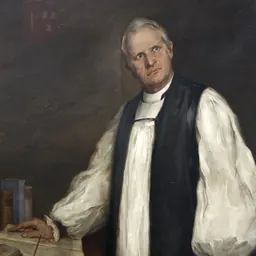
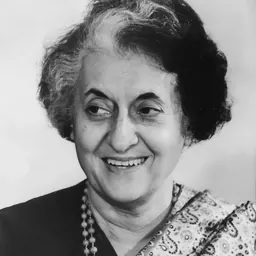

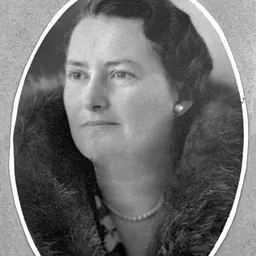
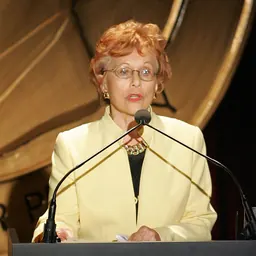
Related people
Same field, nearest in time


Contemporaries
People whose lives overlapped Pauline Frederick's


Frequently asked questions
Who was Pauline Frederick?
journalist (1908–1990)
When was Pauline Frederick born?
Pauline Frederick was born on 13 February 1908 in Gallitzin.
When did Pauline Frederick die?
Pauline Frederick died on 9 May 1990 in Lake Forest.
What was Pauline Frederick's occupation?
Pauline Frederick was a journalist and employee.
What nationality was Pauline Frederick?
Pauline Frederick was American.
Sources & further reading
· Wikipedia: Pauline Frederick
· DBpedia: Pauline Frederick (journalist)
Cite this page
APA: Biography.guide. (2026). Pauline Frederick. https://biography.guide/pauline-frederick/
MLA: "Pauline Frederick." Biography.guide, https://biography.guide/pauline-frederick/.
Chicago: "Pauline Frederick." Biography.guide. https://biography.guide/pauline-frederick/.
Data last updated: 2026-09-20 · Spot an error? Report a correction.
Page generated 2026-09-27 05:02 UTC