
About Paula Szalit
Lived 1886 – 1942 (aged 55). Paula Szalit was an Austrian and Polish composer, pianist and musician.
Paulina Szalitówna (25 November 1885 – 7 February 1942), Eugen d'Albert; C. Hoffmann; and Theodor Leschetizky.
Szalit was regarded as a child prodigy and made numerous appearances in Vienna, Germany, Poland and London.
And another review:
"She is mistress of her instrument in every respect; she understands its genius. As far as technique in the ordinary sense goes she has nothing to learn. . . . Her phrasing had the quality of inevitableness, which can never be the effect of the mediocre mind in music. . . . Miss Szalit has also the mind that grasps the inner meaning of the art; the spirituality that sees in it more than sensuous tonal beauty...By almost universal consent she has been recognised as an artist of quite exceptional attainments."
Occasionally her reviews were more muted, such as this:
"Her readings of works by Beethoven, Mendelssohn, and Chopin were lacking in depth of sentiment, but they displayed an intelligence and musical feeling which, combined with a sympathetic touch and great executive facility, testify to exceptional ability."
Szalit was described by Niemann as "a veritable phenomenon of pianistic and musical talent." Artur Schnabel deemed her the greatest child prodigy in history.
Nieman remarked that she could transpose at sight.
From her first public recital in 1895 until 1906, Szalit performed not only solo recitals but also concertos with leading orchestras and chamber music with well-known ensembles widely throughout continental Europe and England. In September 1906, she was appointed head of the advanced piano class at the Lemberg Conservatory.
Later life After 1906 Szalit disappeared from the public arena. (The Polish Wikipedia article :pl:Paulina Szalitówna mentions a reported concert in the autumn of 1913 with violinist Paul Kochański.) In 1918 she tried to re-establish herself on the Vienna musical scene. She repeated the attempt on March 27, 1921:
"Piano instruction. The well-known pianist Paula Szalit offers first-class instruction, she also undertakes lessons in piano accompaniment and repetiteur work. Rotenlöwgasse 7, Apt 21."
Paula Szalit died in a mental institution in Kulparkóv, near Lviv, in 1942, where she was buried without coffin on 12 February.
Works For piano unless noted.
Intermezzo in G sharp Praeludium Carpiccio (F minor) Miniatures Morceaux, op. 2 (1900): 1. Rêverie 2. Impromptu 3. Tendresse 4. Scène de Ballet 5. Mazurka 6. Valse 7. Intermezzo 8. Gavotte Traeumerei (1897) Intermezzo, Op. 3, no. 3. Impromptu in F, Op. 3 Im Winter: „Schlaf ein, mein süsses Kind“ (1897) (for voice and piano)
Don’t just read it —
keep it.
Full-length biographies made to live with: read them, listen on the way to work, watch them tonight.
- E-book
- Audio
- Video
Instant download · yours to keep · every purchase keeps this site free
Important facts
People in Paula Szalit's life
Named in this biography and alive at the same time
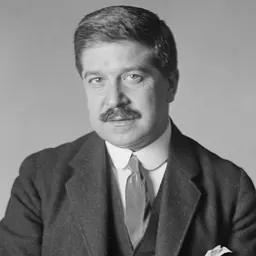

Related people
Same field, nearest in time

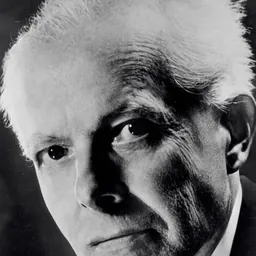


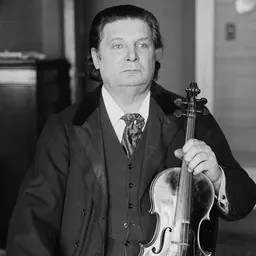
Contemporaries
People whose lives overlapped Paula Szalit's



Frequently asked questions
Who was Paula Szalit?
Pianist and composer (1885/1886/1887–7 February 1942)
When was Paula Szalit born?
Paula Szalit was born on 5 November 1886 in Drohobych, Brody.
When did Paula Szalit die?
Paula Szalit died on 7 February 1942 in Lviv.
What was Paula Szalit's occupation?
Paula Szalit was a composer, pianist and musician.
What nationality was Paula Szalit?
Paula Szalit was Austrian and Polish.
Sources & further reading
Cite this page
APA: Biography.guide. (2026). Paula Szalit. https://biography.guide/paula-szalit/
MLA: "Paula Szalit." Biography.guide, https://biography.guide/paula-szalit/.
Chicago: "Paula Szalit." Biography.guide. https://biography.guide/paula-szalit/.
Data last updated: 2026-09-20 · Spot an error? Report a correction.
Page generated 2026-09-27 05:22 UTC