
About Paul Zucker
Lived 1888 – 1971 (aged 82). Paul Zucker was a German architect, art historian, historian, journalist and docent.
Paul Zucker (August 14, 1888 in Berlin – February 14, 1971 in New York City) was a German-born architect, art historian, art critic and author. Between 1919 and 1935, he practiced architecture in Berlin.
Education Paul Zucker studied architecture and art history in Berlin and Munich; he graduated with the degree of Diplom-Ingenieur (Dipl.-Ing.) from the Technische Hochschule (Berlin-)Charlottenburg. The same institution awarded him a doctorate in engineering in 1913. He wrote his thesis ("Spatial Representations and Pictorial Architectures in the Florentine Painters of the First Half of the Quattrocento") under Richard Borrmann's supervision.
Career From 1918 to 1937, he worked as a freelance architect in Berlin, designing numerous country houses, store interiors, and major buildings. Only one of them survives today.
In 1916, he began teaching as a lecturer in art history, architecture and urban planning at the Lessing-Hochschule in Berlin; from 1928 he lectured at the Staatliche Hochschule für Bildende Kunst (later called the Bauhaus). In 1933, he was dismissed from the Bauhaus for being a Jew. The Lessing-Hochschule followed suit in 1935, and in 1937 Zucker was banned from teaching anywhere in the Third Reich.
New York He emigrated to the United States in 1937, became a U.S. citizen in 1944, and worked in New York as a lecturer in architectural and art history at the New School for Social Research and at the Cooper Union Art School. After moving to New York, he no longer worked as a commercial architect, but in 1943, Zucker and others created the "German Village," a realistic replica of Berlin tenements, at the Dugway Proving Ground test site in Utah. Here, various explosive and incendiary bombs were tested for their effect on these dwellings.
Zucker's writings ranged from the history of scenic design to modern urban planning. He often returned to the topic of ruins, decay, and relics.
Awards
1953: Arnold W. Brunner Scholarship Award from The American Institute of Architects (AIA) 1968: Order of Merit of the Federal Republic of Germany (First Class) 1969: Rossi-Prize from Cooper Union Art School in New York
Don’t just read it —
keep it.
Full-length biographies made to live with: read them, listen on the way to work, watch them tonight.
- E-book
- Audio
- Video
Instant download · yours to keep · every purchase keeps this site free
Important facts
People in Paul Zucker's life
Named in this biography and alive at the same time

Related people
Same field, nearest in time
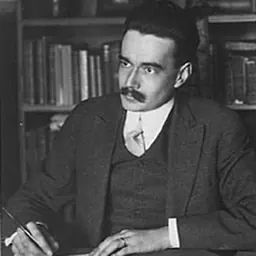


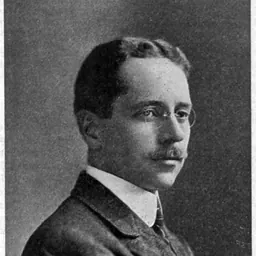
Contemporaries
People whose lives overlapped Paul Zucker's



Frequently asked questions
Who was Paul Zucker?
German American architect (1888–1971)
When was Paul Zucker born?
Paul Zucker was born on 14 August 1888 in Berlin.
When did Paul Zucker die?
Paul Zucker died on 12 February 1971 in New York City.
What was Paul Zucker's occupation?
Paul Zucker was an architect, art historian, historian, journalist and docent.
What nationality was Paul Zucker?
Paul Zucker was German.
Sources & further reading
Cite this page
APA: Biography.guide. (2026). Paul Zucker. https://biography.guide/paul-zucker/
MLA: "Paul Zucker." Biography.guide, https://biography.guide/paul-zucker/.
Chicago: "Paul Zucker." Biography.guide. https://biography.guide/paul-zucker/.
Data last updated: 2026-09-20 · Spot an error? Report a correction.
Page generated 2026-09-27 05:18 UTC