
About Paul White
Lived 1902 – 1955 (aged 53). Paul White was an American journalist and news director.
Paul Welrose White (June 6, 1902 – July 9, 1955) was an American journalist and news director who founded the Columbia Broadcasting System's news division in 1933 and directed it for 13 years. His leadership spanned World War II and earned a 1945 Peabody Award for CBS Radio. After his departure from CBS in 1946, he wrote a textbook on broadcast journalism, News on the Air. Since 1956, the Radio Television Digital News Association has presented the Paul White Award for lifetime achievement as its highest honor.
Biography Paul Welrose White was born June 6, 1902, in Pittsburg, Kansas, the son of Paul Welrose White and Anna (Pickard) White. His early newspaper experience included reporting for The Pittsburg Headlight in 1918 and The Salina Journal in 1919, and working as a telegraph editor of The Kansas City Journal in 1920. White studied at the University of Kansas for two years (1920–21), before transferring to Columbia University. He received a Bachelor of Literature degree (1923) and a Master of Science degree (1924) from the Columbia University Graduate School of Journalism. While studying at Columbia, he reported for The New York Evening Bulletin and was a contributor to the New York Sunday World.
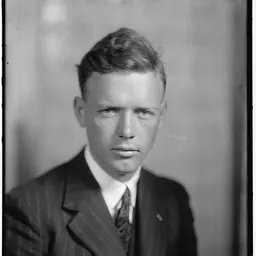
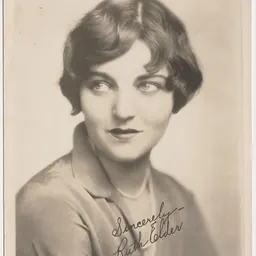
White became a correspondent for the United Press, covering stories ranging from the sensational trials of Ruth Snyder, Earl Carroll and the Hall–Mills murder case to the historic flights of Charles Lindbergh, Ruth Elder and Richard E. Byrd. White worked his way up to becoming editor of United Features Syndicate.
In 1929, the Columbia Broadcasting System began making regular radio news broadcasts — five-minute summaries taken from reports from the United Press, one of the three wire services that supplied newspapers with national and international news. In December 1930, CBS chief William S. Paley hired White away from United Press as CBS's news editor. Paley put the radio network's news operation at the same level as entertainment, and authorized White to interrupt programming if events warranted. Along with other networks, CBS chafed at the breaking news embargo imposed upon radio by the wire services, which prevented them from using bulletins until they first appeared in print. CBS disregarded an embargo when it broke the story of the Lindbergh kidnapping in 1932, using live on-the-air reporting. Radio networks scooped print outlets with news of the 1932 presidential election. The American Newspaper Publishers Association retaliated by closing the wire services to radio.
In March 1933, White was named vice president and general manager in charge of news at CBS.
Within the year, the conventional press wanted to compromise. In December 1933, the Press-Radio Bureau was created — with another set of restrictions that were soon disregarded. "This was the last hurrah in the attempt by the press to control radio news," wrote radio historian John Dunning. "Radio had discovered its own capability." Bill Downs, In the process, he assumed a central role in the establishment of a new broadcast division within CBS consisting of sixty four stations which distributed vital news, music and cultural programming in support of Pan-Americanism for the government's Office of the Coordinator of Inter-American Affairs chaired by Nelson Rockefeller.
White and CBS received a 1945 Peabody Award for Outstanding Reporting of the News. He left CBS in May 1946 to write a textbook, News on the Air (1947), and for health reasons he moved to San Diego, California, in 1947. He accepted the position of associate editor of The San Diego Journal and became news director of KFMB radio and television in 1950. He covered the Republican and Democratic National Conventions in Chicago for CBS in 1952.
Don’t just read it —
keep it.
Full-length biographies made to live with: read them, listen on the way to work, watch them tonight.
- E-book
- Audio
- Video
Instant download · yours to keep · every purchase keeps this site free
Important facts
People in Paul White's life
Named in this biography and alive at the same time



Related people
Same field, nearest in time



Contemporaries
People whose lives overlapped Paul White's




Frequently asked questions
Who was Paul White?
American journalist and founder of CBS News (1902–1955)
When was Paul White born?
Paul White was born on 6 June 1902 in Pittsburg.
When did Paul White die?
Paul White died on 9 July 1955 in San Diego.
What was Paul White's occupation?
Paul White was a journalist and news director.
What nationality was Paul White?
Paul White was American.
Sources & further reading
· DBpedia: Paul White (journalist)
Cite this page
APA: Biography.guide. (2026). Paul White. https://biography.guide/paul-white-journalist/
MLA: "Paul White." Biography.guide, https://biography.guide/paul-white-journalist/.
Chicago: "Paul White." Biography.guide. https://biography.guide/paul-white-journalist/.
Data last updated: 2026-09-22 · Spot an error? Report a correction.
Page generated 2026-09-27 05:26 UTC