
Paul Wellington Furse
Royal Navy rear-admiral & Botanical Collector
About Paul Wellington Furse
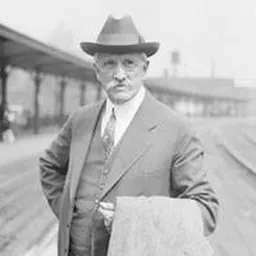
Lived 1904 – 1978 (aged 73–74). Paul Wellington Furse was a rear admiral and botanical collector.
John Paul Wellington Furse, (13 October 1904 – 8 October 1978) was an English naval officer who became a rear-admiral before he retired. He was a painter and botanical illustrator and later a plant hunter with his wife for the Royal Horticultural Society.
Family John Paul Wellington Furse was born in Frimley, Surrey, England. He was the son of portrait painter Charles Wellington Furse and (a British nursing and military administrator) Dame Katharine Furse (formerly Katharine Symonds). His father died in the same week Furse was born. He had 4 uncles and 4 aunts. Including; Rev. Michael Bolton Furse (12 October 1870 – 18 June 1955), an Anglican bishop and Sir William Thomas Furse (21 April 1865 – 31 May 1953), an army lieutenant general.
His great-aunt was the botanical artist Marianne North (24 October 1830 – 30 August 1890). Peter enlisted into the Royal Navy in 1918 (during World War 1), he was a cartographer. In 1922, he graduated from Emmanuel College, University of Cambridge. On 25 June 1931, he married Barbara Elizabeth Ross, they then lived in Nairobi, Kenya, and had a daughter Elizabeth Furse in 1936. They then moved to Cape Town, South Africa. During World War II, he returned to the Royal Navy and was eventually made lieutenant commander. After the war, he returned to South Africa before they eventually retired to Hampton, New Brunswick, Canada, since his wife was originally Canadian born. His daughter Elizabeth Furse (13 October 1936 – 18 April 2021) was a member of the United States House of Representatives from 1993 to 1999.
Furse married Cicely Rathbone (1899–1991), on 7 April 1929 in London, England. Cicely was often known as Polly. His mother, Katharine, had gone with Polly and Paul to Switzerland later in 1929. He also joined the Navy, and became an engineer, like his father. He later married an Australian girl, was assigned to an aircraft carrier in Borneo, and then returned to greet his son Ralf. He had two years as senior engineer on HMS Ark Royal. Later he was a staff engineer on (his first frigate). John R. Furse wrote a book Elephant Island: An Antarctic Expedition published on 16 October 1979, with the royalties going to the RGS. He died on 30 October 2018.
Naval career He was commissioned into the Royal Navy in 1918,
In 1925, he became a sub-lieutenant and then in 1926, he was posted to the aircraft carrier , which was initially assigned to the Mediterranean Fleet.
In December 1939, he was promoted to commander Cdr.
He returned to HMS President between 1947 and 1950. In December 1948, he was promoted to captain. Then he became director of aircraft maintenance and repair for the Admiralty between 1955 and 1958.
He was then appointed a Companion of the Order of the Bath (CB) on 1 January 1958. His last post was of director general of the Aircraft Department for the Admiralty between 1958 and 1959, He then retired from Royal Navy in 1959, They drove from England in a Land Rover packed full of equipment to explore the mountain passes, that had hardly been seen before. They went with a party of explorers including Patrick Synge, the then editor of 'Journal of the Royal Horticultural Society'. The party travelled over 6,000 miles in 2 months exploring. This first trip resulted in just over 900 collections of plants. Including the yellow crown imperial, Fritillaria raddeana (from the Kopet Dagh on the borders of Turkmenia or Iran), Iris afghanica (from the Salang Pass, north of Kabul), and also from the Black Sea coast, Iris lazica .
In 1964, they carried out a botanical expedition in conjunction again with the Royal Horticultural Society botanist Patrick Synge, to Afghanistan, Both of their 1964 and 1966 expeditions had resulted in the collection of nearly 4,200 specimens.
Furse had a passion and specialist knowledge for fritillarias, and also for irises, daffodils, tulips, crocuses, colchicums, lilies and other bulbous plants. It is claimed that Furse had illustrated nearly every known species of lily. letters and various specimens.
Plant honours Furse was made a Fellow of the Linnean Society of London in January 1964.
In 1965, Furse was awarded by The British Iris Society, the Foster Memorial Plaque (named after Sir Michael Foster).
Campanula 'Paul Furse' (a blue-violet flowers on arching stems with a branching habit) was named after him.
He was also remembered in Eremurus furseorum (from Afghanistan), published in 1966, Fessia furseorum (from NE. Afghanistan), originally Scilla furseorum , (published in 1967), and also Sempervivum furseorum,
Iris furseorum , which was collected in N.E. Afghanistan by Paul and Polly Furse in 1966 and has been maintained in cultivation. It was first published in Curtis's Botanical Magazine Vol.31 on page 257 in 2014.
His illustrations from the Lindley Library, were displayed in 'The Royal Horticultural Society Pocket Diary 2021'.
Publications Furse, J. P. W., (1963), Irises in Iran and Turkey, The Iris Year Book 1963, p. 135-144. Furse, J. P. W., (1965), Irises in Iran and Afghanistan, The Iris Year Book 1965, p. 100-112. Furse, J. P. W., (1966), Journal of the Royal Horticultural Society 91: fig. 8. Iris platyptera as 'Old Smokey'. Furse, J. P. W., (1966), The Iris Year Book 1965, p. 106. The British Iris Society. Iris platyptera as 'Old Smokey'. Furse, J. P. W., (1968), Iris in Turkey, Iran and Afghanistan., The Iris Year Book 1968, p. 63-77. The British Iris Society. Iris doabensis as 'Doab Gold'. p. 71 Napier, Elspeth (ed), The Lily Year Book for 1971 (includes two group discussions - the first on Hostas with contributions from Chris Brickell, G.S. Thomas and William Stearn, and the second discussion on Scillas and Chionodoxas led by Paul Furse) Furse, J. P. W., (1971), Iris species in the wild. In International Rock Garden Plant Conference, 4th, Harrogate, 1971. The world of rock plants: 46–49. Furse, J. P. W., (1971), Oncocyclus and Regelia irises in Turkey, Iran and Afghanistan. Iris Year Book 1971, 119–132. Furse, J. P. W. (1972), Iris Reticulata Section, Furse, J. P. W., (1973), Iris reticulata section or the genus Iridodictyum. Iris Yearbook 1972, 103–111. Furse, J. P. W., (1975), Irises in Iran and Afghanistan, 1964. Aril Society International Yearbook 1975: 52–55. Furse, J. P. W., (1975), Irises in Iran and Turkey. Aril Society International Yearbook 1975, 55–58. Quart. Bull. Alpine Garde Soc. V.45, page 112-119 1977, Times 12 October 1978, Iris Yearbook 1978 pages 15–16, Quart. Bull. Alpine Garde Soc. V.47 page 86, 1979, Lilies 1978/79 page 88-89
Death Furse died on 8 October 1978 at age 73 in Kent, England.
Awards and decorations
Don’t just read it —
keep it.
Full-length biographies made to live with: read them, listen on the way to work, watch them tonight.
- E-book
- Audio
- Video
Instant download · yours to keep · every purchase keeps this site free
Important facts
People in Paul Wellington Furse's life
Named in this biography and alive at the same time






Contemporaries
People whose lives overlapped Paul Wellington Furse's
Frequently asked questions
Who was Paul Wellington Furse?
Royal Navy rear-admiral & Botanical Collector
When was Paul Wellington Furse born?
Paul Wellington Furse was born in 1904.
When did Paul Wellington Furse die?
Paul Wellington Furse died in 1978.
What was Paul Wellington Furse's occupation?
Paul Wellington Furse was a rear admiral and botanical collector.
Sources & further reading
· Wikipedia: Paul Wellington Furse
Cite this page
APA: Biography.guide. (2026). Paul Wellington Furse. https://biography.guide/paul-wellington-furse/
MLA: "Paul Wellington Furse." Biography.guide, https://biography.guide/paul-wellington-furse/.
Chicago: "Paul Wellington Furse." Biography.guide. https://biography.guide/paul-wellington-furse/.
Data last updated: 2026-09-20 · Spot an error? Report a correction.
Page generated 2026-09-27 04:58 UTC