
About Paul Sethe
Lived 1901 – 1967 (aged 65). Paul Sethe was a German journalist, writer, opinion journalist, humanities scholar and historian.
Paul Sethe (12 December 1901 – 21 June 1967) was a German writer and journalist.
Life and work Sethe studied history, German and art history at the University of Bonn. In 1932 he received his doctorate with thesis about the British naval command from 1911 to 1915: "The Missing Sea Battle". From 1934 until the newspaper was banned in 1943 by the Nazis, he was editor of the Frankfurter Zeitung. Carl Friedrich Goerdeler, one of the heads of the German resistance to Nazism, had suggested Sethe as the editor-in-chief of the newspaper that the Widerstand was planning to publish after the 20 July plot.
After World War II Sethe was one of the founding editors of the Frankfurter Allgemeine Zeitung, which developed very soon to the leading national newspapers in Germany. He announced his resignation 1955 because his co-editors did not share his critical opinion concerning the German foreign policy at that time. Afterwards he wrote for Die Welt, Die Zeit and Stern.
Paul Sethe was an active member of the Freemasonry.
In Berlin the Setheweg (Sethe-path) was named after him in 1980.
Positions Sethe was one of the leading journalists ("Doyen of German journalism", "grand old man of West German journalism" ) of the post-war era in Germany. He regarded his profession as the "conscience of the nation". He was considered conservative and wrote primarily about German politics and German history. He argued against one-sided ties to the West and for increased contact with the East, which brought him in conflict with the Federal Government and the mainstream at that time. He was a severe critic of Konrad Adenauer's foreign policy and advocated rapprochement with the East. Sethe always insisted on his opinion that there had been several "missed opportunities" of German politics, for example the Soviet March note of 1952 as a neglected starting point for reunification.
His most cited sentence comes from a letter to the editor in Der Spiegel on 4 May 1965: “Freedom of the press is the freedom of two hundred rich people to spread their opinions.”
Publications In addition to his journalistic activities, Sethe wrote a number of books and historical studies (very short selection):
Im Banne der Grauen Eminenz (Under the spell of the gray eminence) Stuttgart: Franckh 1936. Schicksalsstunden der Weltgeschichte (Fateful hours in world history) Frankfurt: Scheffler 1952. Die großen Tage (The big days) Frankfurt: Scheffler 1953 Epochen der Weltgeschichte (Epochs of world history) Frankfurt: Scheffler 1955 A Short History of Russia. Chicago: Gateway Editions 1956 Zwischen Bonn und Moskau (Between Bonn and Moscow) Frankfurt: Scheffler 1956. Die großen Entscheidungen (The big decisions) Frankfurt: Scheffler 1958 Deutsche Geschichte im letzten Jahrhundert (German history in the last century) Frankfurt: Scheffler 1960. Morgenröte der Gegenwart (Dawn of the present) Stuttgart: Deutsche Verlagsanstalt 1963. Das Fundament unserer Zukunft (The foundation of our future) Düsseldorf: Econ 1964. Russische Geschichte (Russian history) Frankfurt: Scheffler 1965. Öffnung nach Osten (Opening to the east) Frankfurt: Scheffler 1966. In Wasser geschrieben (Written in water) Frankfurt: Scheffler 1968. Das machte Geschichte (That made history) Frankfurt: Scheffler 1969. Geschichte der Deutschen (History of the Germans) Frankfurt: Societäts-Verlag 1977.
Don’t just read it —
keep it.
Full-length biographies made to live with: read them, listen on the way to work, watch them tonight.
- E-book
- Audio
- Video
Instant download · yours to keep · every purchase keeps this site free
Important facts
People in Paul Sethe's life
Named in this biography and alive at the same time

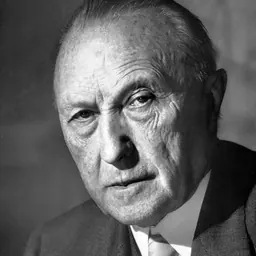
Related people
Same field, nearest in time



Contemporaries
People whose lives overlapped Paul Sethe's



Frequently asked questions
Who was Paul Sethe?
German writer and journalist (1901–1967)
When was Paul Sethe born?
Paul Sethe was born on 12 December 1901 in Bochum.
When did Paul Sethe die?
Paul Sethe died on 21 June 1967 in Hamburg.
What was Paul Sethe's occupation?
Paul Sethe was a journalist, writer, opinion journalist, humanities scholar and historian.
What nationality was Paul Sethe?
Paul Sethe was German.
Sources & further reading
Cite this page
APA: Biography.guide. (2026). Paul Sethe. https://biography.guide/paul-sethe/
MLA: "Paul Sethe." Biography.guide, https://biography.guide/paul-sethe/.
Chicago: "Paul Sethe." Biography.guide. https://biography.guide/paul-sethe/.
Data last updated: 2026-09-20 · Spot an error? Report a correction.
Page generated 2026-09-27 05:19 UTC