
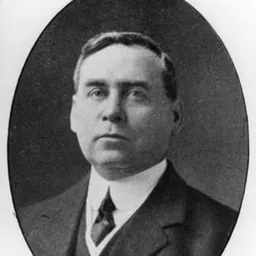
Paul Seligman
Philosopher
About Paul Seligman
Lived 1903 – 1985 (aged 81–82).
Paul Seligman was a teacher and scholar born in 1903 in Bingen am Rhein, Germany.
During the Nazi rise to power, he was involved in the creation of at least three documentary films alongside Ella Bergmann-Michel as a producer, creating an essay pleading that film should remain independent and free for one of the films. After this initial collaboration was eventually made to stop, he made a film of his own called Frühjahr 1933 (Spring 1933). moving to the United Kingdom, where he eventually enrolled in Birkbeck, University of London, to study philosophy, finishing his Ph. D. degree in 1956.
After brain haemorrhage, Paul Seligman passed away in University Hospital (London, Ontario) the 2nd of March 1985, Soon after, the University of Waterloo begun offering a scholarship to his name.
Throughout his last days of life, he was part of the C. G. Jung foundation in the Toronto Branch, becoming the first president of said foundation, and actively gave seminars to University of Waterloo students regarding Jungian thought and psychology. showed his unpublished film and an interview from 1976.
The Apeiron of Anaximander The thesis turned book is a recollection and interpretation of the accounts and commentaries of The Apeiron(/əˈpaɪˌrɒn/ ; ἄπειρον) and the Adikia (ᾰ̓δῐκῐ́ᾱ'') doctrine by philosophers including Aristotle, Theophrastus, Simplicius of Cilicia, amongst others.
Printed and published by the Athlone Press of the University of London in 1962, Seligman intended to reshape the understanding contemporary scholars had of the Apeiron and the Adikia by separating the concepts and attempting an understanding of the philosophical value in regards to metaphysics, and to uncover disregarded aspects of Anaximander's thought and works.
The book is separated into three main themes, and within the 15 chapters, Seligman attempts to reveal the real meaning of the Apeiron and where it could have emerged, understanding Anaximander's view as a natural evolution from initial cosmogonical and cosmological theories through history, and proposing that Metaphysics is a rational field that gives impulse to tangible science while trying to demonstrate how Anaximander was that initial philosopher who moved his work away from mythos, creating a principle that surpassed the metaphysical idea and turned into the basis of philosophical development.
The book also serves as a mild critique to Aristotle's way of work, despite his understanding of the importance of Aristotle in the shaping of what we know about Anaximander.
Don’t just read it —
keep it.
Full-length biographies made to live with: read them, listen on the way to work, watch them tonight.
- E-book
- Audio
- Video
Instant download · yours to keep · every purchase keeps this site free
Important facts
People in Paul Seligman's life
Named in this biography and alive at the same time

Contemporaries
People whose lives overlapped Paul Seligman's

Frequently asked questions
Who was Paul Seligman?
philosopher (1903–1985)
When was Paul Seligman born?
Paul Seligman was born in 1903.
When did Paul Seligman die?
Paul Seligman died on 2 March 1985.
Sources & further reading
Cite this page
APA: Biography.guide. (2026). Paul Seligman. https://biography.guide/paul-seligman/
MLA: "Paul Seligman." Biography.guide, https://biography.guide/paul-seligman/.
Chicago: "Paul Seligman." Biography.guide. https://biography.guide/paul-seligman/.
Data last updated: 2026-09-20 · Spot an error? Report a correction.
Page generated 2026-09-27 05:15 UTC