
About Paul Scharner
Born 1980. Paul Scharner is an Austrian association football player.
Paul Josef Herbert Scharner (born 11 March 1980) is an Austrian retired footballer who played as a defender and midfielder.
Scharner started his professional career with Austrian Bundesliga sides Austria Wien and SV Salzburg, before moving to Norwegian Tippeligaen in late 2004, starting for SK Brann. In January 2006, he entered the Premier League where he played for over six years, playing for Wigan Athletic and West Bromwich Albion, respectively. After a short time as a free agent, he transferred to Bundesliga veteran club Hamburger SV in August 2012, before returning to Wigan Athletic on loan in January 2013 - winning the FA Cup. He announced his retirement, at age 33, in September 2013.
Early life and youth career Born in Scheibbs, Scharner grew up in Purgstall an der Erlauf, where he also started his playing career with local site SVG Purgstall at the age of seven, playing for the club's U-8 team. He stayed with the club until 1993, when he transferred to FCN St. Pölten, which he left in 1996 for Austria Wien, the club where he would receive his first professional contract in 1999. He played for their U-17 and U-18 and later for the club's amateurs, while also getting vocational education in the field of electrical engineering.
Professional career
Austria Wien After rising through the youth ranks of the club and playing for the U-17, U-18 and amateur squads, and received his first professional contract in May 1999.
Similar to the last season, Scharner played the first team only in friendly matches at the beginning, before returning to the Bundesliga in the eleventh round on 11 September against GAK as a substitute, in mid October against SW Bregenz as a time stoppage and in late November against LASK Linz. In total he made twelve appearances in the league, nine of which as a starter, while receiving three yellow cards. He made his ÖFB-Cup debut in the second round in late October against SV Würmla and returned for four other matches, while being crucial for the loss against SV Salzburg by receiving a second yellow card in the 23rd minute of play. He scored his first two goals for the Austria in a friendly match against Wiener Neudorf in February.
2000/2001 and 2001/2002 seasons His first matches in the new season also marked his debut on the international stage, playing four matches in the UEFA Intertoto Cup, competing with Nea Salamis Famagusta FC and Ceahlăul Piatra Neamţ, respectively. That season, he made only one appearance in the ÖFB-Cup, in the second round against Wiener Neustadt. In the league, he firstly played in the ninth round against Bregenz, but did not become a part of the team again until the 16th round, but played every game until the 23rd round then. After that, his appearances became fewer until the end of the season. He collected a total of three yellow cards that season, playing 14 games.
To further develop his skills and to give him more minutes, Scharner was loaned to then-Austria affiliate club SG Untersiebenbrunn in the Erste Liga from July to October 2001, where he scored five goals in 16 league matches and also played in the ÖFB-Cup. He returned to his club in November and started getting minutes by the end of the month, playing against Rapid Wien, SV Salzburg and FC Kärnten. In the second half of the season he developed himself as a starter, seeing the kick-off in twelve of his 13 games, while seeing four yellow cards that season. He made his first goal for Austria Wien in a professional competition, opening the scoring in a Bundesliga match against Sturm Graz on 30 March. His strong away round also brought him into the Austria national football team, debuting in a 0:0 against Cameroon on 17 April 2002. His breakthrough season also marked his most successful with the club, as Austria won the Bundesliga, the ÖFB-Cup and the Austrian Supercup.
Scharner played nine league games for Austria Wien the next season, scoring one goal and receiving three yellow cards until September, as well as competing in the UEFA Champions League qualification against Olympique Marseille, losing the home game and tying in the away game, which led to an UEFA Cup match against Borussia Dortmund, which was also lost. He was kicked from the team in mid October, after then-coach Joachim Löw intended to substitute him as a right midfielder, a position he did not like to play. After refusing his substitution and later stating: "The coach and I discussed where I can help the team the most, but the coach always uses me elsewhere. I already played on seven different positions. But I'm continuing my path." he was suspended from Austria and was forced to look for a new team.
After being kicked by Joachim Löw, Scharner transferred to relegation battler SV Salzburg in January to help them for the rest of the season. He made a total of 13 league games for Salzburg that season, 4 of which were won and three tied, scoring two goals, against Wacker Mödling and Bregenz, respectively. He saw his first yellow/red card in a 3:2 win against Kärnten, the same site that kicked Salzburg out of the 1/8 finale in the ÖFB-Cup, sweeping them 4:0. He collected a total of five yellow cards that season. The team managed to avoid relegation at the end of the season.
Although the relegation was avoided last season, Scharner surprisingly pressed a transfer to SK Brann shortly before the closure of the transfer window, leaving Salzburg early in the season. In his short stint with Salzburg that season, Scharner made a total of five league matches, scoring one goal against Bregenz and receiving one yellow and one yellow/red card.
SK Brann After avoiding relegation with Salzburg, Scharner was expected to fulfill his contract, but surprisingly pressed a transfer to Norwegian Tippeligaen club SK Brann on the last day of the summer transfer period. He signed a 2.5-year contract. thus qualifying for the UEFA Cup qualification, where they overcame AC Allianssi, but lost both games against Lokomotiv Moscow the next round.
The following year, he developed himself into a starter for the Norwegian side, playing 29 games while scoring five goals and receiving four yellow cards. When he left the club after the 2005 season, he had played 32 league matches, scoring seven goals. Scharner was elected Brann's Player of the Year in 2005.
Wigan Athletic After finishing the 2005 season with SK Brann, Scharner signed a 3.5-year deal with Wigan Athletic on 22 December 2005, and joined the squad after the holidays. Wigan agreed to pay a fee of £2,500,000 (€3,700,000, 29,500,000 NOK), making it the biggest transfer in Brann's history.
Scharner joined Wigan for the second half of the 2005–06 season. In his first match for Wigan, Scharner scored the winning goal against Arsenal in the League Cup at the JJB Stadium. He went on to start in the final for Wigan that season, a 4–0 defeat to Manchester United. He scored his first Premier League goal in the 24th round in a 1–1 draw with Everton. He quickly emerged as a starter, playing all games from the 22nd round onwards, scoring three goals while receiving five yellow cards.
He continued his leading role the next season, this time Wigan were battling relegation . He started for much of the first half of the season, scoring two goals in an away-tie against Everton, receiving five yellow cards in that half of the season. Injury kept him off the field for much of the second half, returning not until the 30th round in a match against Fulham. he collected four yellow cards this time around and scored one goal in the last game of the season, a 1–2 away-win against Sheffield United. This one goal proved to be crucial that season, as his performance in the game safed Wigan from relegation at the final day of play, sending their opponent to The Championship instead, by a goal difference of just one.
The 2007–08 season saw Wigan battling relegation once again. Again, Paul Scharner was a vital part of the team, starting in almost every game of the season, while scoring four goals and receiving six yellow cards. He scored his first goal of the season in the fourth round against West Ham United. He helped his team with a goal in the third round of the FA Cup against Sunderland but Wigan lost to Chelsea in the next round. Wigan finished the season on the 13th place, having earned 40 points, while Scharner was elected Wigan's player of the year.
Aside from reaching the third round in the FA Cup and the fourth in the League Cup, Scharner made a total of 27 league games the following season, scoring no goals while receiving three yellow cards, lifting Wigan Athletic to a solid eleventh place, having earned 45 points. On 22 March 2009, he became the first Wigan player to play 100 Premier League games, playing an outstanding 77 minutes in a 1–0 win at home to Hull City.
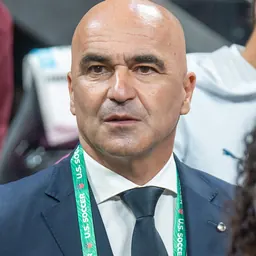
In his final season for Wigan, he played in all 38 league games, scoring four goals while receiving six yellow cards. Wigan lost to Blackpool in the second round of the League Cup and to Notts County in the fourth round of the FA Cup. On 30 August 2009, he scored his first goal of the season against Everton. After a 5–0 defeat to Manchester United, Wigan manager Roberto Martínez preferred to use Scharner in an attacking midfield role. Scharner was a part of the team in November 2009 that suffered a historical 9–1 loss at the hands of Tottenham, scoring Wigan's only goal in the fixture although, when controlling the ball prior to shooting, he appeared to handle it. On 19 April 2010, he announced his decision to leave Wigan Athletic at the end of the 2009–10 season.
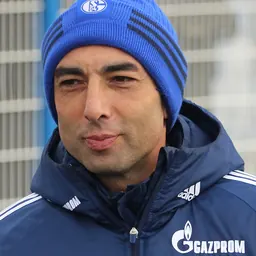
West Bromwich Albion On 30 August 2010, Scharner joined newly promoted Premier League side West Bromwich Albion on a two-year deal, having been a free agent since his release by Wigan. Teammate James Morrison has since praised his performances, saying that although Scharner is "a weirdo", has made a positive impact on the team. He made the switch to West Brom with the intent of no longer playing in central defence when manager Roberto Di Matteo told him he will be used as a midfielder.
After his league debut in a 1–1 draw against Tottenham Hotspur in the fourth round, West Brom went on a five-game unbeaten run, including a win against Arsenal and a draw against Manchester United. He scored his first goal for West Brom in a 4-1 away win against Everton, helping Albion to their first league win at Goodison Park since 1979. He received seven yellow cards and was sent off once that season, while scoring four goals. His club finished the season in eleventh place with 47 points.
The next season, his final year in the Premier League, Scharner played 29 games for West Brom, mostly as a starter. He scored three goals while receiving six yellow cards. His team reached the third round in the League Cup, losing to Everton. On 22 October 2011, Scharner scored a historic winner in a 2-1 away win against rivals Aston Villa, which was Albion's first league win at Villa Park since 1979. West Brom earned 47 points again, finishing in tenth place. After not meeting a clause in his contract that would trigger a twelve-month extension, Scharner announced on 8 May that he would be leaving West Brom in the summer and search for a new challenge.
Hamburger SV After his contract with West Bromwich Albion ended, Scharner was linked to Eintracht Frankfurt but after absolving a week of training there, Scharner was not signed by Frankfurt and instead moved to Bundesliga veteran club Hamburger SV, where he received a two-year contract. When talking to coach Thorsten Fink for the first time prior to signing his contract, he prepared a list of ten questions he wanted to ask his new coach, a fact that surprised and impressed Fink.
Return to Wigan After four senior Bundesliga appearances in the 2012–13 season with Hamburg, Scharner was signed on loan by former club Wigan Athletic, on transfer deadline day. He helped the club to reach the FA Cup final after they beat Millwall 2–0 at Wembley. Scharner said it was his "best moment in football". On 11 May 2013 Scharner won the FA Cup with Wigan, playing the whole game in a 1–0 upset win against Manchester City. Only three days later, Wigan were relegated from the Premier League following a 4–1 defeat against Arsenal.
International career Scharner started playing for Austria at the under-21 level, debuting against Spain in 2000. He played a total of twelve matches on that level, scoring no goals.
Scharner debuted for the Austria national football team in a 0–0 draw with Cameroon on 17 April 2002. The chairmanship of the ÖFB has stated that he will never play for Austria again, no matter who coaches it. He played a total of 40 matches, scoring no goals.
Style of play Scharner usually serves as a central defender or midfielder. Nevertheless, he is noted for his positional flexibility, having played every outfield position for Wigan except left back. This versatility was already evident early in his career. While at Austria Wien his former coach Joachim Löw played him in various positions and although, over his career he has performed well whatever position he has been selected to play, he has let it be known he prefers playing in a defensive position. Scharner believes, "You can train your mind as well as your body."
Image Scharner's disputes with coaches at both club and international level have brought him media attention: a 2012 feature in Österreich described him as "still an awkward customer" . In England, he is remembered largely for his professionalism, focus and his energetic performances, as well as his close relationship and identification with the fans of his former teams.
International Statistics as of 19 August 2012.
Honours Austria Wien Austrian Bundesliga: 2002–03
Individual SK Brann's Player of the Year: 2005
Don’t just read it —
keep it.
Full-length biographies made to live with: read them, listen on the way to work, watch them tonight.
- E-book
- Audio
- Video
Instant download · yours to keep · every purchase keeps this site free
Important facts
People in Paul Scharner's life
Named in this biography and alive at the same time



Related people
Same field, nearest in time






Contemporaries
People whose lives overlapped Paul Scharner's




Frequently asked questions
Who is Paul Scharner?
Austrian footballer
When was Paul Scharner born?
Paul Scharner was born on 11 March 1980 in Scheibbs.
What is Paul Scharner's occupation?
Paul Scharner is an association football player.
What nationality is Paul Scharner?
Paul Scharner is Austrian.
Sources & further reading
Cite this page
APA: Biography.guide. (2026). Paul Scharner. https://biography.guide/paul-scharner/
MLA: "Paul Scharner." Biography.guide, https://biography.guide/paul-scharner/.
Chicago: "Paul Scharner." Biography.guide. https://biography.guide/paul-scharner/.
Data last updated: 2026-09-20 · Spot an error? Report a correction.
Page generated 2026-09-27 05:31 UTC