
Paul Marquard
German classical philologist and musicologist
About Paul Marquard
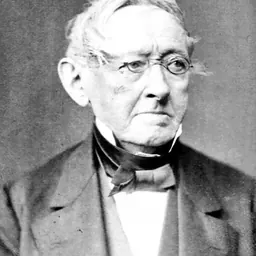
Lived 1836 – 1872 (aged 36). Paul Marquard was a German teacher, classical philologist, music historian, pedagogue and musicologist.
Paul Marquard (8 October 1836 – 7 December 1872) was a German classical philologist and music historian.
Life Born in Drezdenko, Marquard, the son of pastor Friedrich Rudolf Marquard (ca. 1801-1853) and Auguste née Müller, received his first lessons from his father and then attended the Joachimsthalsches Gymnasium in Berlin. After the early death of his father, his teachers there became important reference persons for him. In the vita of his dissertation, he later mentioned above all the director August Meineke, the teacher Karl Pomptow (1819-1879) and his fellow pupil Adolf Kiessling (1837-1893), who supported him during his studies. After graduating from high school (1857), Marquard studied classical philology, philosophy and theology, first at the Humboldt University of Berlin, then, from the winter semester 1857/1858, at the Rheinische Friedrich-Wilhelms-Universität Bonn with Otto Jahn, Friedrich Ritschl and Friedrich Gottlieb Welcker. After the state examination, he taught first at the Bender'sche Erziehungsanstalt für Knaben in Weinheim, then at the Instituut Noorthey (founded by Petrus de Raadt) in Veur (Leidschendam-Voorburg, Netherlands). In 1863, Marquard received his doctorate in Bonn. His fellow students , Curt Wachsmuth and Lucian Müller were his competitors.
From 1865, Marquard taught at the in Berlin, where he was appointed a full teacher. During this time, he continued his scientific work, which was mainly concerned with ancient music theory. He undertook research trips to various libraries to study the manuscripts of the Greek music theorists. In 1868, his annotated, bilingual edition of the Harmonics of Aristoxenos was published, which remained fundamental long after its publication. Together with Hermann Deiters and Karl von Jan, Marquard planned a complete edition of the ancient music theorists, but this did not come about.
For health reasons Marquard retired on 1 October 1872. For recreation and further scientific work he travelled to Italy. On 7 December 1872, he died at the age of 36 years in Catania in Sicily.
Publications De Aristoxeni Tarentini elementis harmonicis. Bonn 1863 (Dissertation) Ἀριστοξένου ἁρμονικῶν τὰ σωζόμενα. Die harmonischen Fragmente des Aristoxenus. Griechisch und deutsch mit kritischem und exegetischem Commentar und einem Anhang die rhythmischen Fragmente des Aristoxenus enthaltend. Berlin 1868 Briefe über Berliner Erziehung. Berlin 1871 Briefe über nationale Erziehung. Leipzig 1872
Don’t just read it —
keep it.
Full-length biographies made to live with: read them, listen on the way to work, watch them tonight.
- E-book
- Audio
- Video
Instant download · yours to keep · every purchase keeps this site free
Important facts
People in Paul Marquard's life
Named in this biography and alive at the same time






Related people
Same field, nearest in time

Contemporaries
People whose lives overlapped Paul Marquard's



Frequently asked questions
Who was Paul Marquard?
German classical philologist and musicologist
When was Paul Marquard born?
Paul Marquard was born on 8 October 1836 in Drezdenko.
When did Paul Marquard die?
Paul Marquard died on 7 December 1872 in Catania.
What was Paul Marquard's occupation?
Paul Marquard was a teacher, classical philologist, music historian, pedagogue and musicologist.
What nationality was Paul Marquard?
Paul Marquard was German.
Sources & further reading
Cite this page
APA: Biography.guide. (2026). Paul Marquard. https://biography.guide/paul-marquard/
MLA: "Paul Marquard." Biography.guide, https://biography.guide/paul-marquard/.
Chicago: "Paul Marquard." Biography.guide. https://biography.guide/paul-marquard/.
Data last updated: 2026-09-20 · Spot an error? Report a correction.
Page generated 2026-09-27 05:09 UTC