
About Paul Manafort
Born 1949. Paul Manafort is an American consultant, lobbyist, jurist, political adviser and politician.
Paul John Manafort Jr. (; born April 1, 1949) is an American former lobbyist, political consultant, and attorney. A long-time Republican Party campaign consultant, he chaired the Trump presidential campaign from June to August 2016. Manafort served as an adviser to the U.S. presidential campaigns of Republicans Gerald Ford, Ronald Reagan, George H. W. Bush, and Bob Dole. In 1980, he co-founded the Washington, D.C.-based lobbying firm Black, Manafort & Stone, along with principals Charles R. Black Jr. and Roger Stone, joined by Peter G. Kelly in 1984. Manafort often lobbied on behalf of foreign leaders, including former President of Ukraine Viktor Yanukovych, former dictator of the Philippines Ferdinand Marcos, former dictator of Zaire Mobutu Sese Seko, and Angolan guerrilla leader Jonas Savimbi. Lobbying to serve the interests of foreign governments requires registration with the United States Department of Justice under the Foreign Agents Registration Act (FARA); on June 27, 2017, he retroactively registered as a foreign agent. The indictment came at the request of Robert Mueller's Special Counsel investigation. and he was ordered to jail.
Manafort was prosecuted in two federal courts. In August 2018, he stood trial in the United States District Court for the Eastern District of Virginia and was convicted on eight charges of tax and bank fraud. Manafort was next prosecuted on ten other charges, but this effort ended in a mistrial with Manafort later admitting his guilt. In the United States District Court for the District of Columbia, Manafort pled guilty to two charges of conspiracy to defraud the United States and witness tampering, while agreeing to cooperate with prosecutors.
On November 26, 2018, Mueller reported that Manafort violated his plea deal by repeatedly lying to investigators. On February 13, 2019, D.C. District Court Judge Amy Berman Jackson concurred, voiding the plea deal. On March 7, 2019, Judge T. S. Ellis III sentenced Manafort to 47 months in prison. On March 13, 2019, Jackson sentenced Manafort to an additional 43 months in prison. Minutes after his sentencing, New York state prosecutors charged Manafort with sixteen state felonies. On December 18, 2019, the state charges against him were dismissed because of the doctrine of double jeopardy. In August 2020, the Republican-controlled United States Senate Select Committee on Intelligence concluded in August 2020 that Manafort's ties to individuals connected to Russian intelligence while he was Trump's campaign manager "represented a grave counterintelligence threat" by creating opportunities for "Russian intelligence services to exert influence over, and acquire confidential information on, the Trump campaign."
On May 13, 2020, Manafort was released to home confinement due to the threat of getting infected with COVID-19. On December 23, 2020, then-U.S. President Donald Trump pardoned Manafort.
In mid-March 2024, Manafort reemerged on the political scene, with reports suggesting that he intended to participate in Donald Trump's 2024 presidential campaign. Following Trump's victory at the 2024 United States presidential election, Manafort reportedly cooperated with several individuals from Trump's inner circle (including Tony Fabrizio and Chris LaCivita), as they worked as consultants to the electoral campaign of the former President and Prime Minister of Albania, Sali Berisha's political party, Alliance for a Magnificent Albania, in the 2025 Albanian parliamentary election.
Early life and education Paul John Manafort Jr. was born on April 1, 1949, in New Britain, Connecticut. Manafort's parents are Antoinette Mary Manafort (born Cifalu; 1921–2003) and Paul John Manafort Sr. (1923–2013). His grandfather immigrated to the United States from Italy in the early 20th century, settling in Connecticut. He founded the construction company New Britain House Wrecking Company in 1919 (later renamed Manafort Brothers Inc.). His father served in the U.S. Army combat engineers during World War II His father was indicted in a corruption scandal in 1981 but was not convicted.
In 1967, Manafort graduated from St. Thomas Aquinas High School, a private Roman Catholic secondary school, in New Britain. He attended Georgetown University, where he received his B.S. in business administration in 1971 and his J.D. in 1974.
Career Between 1977 and 1980, Manafort practiced law with the firm of Vorys, Sater, Seymour and Pease in Washington, D.C. Between 1978 and 1980, Manafort served as the southern coordinator for Ronald Reagan's presidential campaign and the deputy political director at the Republican National Committee. After Reagan's election in November 1980, he was appointed associate director of the White House Presidential Personnel Office. In 1981, he was nominated to the board of directors of the Overseas Private Investment Corporation. and Bob Dole in 1996.
Chairman of Trump's 2016 campaign In February 2016, Manafort approached Trump through a mutual friend, Thomas J. Barrack Jr. He pointed out his experience advising presidential campaigns in the United States and around the world, described himself as an outsider not connected to the Washington establishment, and offered to work without salary. In March 2016, he joined Trump's presidential campaign to take the lead in getting commitments from convention delegates. On June 20, 2016, Trump fired campaign manager Corey Lewandowski and promoted Manafort to the position. Manafort gained control of the daily operations of the campaign as well as an expanded $20 million budget, hiring decisions, advertising, and media strategy.
On June 9, 2016, Manafort, Donald Trump Jr., and Jared Kushner were participants in a meeting with Russian attorney Natalia Veselnitskaya and several others at Trump Tower. A British music agent, saying he was acting on behalf of Emin Agalarov and the Russian government, had told Trump Jr. that he could obtain damaging information on Hillary Clinton if he met with a lawyer connected to the Kremlin. At first, Trump Jr. said the meeting had been primarily about the Russian ban on international adoptions (in response to the Magnitsky Act) and mentioned nothing about Mrs. Clinton; he later said the offer of information about Clinton had been a pretext to conceal Veselnitskaya's real agenda.
In August 2016, Manafort's connections to former Ukrainian President Viktor Yanukovych and his pro-Russian Party of Regions drew national attention in the US, where it was reported that Manafort may have received $12.7 million (~$ in ) in off-the-books funds from the Party of Regions.
On August 17, 2016, Trump received his first security briefing. On the same day, August 17, Trump shook up his campaign organization in a way that appeared to minimize Manafort's role. It was reported that members of Trump's family, particularly Kushner, who had originally been a strong backer of Manafort, had become uneasy about his Russian connections and suspected that he had not been forthright about them.
Manafort stated in an internal staff memorandum that he would "remain the campaign chairman and chief strategist, providing the big-picture, long-range campaign vision." However, two days later, Trump announced his acceptance of Manafort's resignation from the campaign after Steve Bannon and Kellyanne Conway took on senior leadership roles within that campaign.
Upon Manafort's resignation as campaign chairman, Newt Gingrich stated, "nobody should underestimate how much Paul Manafort did to really help get this campaign to where it is right now." Gingrich later added that, for the Trump administration, "It makes perfect sense for them to distance themselves from somebody who apparently didn't tell them what he was doing."
In January 2019, Manafort's lawyers submitted a filing to the court in response to the allegation that Manafort had lied to investigators. Through an error in redacting, the document accidentally revealed that while he was campaign chairman, Manafort met with Konstantin Kilimnik, a likely Russian intelligence officer and an alleged operative of the "Mariupol Plan," which would separate eastern Ukraine by political means with Manafort's assistance. The filing stated that Manafort gave him polling data related to the 2016 campaign and discussed a Ukrainian peace plan with him.
While Manafort served within the 2016 United States presidential election campaign, it is alleged that Manafort, via Kyiv-based operative Konstantin Kilimnik, offered to provide briefings on political developments to Oleg Deripaska. Behaviors such as these were seen by writers at The Atlantic as an attempt by Manafort "to please an oligarch tied to" Putin's government.
Lobbying career In 1980, Manafort was the founding partner of Washington, D.C.-based lobbying firm Black, Manafort & Stone, alongside principals Charles R. Black Jr. and Roger Stone. After Peter G. Kelly was recruited, the name of the firm was changed to Black, Manafort, Stone and Kelly (BMSK) in 1984.
Association with Jonas Savimbi Manafort has represented Angolan rebel leader Jonas Savimbi.
In 1985, Manafort's firm, BMSK, signed a $600,000 (~$ in ) contract with Jonas Savimbi, the leader of the Angolan rebel group UNITA, to refurbish Savimbi's image in Washington and secure financial support on the basis of his anti-communism stance. BMSK arranged for Savimbi to attend events at the American Enterprise Institute (where Jeane Kirkpatrick gave him a laudatory introduction), The Heritage Foundation, and Freedom House; in the wake of the campaign, Congress approved hundreds of millions of dollars in covert American aid to Savimbi's group. Allegedly, Manafort's continuing lobbying efforts helped preserve the flow of money to Savimbi several years after the Soviet Union ceased its involvement in the Angolan conflict, forestalling peace talks.
Manafort served as a lobbyist for Ferdinand Marcos, the former President of the Philippines. Manafort lobbied on behalf of former Zairean President Mobutu Sese Seko. Manafort's firm, BMSK, accepted $950,000 yearly to lobby for Ferdinand Marcos, the then-president of the Philippines. Additionally, he was involved in lobbying for Mobutu Sese Seko, the authoritarian President of the Republic of Zaïre (predecessor of today's Democratic Republic of the Congo), securing a US$1 million (~$ in ) annual contract in 1989, while he also attempted to recruit the Somali strongman, Siad Barre, as a client.
His firm lobbied on behalf of the governments of the Dominican Republic, Equatorial Guinea, Kenya, earning between $660,000 and $750,000 each year between 1991 and 1993, and Nigeria, earning $1 million in 1991. These activities resulted in Manafort's firm being listed amongst the top five lobbying firms receiving money from human-rights-abusing regimes in the Center for Public Integrity report "The Torturers' Lobby".
The New York Times reported that Manafort accepted payment from the Kurdistan Region to facilitate Western recognition of the 2017 Kurdistan Region independence referendum.
Involvement in the Karachi affair Manafort wrote the campaign strategy for Édouard Balladur in the 1995 French elections and was paid indirectly. The money, at least $200,000, was transferred to him through his friend, Lebanese arms dealer Abdul Rahman al-Assir, from middlemen fees paid for arranging the sale of three French s to Pakistan, in a scandal known as the Karachi affair. While producing a documentary as part of the deal, Manafort interviewed several Indian officials while pretending to be a CNN reporter.
HUD scandal In the late 1980s, Manafort was criticized for using his connections at HUD to ensure funding for a $43 million rehabilitation of dilapidated housing in Seabrook, New Jersey. Manafort's firm received a $326,000 fee for its work in getting HUD approval of the grant, largely through personal influence with Deborah Gore Dean, an executive assistant to former HUD Secretary Samuel Pierce.
Transition to Ukraine Manafort's involvement in Ukraine can be traced to 2003, when Russian oligarch Oleg Deripaska hired Dole, Manafort's prior campaign candidate, to lobby the United States Department of State for a waiver of his visa ban, primarily so that he could solicit otherwise unavailable institutional purchasers for shares in his company, RusAL. Then, in early 2004, Deripaska met with Manafort's partner, Rick Davis, also a prior campaign adviser to Bob Dole, to discuss hiring Manafort and Davis to return the former Georgian Minister of State Security, Igor Giorgadze, to prominence in Georgian politics.
By December 2004, however, Deripaska shelved his plans in Georgia and dispatched Manafort to meet with Akhmetov in Ukraine to help Akhmetov and his holding firm, System Capital Management, weather the political crisis brought by the Orange Revolution. even as the U.S. government (and U.S. Senator John McCain) opposed Yanukovych because of his ties to Russia's leader Vladimir Putin.
Borys Kolesnikov, Yanukovych's campaign manager, said the party hired Manafort after identifying organizational and other problems in the 2004 elections, in which it was advised by Russian strategists.
In the 2010 election, Yanukovych managed to pull off a narrow win over Prime Minister Yulia Tymoshenko, a leader of the 2004 demonstrations. Yanukovych owed his comeback in Ukraine's presidential election to a drastic makeover of his political persona, and—people in his party say—that makeover was engineered in part by his American consultant, Manafort. Manafort negotiated a $10 million (~$ in ) annual contract with Deripaska to promote Russian interests in politics, business, and media coverage in Europe and the United States, starting in 2005. A witness at Manafort's 2018 trial for fraud and tax evasion testified that Deripaska loaned Manafort $10 million in 2010, which, to her knowledge, was never repaid. In 2013, Yanukovych became the main target of the Euromaidan protests. On March 17, 2014, the day after the Crimean status referendum, Yanukovych became one of the first eleven persons who were placed under executive sanctions on the Specially Designated Nationals List (SDN) by President Barack Obama, freezing his assets in the US and banning him from entering the United States. acting as an unregistered agent of a foreign principal,
Manafort and Gates pleaded not guilty to the charges at their court appearance on October 30, 2017. The US government asked the court to set Manafort's bail at $10 million and Gates at $5 million. If convicted on all charges, Manafort could have faced decades in prison.
Following the hearing, Manafort's attorney Kevin M. Downing made a public statement to the press proclaiming his client's innocence while describing the federal charges stemming from the indictment as "ridiculous". Downing defended Manafort's decade-long lobbying effort for Yanukovych, describing their lucrative partnership as attempts to spread democracy and strengthen the relationship between the United States and Ukraine. Judge Stewart responded by threatening to impose a gag order, saying "I expect counsel to do their talking in this courtroom and in their pleadings and not on the courthouse steps." Revealed on September 13, 2018, Manafort and Donald Trump had signed a joint defense agreement allowing their attorneys to share information during the Mueller investigations and, previously, joint defense agreements had been arranged between Donald Trump and both Michael Cohen and Michael Flynn.
On November 30, 2017, Manafort's attorneys said that Manafort had reached a bail agreement with prosecutors that would free him from the house arrest he had been under since his indictment. He offered bail in the form of $11.65 million worth of real estate. While out on bond, Paul Manafort worked on an op-ed with a "Russian who has ties to the Russian intelligence service", prosecutors said in a court filing requesting that the judge in the case revoke Manafort's bond agreement.
On January 3, 2018, Manafort filed a lawsuit challenging Mueller's broad authority and alleging the Justice Department violated the law in appointing Mueller. A spokesperson for the department replied that "The lawsuit is frivolous but the defendant is entitled to file whatever he wants". Judge Jackson dismissed the suit on April 27, 2018, citing precedent that a court should not use civil powers to interfere in an ongoing criminal case. She did not, however, make any judgment as to the merits of the arguments presented.
On February 22, 2018, both Manafort and Gates were further charged with additional crimes involving a tax avoidance scheme and bank fraud in Virginia. The charges were filed in the United States District Court for the Eastern District of Virginia, rather than in the District of Columbia, as the alleged tax fraud overt actions had occurred in Virginia and not in the District. The new indictment alleged that Manafort, with assistance from Gates, laundered over $30 million through offshore bank accounts between approximately 2006 and 2015. Manafort allegedly used funds in these offshore accounts to purchase real estate in the United States, in addition to personal goods and services. Through a spokesman, Manafort expressed disappointment in Gates' decision to plead guilty and said he had no similar plans. "I continue to maintain my innocence," he said.
On February 28, 2018, Manafort entered a not guilty plea in the District Court for the District of Columbia. Jackson subsequently set a trial date of September 17, 2018, and reprimanded Manafort and his attorney for violating her gag order by issuing a statement the previous week after former co-defendant Gates pleaded guilty. Manafort commented, "I had hoped and expected my business colleague would have had the strength to continue the battle to prove our innocence." He later pushed the trial back to July 24, citing a medical procedure involving a member of Ellis's family. Ellis also expressed concern that the special counsel and Mueller were only interested in charging Manafort to squeeze him for information that would reflect on Mr. Trump or lead to Trump's impeachment. Ellis later retracted his comments against the Mueller prosecution.
On May 30, 2018, friends of Manafort announced the establishment of a legal defense fund, with the intention to assist him in paying his legal bills.
On June 8, 2018, Manafort and Kilimnik were indicted for obstruction of justice and witness tampering. The charges involved allegations that Manafort had attempted to convince others to lie about an undisclosed lobbying effort on behalf of Ukraine's former pro-Russian government. Since this allegedly occurred while Manafort was under house arrest, Judge Jackson revoked Manafort's bail on June 15 and ordered him held in jail until his trial. Manafort was booked into the Northern Neck Regional Jail in Warsaw, Virginia, at 8:22 PM on June 15, 2018, where he was housed in the VIP section and kept in solitary confinement for his own safety. On June 22, Manafort's efforts to have the money laundering charges against him dismissed were rejected by the court. Citing Alexandria's D.C. suburbia status, abundant and significantly negative press coverage, and the margin by which Hillary Clinton won the Alexandria Division in the 2016 presidential election, Manafort moved the court for a change of venue to Roanoke, Virginia, on July 6, 2018, citing constitutional entitlement to a fair and unbiased trial. On July 10, Judge T. S. Ellis ordered Manafort to be transferred back to the Alexandria Detention Center, an order Manafort opposed.
In February 2023, Manafort agreed to pay $3.15 million to settle a civil suit brought by the Justice Department in 2022 regarding undisclosed foreign bank accounts.
New York State indictment On March 13, 2019, the same day on which he was sentenced in the Washington case, Manafort was indicted by the Manhattan District Attorney on 16 charges related to mortgage fraud. District Attorney Cyrus Vance Jr. said the charges stemmed from an investigation launched in March 2017. Unlike his previous convictions, these were levied by the State of New York, and therefore, a presidential pardon cannot override or affect the sentence in the event of conviction.
On December 18, 2019, Justice Maxwell Wiley of the New York Supreme Court, Criminal Term, New York County, dismissed the charges against Manafort. In October 2020, a panel of the Appellate Division unanimously upheld the dismissal.
Despite Manafort being pardoned in December 2020 for his federal crimes, the Manhattan District Attorney's Office announced it would nevertheless continue to pursue state charges. However, on February 4, 2021, the New York Court of Appeals declined to hear the Manhattan District Attorney's appeal.
Trials
The numerous indictments against Manafort were divided into two trials.
Eastern District of Virginia Manafort was tried in the Eastern District of Virginia on eighteen charges, including tax evasion, bank fraud, and hiding foreign bank accounts - financial crimes uncovered during the special counsel's investigation into Russia's role in the 2016 election. On August 21, the jury found Manafort guilty on eight of the eighteen charges, while Ellis declared a mistrial on the other ten. He was convicted on five counts of tax fraud, one of the four counts of failing to disclose his foreign bank accounts, and two counts of bank fraud.
The jury was hung on three of the four counts of failing to disclose, as well as five counts of bank fraud, four of which were related to the Federal Savings Bank of Chicago run by Stephen Calk. Mueller's office advised the court that Manafort should receive a sentence of 20 to 24 years, a sentence consistent with federal guidelines, but on March 7, 2019, Ellis sentenced Manafort to just 47 months in prison, less nine months for time already served, adding that the recommended sentence was "excessive" and that Manafort had lived an "otherwise blameless life." However, Ellis noted that Manafort had not expressed "regret for engaging in wrongful conduct".
District of Columbia Manafort's trial in the U.S. District Court for the District of Columbia was scheduled to begin in September 2018. He was charged with conspiracy to defraud the United States, money laundering, failing to register as a foreign lobbyist, making false statements to investigators, and witness tampering. On September 14, 2018, Manafort entered into a plea deal with prosecutors and pleaded guilty to two charges: conspiracy to defraud the United States and witness tampering. He also agreed to forfeit to the government cash and property with a combined worth estimated between $11 and $26 million, and to cooperate fully with the Special Counsel. A tentative sentencing date for Manafort's guilty plea in the D.C. case has been set for March 2019. On December 7, 2018, the special counsel's office filed a document with the court, listing five areas in which they claimed Manafort has lied to them, which they stated negated the plea agreement. DC District Court judge Amy Berman Jackson ruled on February 13, 2019, that Manafort had violated his plea deal by repeatedly lying to prosecutors.
In a February 7, 2019, hearing before U.S. District Court for the District of Columbia Judge Amy Berman Jackson, prosecutors speculated that Manafort had concealed facts about his activities to enhance the possibility of his receiving a pardon. They said that Manafort's work with Ukraine had continued after he had made his plea deal and that during the Trump campaign, he met with his campaign deputy, Rick Gates, who also had pleaded guilty in the case, and with alleged Russian Federation intelligence agent, Konstantin Kilimnik, in an exclusive New York cigar bar. Gates said the three left the premises separately, each using different exits.
On March 13, 2019, Jackson sentenced Manafort to 73 months in prison, with 30 months concurrent with the jail time he received in the Virginia case, for a resultant sentence of an additional 43 months in jail (30 additional months for conspiracy to defraud the United States and 13 additional months for witness tampering). Manafort also apologized for his actions.
Prison sentence
Manafort was jailed from June 2018 until May 2020. During that time, he was briefly held at the United States Penitentiary Canaan in Waymart, Pennsylvania. He was held at Federal Correctional Institution, Loretto in Loretto, Pennsylvania (inmate #35207-016). In June 2019, he was moved to the Metropolitan Correctional Center, New York in Manhattan. In August 2019, he was moved back to the Federal Correctional Institution, Loretto, Pennsylvania, with an expected release date of December 25, 2024. On December 23, 2020, Trump issued Manafort a full pardon.
As part of his pardon, some of his forfeitures were unwound. He was able to retain his large house in Water Mill, New York, his brownstone in Brooklyn, his apartment on the edge of Manhattan's Chinatown, and assets seized in an account at Federal Savings Bank. He did not retain assets that were already forfeited and sold, such as an apartment in Trump Tower in Manhattan, a bank account, and a life insurance policy.
Law licenses In 2017, Massachusetts lawyer J. Whitfield Larrabee filed a misconduct complaint against Manafort in the Connecticut Statewide Grievance Committee, seeking his disbarment on the basis of "conduct involving dishonesty, fraud, deceit, and misrepresentation." In 2018, after Manafort pleaded guilty to conspiracy, the Connecticut Office of the Chief Disciplinary Counsel brought a case against Manafort. In January 2019, ahead of a disbarment hearing, Manafort resigned from the Connecticut bar and waived his right to ever seek readmission.
Manafort was disbarred from the DC Bar on May 9, 2019.
Personal life Manafort has been married to Kathleen Bond Manafort since August 12, 1978. They have two daughters, including Jessica.
Don’t just read it —
keep it.
Full-length biographies made to live with: read them, listen on the way to work, watch them tonight.
- E-book
- Audio
- Video
Instant download · yours to keep · every purchase keeps this site free
Important facts
People in Paul Manafort's life
Named in this biography and alive at the same time



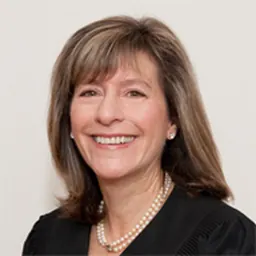
Related people
Same field, nearest in time


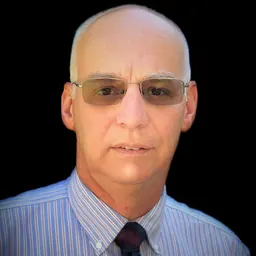
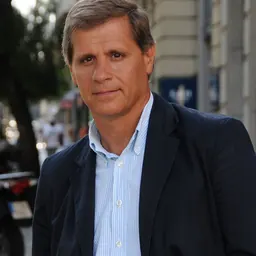
Contemporaries
People whose lives overlapped Paul Manafort's

Frequently asked questions
Who is Paul Manafort?
American political consultant
When was Paul Manafort born?
Paul Manafort was born on 1 April 1949 in New Britain.
What is Paul Manafort's occupation?
Paul Manafort is a consultant, lobbyist, jurist, political adviser and politician.
What nationality is Paul Manafort?
Paul Manafort is American.
Sources & further reading
Cite this page
APA: Biography.guide. (2026). Paul Manafort. https://biography.guide/paul-manafort/
MLA: "Paul Manafort." Biography.guide, https://biography.guide/paul-manafort/.
Chicago: "Paul Manafort." Biography.guide. https://biography.guide/paul-manafort/.
Data last updated: 2026-09-20 · Spot an error? Report a correction.
Page generated 2026-09-27 05:21 UTC