
Paul-Henri Sandaogo Damiba
Burkinabé military officer and president (January–September 2022)
About Paul-Henri Sandaogo Damiba
Born 1981. Paul-Henri Sandaogo Damiba is a Burkinabé military personnel, politician and military officer.
Paul-Henri Sandaogo Damiba (; born January 1981
Early life and education Paul-Henri Sandaogo Damiba graduated from the École militaire in Paris. During his studies, he met with future Guinean president Mamady Doumbouya, who was also training there. He holds a master's degree in criminology from the Conservatoire national des arts et métiers (CNAM) in Paris and a defense expert certification in management, command and strategy. From 2010 to 2020, he held training exercises in the United States.
Military career Damiba is a lieutenant colonel and commander of the third military region covering Ouagadougou, Manga, Koudougou and Fada N'gourma. He is a former member the Regiment of Presidential Security, the former presidential guard of Blaise Compaoré. Damiba left the RSP in 2011 after an army mutiny.
In 2019, Damiba testified in the trial of conspirators behind a 2015 coup in Burkina Faso that briefly deposed a transitional government, according to reports from the time in Burkinabe media. He called in the past for the Burkinabé government to recruit mercenaries from the Russian Wagner Group against Islamist rebels. The government of Roch Marc Kaboré was strictly opposed to the proposal, on the grounds that doing so would alienate Burkina Faso from the West.
In late 2021, an army of jihadists overran the base of a gendarmerie in Inata, Soum, killing 49 gendarmes and four civilians. A significant uproar rose in response to the attack, spurred on by revelations about the poor treatment of the gendarmes by the government prior to the raid, forcing numerous government officials to resign or have their ministries shuffled. According to online African-American reference center BlackPast.org "It later came to light that the gendarmes at Inata had not received food rations for two weeks... [they] were forced to slaughter animals in the vicinity to stay alive." Kaboré appointed Damiba, who by then was deeply moved by the events at Inata,
In 2021, Damiba published a book about the fight against Islamists, West African Armies and Terrorism: Uncertain Responses?
Damiba has received training through a number of United States programs. In 2010 and 2020, he participated in the Flintlock Joint Combined Exchange Training exercises including raising awareness of human rights and laws of armed conflicts. In 2013, Damiba participated in the U.S. State Department funded African Contingency Operations Training and Assistance course. In 2013 and 2014, Damiba attended the Military Intelligence Basic Officer Course for Africa. In 2018 and 2019, he trained in Burkina Faso with a U.S. Defense Department Civil Military Support Element.
Taking power, rule, and downfall
On 24 January 2022, Damiba led a coup deposing and detaining President Roch Marc Christian Kaboré and Prime Minister Lassina Zerbo. While people were celebrating the coup in Ouagadougou, some supporters carried Russian flags, as a sign of their call to receive help from Russia in their fight against Islamist terrorism. After the announcement, the military declared that the National Assembly and the Government had been dissolved, while the Constitution had been suspended. On 31 January, the military junta restored the Constitution and appointed Damiba as the interim president.
With Damiba at its head, the Patriotic Movement for Safeguard and Restoration military junta pledged to improve security and eventually restore civilian rule. However, the military regime failed to defeat the Jihadists; instead, rebels and other non-state actors even expanded their operations and controlled 40% of the country by September 2022. Many military officers grew dissatisfied with Damiba, believing that he did not focus on the rebellion. Jihadist insurgents launched several major attacks in September 2022, causing the interim president to reshuffle his cabinet. On 12 September, Damiba fired his defense minister, General Aimé Barthélemy Simporé, and assumed the position himself. He also appointed Colonel-Major Silas Keita as minister delegate in charge of national defence. Sahel expert and University of Calgary scholar Abdul Zanya Salifu argued that his inability to defeat the jihadists had led to Damiba's downfall, as his promise to improve security had been the justification for him taking power in the first place.
Religious and community leaders announced on 2 October that Damiba had agreed to resign from his position after they mediated between him and Traoré. Damiba demanded seven guarantees in return, including that his allies would be protected, a guarantee for his security and rights, and that the new junta would fulfill the promise he made to the Economic Community of West African States (ECOWAS) about restoring civilian rule in two years. Traoré agreed to the deal and Damiba went into exile in Togo. Three army officers were arrested in November 2022 for helping him flee from Burkina Faso.
In July 2024, Damiba sent a letter to Ibrahim Traoré, President of Burkina Faso, in which he expressed concern about the deterioration of the security situation and possible abuses against civilians. In September, Damiba was accused by Traoré's military junta of organizing (along with military officers, former ministers and others) a plot to overthrow the junta that was foiled. He was also accused of involvement in the August Barsalogho massacre, carried out by Jama'at Nasr al-Islam wal-Muslimin.
Public image The January 2022 coup was widely popular in Burkina Faso. Damiba has become known for the red beret he wears during speeches, believed to be an impression of Burkinabé revolutionary and founding father Thomas Sankara, whose speeches also carried similar rhetoric to Damiba's. Damiba had already gained praise prior to the coup for his activities fighting jihadists.
When Damiba proved unable to contain the insurgency, public support for him declined sharply. When he was overthrown in September 2022, groups in the capital gathered to express support for those who had deposed him.
Don’t just read it —
keep it.
Full-length biographies made to live with: read them, listen on the way to work, watch them tonight.
- E-book
- Audio
- Video
Instant download · yours to keep · every purchase keeps this site free
Important facts
People in Paul-Henri Sandaogo Damiba's life
Named in this biography and alive at the same time


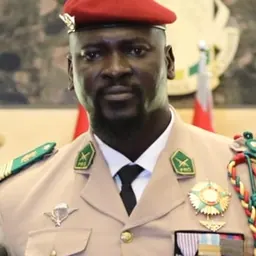


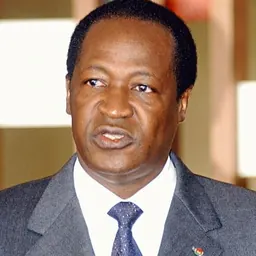

Related people
Same field, nearest in time
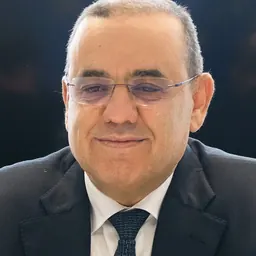
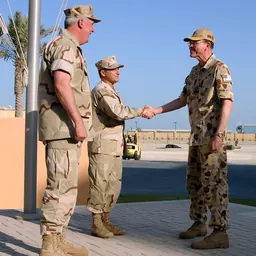


Contemporaries
People whose lives overlapped Paul-Henri Sandaogo Damiba's


Frequently asked questions
Who is Paul-Henri Sandaogo Damiba?
Burkinabé military officer and president (January–September 2022)
When was Paul-Henri Sandaogo Damiba born?
Paul-Henri Sandaogo Damiba was born on 2 January 1981 in Ouagadougou.
What is Paul-Henri Sandaogo Damiba's occupation?
Paul-Henri Sandaogo Damiba is a military personnel, politician and military officer.
What nationality is Paul-Henri Sandaogo Damiba?
Paul-Henri Sandaogo Damiba is Burkinabé.
Sources & further reading
· Wikipedia: Paul-Henri Sandaogo Damiba
· DBpedia: Paul-Henri Sandaogo Damiba
Cite this page
APA: Biography.guide. (2026). Paul-Henri Sandaogo Damiba. https://biography.guide/paul-henri-sandaogo-damiba/
MLA: "Paul-Henri Sandaogo Damiba." Biography.guide, https://biography.guide/paul-henri-sandaogo-damiba/.
Chicago: "Paul-Henri Sandaogo Damiba." Biography.guide. https://biography.guide/paul-henri-sandaogo-damiba/.
Data last updated: 2026-09-20 · Spot an error? Report a correction.
Page generated 2026-09-27 05:18 UTC