
About Paul Gilson
Lived 1865 – 1942 (aged 76). Paul Gilson was a Belgian composer, university teacher, pianist, music educator, musician and music critic.
Paul Gilson (Brussels, 15 June 1865 – Brussels, 3 April 1942) was a Belgian musician and composer.
Biography Paul Gilson was born in Brussels. In 1866, his family moved to Ruisbroek in the Belgian province of Brabant. There he studied theory with the organist and choir director Auguste Cantillon, and began writing works for orchestra and choir. His first official training came from 1887 to 1889 under François-Auguste Gevaert in composition and under Charles Duyck in harmony and counterpoint at the Brussels Conservatory, and in 1889, he was awarded the Belgian Prix de Rome for a cantata, Sinaï, which was very well received. As the winner of the prize he was able to spend time in Bayreuth (1892), Paris (1893–4) and Italy (1895).
A large orchestral work, La mer, which was first performed in Brussels on 20 March 1892, established Gilson as a national musical figure and also gave him success abroad, though not in Paris.
In 1925, a group of Gilson's students who called themselves Les Synthétistes (including René Bernier, Francis de Bourguignon, Théo De Joncker, Marcel Poot, Maurice Schoemaker, Jules Strens and Robert Otlet) first formed, declaring allegiance to Gilson's ideas about music. Along with Poot and Schoemaker, he founded La revue belge musicale in 1924; he was the chief editor until it folded in 1939. He also wrote pamphlets for Belgian radio.
Gilson corresponded regularly with Russian composers César Cui and Mitrofan Belyayev. He died in his native city of Brussels.
Honours 1932 : commander in the Order of Leopold.
Music Gilson was somewhat conservative in his musical outlook. Some of his work is indebted to Wagnerian harmony, and his books on harmony and instrumentation also bear this out.
La Mer, the score which gave him his greatest success, is a set of four impressionistic movements ("symphonic sketches") in sonata form which were originally intended to illustrate verses by a French-speaking poet, Eddy Levis. Despite being finely crafted, his later works such as the oratorio Francesca da Rimini tended to be somewhat conventional, lacking the originality displayed in the orchestration of La Mer. 1903 Variation symphonique for brass instruments 1892/1925 La Mer 4 Symphonic Sketches for wind orchestra transcribed by Arthur Prevost Lever de soleil Chants et danses de matelots Crépuscule Tempête 1930 Tornacum 1930 Grande marche du Centenaire 1948 Moeder for speaker and fanfare orchestra Binche Brabant – marche militaire Danse guerrière from the ballet La Captive Deuxième rhapsodie Deuxième valse symphonique Encore un ! allegro Epithalame Gavotte Monsignore Hommage à Weber Interlude solennel L'heureux voyage Le retour au pays : Prière avant le départ Marche commémorative Marche cortège Marche panégyrique Merxem – Allegro militaire Montréal – Allegro de concert Ouverture »Eleusines« Patrouille albanaise Poème symphonique en forme d'ouverture Polka fantaisiste Rhapsodie laudative Rhapsodie hawaïenne Richard III Ouverture Terugkeer naar het vaderland Triumph Marsch Variations Valse symphonique nr. 1 Valse symphonique nr. 2 Vestris – Danse mimique Quarantenaire – Marche solennelle
Stage works 1890 Le démon Dramatic cantata on a text by Lermontov in 2 acts for soloists, choir and orchestra 1892 Francesca da Rimini Dramatic oratorio based on a text by Dante for soloists, choir and orchestra 1895 Gens de mer (Zeevolk) Lyric drama in 2 acts 1896–1900 La captive Ballet in 2 acts 1903 Princesse Rayon de Soleil (Prinses Zonneschijn), légende féerique en quatre actes 1910 Les aventuriers (Rooversliefde) Musical drama in 1 act 1910–1921 Les deux bossus, ballet-Pantomime in 1 Act 1940 Elijah Music for a play by Cyriel Verschaeve Daphné Ballett
Other works 1889–1890 Six mélodies 1902 Petite suite rustique for piano 1934 Le mas d'Icare for a film by Carlo Queeckers for string orchestra 1926 Sonatina for carillon 1934–1936 Romantische werkjes 1940 Aria di Timpani con 6 Variazioni Suite nocturne for piano Six chansons écossaises based on a text by Leconte de Lisle
Arrangements Scheherazade arrangement of the symphonic suite by Nicolai Rimsky-Korsakov for solo piano
Books and writings 1913 Le Tutti orchestral 1923 Traité de lecture musicale 1923 Traité d'harmonie (3 Bände) 1926 Traité de musique militaire Solfège – Cours complet de la lecture musicale en neuf volumes 1942 Notes de musique et souvenirs (memoirs) 1955 Arthur Meulemans: Paul Gilson (1865–1942)
Don’t just read it —
keep it.
Full-length biographies made to live with: read them, listen on the way to work, watch them tonight.
- E-book
- Audio
- Video
Instant download · yours to keep · every purchase keeps this site free
Important facts
People in Paul Gilson's life
Named in this biography and alive at the same time




Related people
Same field, nearest in time


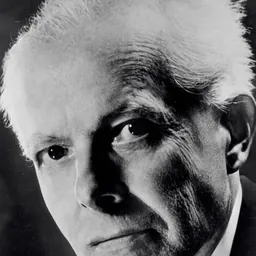

Contemporaries
People whose lives overlapped Paul Gilson's
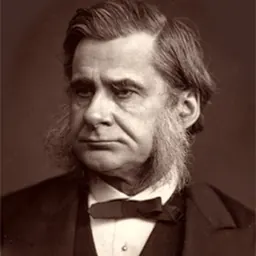

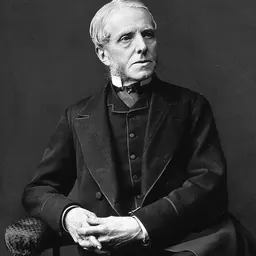
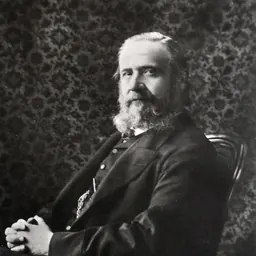

Frequently asked questions
Who was Paul Gilson?
Belgian composer (1865–1942)
When was Paul Gilson born?
Paul Gilson was born on 15 June 1865 in Brussels.
When did Paul Gilson die?
Paul Gilson died on 3 April 1942 in Brussels.
What was Paul Gilson's occupation?
Paul Gilson was a composer, university teacher, pianist, music educator, musician and music critic.
What nationality was Paul Gilson?
Paul Gilson was Belgian.
Sources & further reading
Cite this page
APA: Biography.guide. (2026). Paul Gilson. https://biography.guide/paul-gilson/
MLA: "Paul Gilson." Biography.guide, https://biography.guide/paul-gilson/.
Chicago: "Paul Gilson." Biography.guide. https://biography.guide/paul-gilson/.
Data last updated: 2026-09-26 · Spot an error? Report a correction.
Page generated 2026-09-27 05:14 UTC