
Paul Fussell
American cultural and literary historian
About Paul Fussell
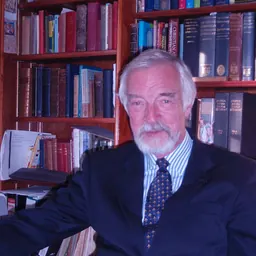
Lived 1924 – 2012 (aged 88). Paul Fussell was an American literary historian, military historian, literary critic, university teacher, writer and journalist.
Paul Fussell Jr. (22 March 1924 – 23 May 2012) was an American cultural and literary historian, author and university professor. he made a "career out of refusing to disguise it or elevate it".
Biography Born and raised in Pasadena, California, Fussell was the sixth of seven children. His father, Paul Fussell (1895–1973), son of a widowed schoolteacher, became a corporate lawyer in Los Angeles with the firm of O'Melveny & Myers, and served as President of the Los Angeles County Bar Association in 1947. His mother, Wilhma Wilson Sill (1893–1971), was the daughter of a carriage trimmer in Illinois. His brother, Edwin Sill Fussell, was an author, poet, and professor of American Studies at the University of California, San Diego; his sister Florence Fussell Lind lived in Berkeley, California.
Starting in 1941, Fussell attended Pomona College until he enlisted in the United States Army in September 1942 and was commissioned as an officer the next year. He landed in France in fall 1944 as a 20-year-old second lieutenant with the 103rd Infantry Division, was wounded while fighting in Alsace, and was awarded the Bronze Star and Purple Heart. Following the end of the war in Europe, Fussell returned to the United States where he was assigned to the 45th Infantry Division, which was preparing for the anticipated Allied invasion of Japan. Fussell's recollections of hearing the news of the atomic bombings of Hiroshima and Nagasaki, while waiting stateside to deploy would later form the basis of his essay "Thank God for the Atom Bomb".
He was honorably discharged from the Army in 1946, returned to Pomona to finish his B.A. degree in 1946–1947, married fellow Pomona graduate Betty Harper in 1949, and completed his MA (1949) and PhD (1952) at Harvard University.
He began his teaching career at Connecticut College (1951–55) before moving to Rutgers University in 1955 and finally the University of Pennsylvania in 1983. He also taught at the University of Heidelberg (1957–58) and King's College London (1990–92). As a professor, he travelled widely with his family throughout Europe from the 1950s to '70s, taking Fulbright and sabbatical years in Germany, England and France.
Betty Fussell has described their marriage and its breakup in 1981 in her memoir, My Kitchen Wars. After Fussell moved from his home in Princeton, New Jersey, to Philadelphia, Pennsylvania, he divorced Betty and married Harriette Behringer. He retired from the University of Pennsylvania in 1994 and lived with his wife in Oregon.
Writing and teaching career
When he first entered college, Fussell intended a career in journalism. His plans changed when his sergeant was killed beside him in combat, about which he wrote in his memoir Doing Battle (1996). In his writings he opposed war, promoting instead a vision of rational enlightenment. He pointed to what he saw as the hypocrisy of governmental speech and the corruption of popular culture. Samuel Johnson and The Life of Writing (1971) offered an analysis of the work of the English lexicographer, Samuel Johnson. The Anti-Egotist, Kingsley Amis: Man of Letters was a study of the life and work of friend and colleague, Kingsley Amis.
The award-winning The Great War and Modern Memory (1975) was a cultural and literary analysis of the impact of World War I on the development of modern literature and modern literary conventions. Joseph Heller called it "the best book I know of about world war one". However, a number of modern historians have criticised Fussell's treatment of the war as deeply flawed with significant factual errors and tendentious conclusions.
Abroad: British Literary Travelling Between the Wars (1980) was a pioneering academic examination of travel literature which examined the travel books of Evelyn Waugh, Graham Greene, D. H. Lawrence and Robert Byron. and indulged his increasing public status as a loved or hated "curmudgeon" confirmed his war against governmental and military doublespeak and prepared the way for Wartime: Understanding and Behavior in the Second World War (1989). The epiphany of his earlier essay, "My War", found full expression in his memoir Doing Battle: The Making of a Skeptic (1996): "My Adolescent illusions, largely intact to that moment, fell away all at once, and I suddenly knew I was not and never would be in a world that was reasonable or just". was once again concerned with the experience of combat in World War II.
Awards and honors Fussell's 1975 literary study The Great War and Modern Memory won the National Book Award in category Arts and Letters, the National Book Critics Circle Award for Criticism, and the Ralph Waldo Emerson Award of Phi Beta Kappa.
He was elected in 1977 a Fellow of the Royal Society of Literature.
He won the 2005 Hessell-Tiltman Prize for The Boys' Crusade. Fussell was one of several veterans interviewed in the Ken Burns and Lynn Novick documentary The War in 2007, and in the 1999 ABC-produced documentary The Century: America's Time.
Death
Fussell died of natural causes on 23 May 2012, at a long-term care facility in Medford, Oregon. He had previously lived in Portland, Oregon, for two years. He was 88.
Works
editor with Geoffrey Tillotson and Marshall Waingrow
editor
editor, from The Complete Memoirs of George Sherston
– this is the UK edition of Class editor
editor
autobiography
Don’t just read it —
keep it.
Full-length biographies made to live with: read them, listen on the way to work, watch them tonight.
- E-book
- Audio
- Video
Instant download · yours to keep · every purchase keeps this site free
Important facts
Family & relationships
People in Paul Fussell's life
Named in this biography and alive at the same time
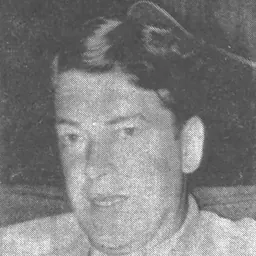
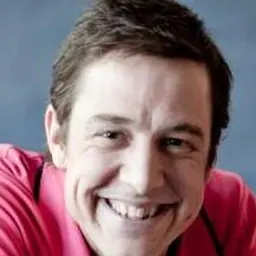
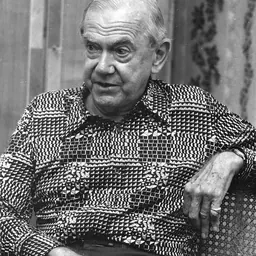

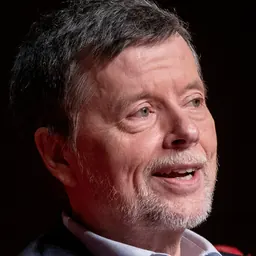

Related people
Same field, nearest in time


Contemporaries
People whose lives overlapped Paul Fussell's

Frequently asked questions
Who was Paul Fussell?
American cultural and literary historian (1924–2012)
When was Paul Fussell born?
Paul Fussell was born on 22 March 1924 in Pasadena.
When did Paul Fussell die?
Paul Fussell died on 23 May 2012 in Medford.
What was Paul Fussell's occupation?
Paul Fussell was a literary historian, military historian, literary critic, university teacher, writer and journalist.
What nationality was Paul Fussell?
Paul Fussell was American.
Sources & further reading
Cite this page
APA: Biography.guide. (2026). Paul Fussell. https://biography.guide/paul-fussell/
MLA: "Paul Fussell." Biography.guide, https://biography.guide/paul-fussell/.
Chicago: "Paul Fussell." Biography.guide. https://biography.guide/paul-fussell/.
Data last updated: 2026-09-25 · Spot an error? Report a correction.
Page generated 2026-09-27 05:12 UTC