
About Paul Doguereau
Lived 1908 – 2000 (aged 91). Paul Doguereau was a French pianist and piano teacher.
Paul René Doguereau (September 8, 1908 – March 3, 2000) was a French pianist and piano teacher. He spent most of his career in Boston, United States, where he was a well-respected cultural figure.
Education Although he officially studied with Marguerite Long at the Paris Conservatory, Doguereau said that he learned very little from her. As is often the case with famous teachers with too little time and too many students, the young pianist was relegated to the hands of an assistant for most of the time. The Paris Conservatory conferred its highest award, the Premier Prix, upon Doguereau at age 15. During his time at Conservatory, Doguereau met Jean Roger-Ducasse.
According to Doguereau's adopted son, the pianist, author, and musicologist Harrison Slater: Quotation|At the time Paul was preparing for his exam for the Premier Prix of the Conservatoire (part of the exam required everyone to learn several standard piano repertoire works in a given brief time period). One of the pieces was the Symphonic Etudes of Schumann, and Paul practiced them directly across the window from Roger-Ducasse. In fact, he practiced them for hours on end (easily, seven-and-a-half to eight hours a day). Roger-Ducasse sent Paul a note asking him, "Don't you ever stop playing to pee?" The implication was, as Paul told it, that all Paul's practicing was keeping Roger-Ducasse from composing, hence the humorous note with the undertones of frustration. Whenever Paul spoke of Roger-Ducasse, it was with extraordinary reverence and respect. Also in the 1930s, supported by a number of Boston patronesses, he studied in Europe with Emil von Sauer and Egon Petri. According to Slater, "Petri was the greatest influence on Paul's technique and teaching." Peter Orth, David Korevaar, Sergey Schepkin, Andrew Rangell, Harrison Slater, Robert Swan, Stephen Porter and Robert Taub.
Recordings Doguereau left little in the way of recorded performances. Given that he stopped performing in public in the 1950s, this is hardly surprising. He did however continue to perform privately, and in the last year of his life played the last two Chopin Ballades for friends twice at his home in Mt. Holly, New Jersey. In 1948, the small Boston label Technichord released an album of Fauré songs featuring Doguereau with two sopranos, Isabel French and Olympia di Napoli. Doguereau also recorded Daniel Pinkham's Concertino, a work that Pinkham wrote for him in 1950.
In addition, Doguereau recorded solo repertoire for Technichord that was never released – perhaps the recordings were not up to his exacting standards. Dr. David Korevaar, a former student of Doguereau, was able to study the solo material held by the Library of Congress. The recordings include performances of Ravel's Sonatine (although missing the second part of the first movement), Fauré's Third Barcarolle, and Bach's Chromatic Fantasie.
After hearing the recordings, Korevaar commented: Quotation|The performances are all excellent, with brisk tempos and a lack of sentimentality that suits the French repertoire well. The piano sound is surprisingly clean and beautiful; every detail of the performance is audible on the recording. In terms of style, the Ravel is clear, unsentimental, and the last movement is brilliant. Doguereau was a Fellow of the American Academy of Arts and Sciences, and frequently organized performances at the Academy.
Doguereau also organized the early Peabody Mason Piano Competitions, where he served as President and Artistic Director. The piano competition was inspired by Miss Mason's commitment to, and aspirations for, the arts and serves to showcase and encourage emerging piano talent. The first competition was held in 1981, with others following in 1984 and 1985. The grand prize winner received a yearly stipend plus a New York City and a Boston recital. The competition's rich heritage, its intermittent nature, and its generous prize have led to a significant reputation and cachet for the award.
A resident of Boston, Doguereau maintained a home in Mount Holly Township, New Jersey, and lived there at the time of his death with his adopted son Harrison James Wignall.
Don’t just read it —
keep it.
Full-length biographies made to live with: read them, listen on the way to work, watch them tonight.
- E-book
- Audio
- Video
Instant download · yours to keep · every purchase keeps this site free
Important facts
People in Paul Doguereau's life
Named in this biography and alive at the same time
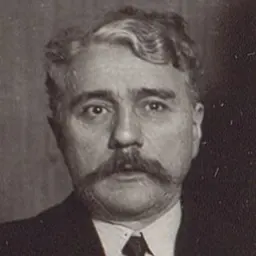
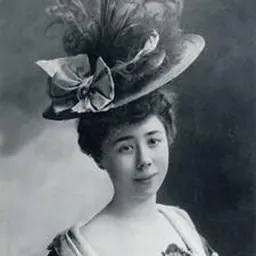
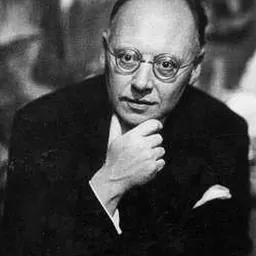
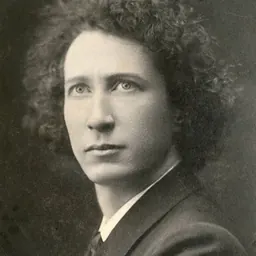




Related people
Same field, nearest in time


Contemporaries
People whose lives overlapped Paul Doguereau's

Frequently asked questions
Who was Paul Doguereau?
pianist, pedagogue, impresario, educator
When was Paul Doguereau born?
Paul Doguereau was born on 8 September 1908 in Angers.
When did Paul Doguereau die?
Paul Doguereau died on 3 March 2000 in Mount Holly.
What was Paul Doguereau's occupation?
Paul Doguereau was a pianist and piano teacher.
What nationality was Paul Doguereau?
Paul Doguereau was French.
Sources & further reading
Cite this page
APA: Biography.guide. (2026). Paul Doguereau. https://biography.guide/paul-doguereau/
MLA: "Paul Doguereau." Biography.guide, https://biography.guide/paul-doguereau/.
Chicago: "Paul Doguereau." Biography.guide. https://biography.guide/paul-doguereau/.
Data last updated: 2026-09-22 · Spot an error? Report a correction.
Page generated 2026-09-27 05:33 UTC