
About Paul Desmond
Lived 1924 – 1977 (aged 52). Paul Desmond was an American composer, saxophonist, jazz musician, recording artist and musician.
Paul Desmond (born Paul Emil Breitenfeld; November 25, 1924 – May 30, 1977) was an American jazz alto saxophonist and composer and proponent of cool jazz. He was a member of the Dave Brubeck Quartet and composed the group's biggest hit, "Take Five". The song remains the best-selling jazz song of all time.
In addition to his work with Brubeck, he led several groups and collaborated with Gerry Mulligan, Chet Baker, Jim Hall, and Ed Bickert. After years of chain smoking and poor health, Desmond succumbed to lung cancer in 1977 after a tour with Brubeck.
Early life Desmond was born Paul Emil Breitenfeld in San Francisco, California, in 1924, the son of Shirley (née King) and Emil Aron Breitenfeld. His grandfather Sigmund Breitenfeld, a medical doctor, was born on November 17, 1857, in Kameničky in Eastern Bohemia; he emigrated to the US in 1885 and on May 2, 1886, in New York, married Hermina Lewy. They had four children (including Emil, father of Paul Emil). Paul Desmond and members of his father's family "frequently speculated as to whether Sigmund or Hermine Breitenfeld had Jewish backgrounds", though they did not identify as Jewish or observe Jewish traditions. However, Fred Barton, composer and cousin to Desmond, found extensive genealogical proof that both the Breitenfeld and Löwy families were Bohemian Jews. The Breitenfeld family in Bohemia and Vienna featured musicians in every generation throughout the 1800s, 1900s, and to the present day. Desmond's mother, born Shirley King, was of an Irish Catholic family.
Desmond's mother, Shirley, was emotionally unstable throughout his upbringing and appears to have suffered from obsessive–compulsive disorder and other mental illnesses.
Following his military discharge, Paul Emil Breitenfeld legally changed his last name from Breitenfeld to Desmond in 1946. He told many stories over the years regarding how he chose the name Desmond, but his biographer Doug Ramsey offers an account from Desmond's friend Hal Strack that the two were listening to the Glenn Miller band singer Johnny Desmond in 1942, and Desmond told Strack, "that's such a great name. It's so smooth and yet it's uncommon. ... If I ever decide I need another name, it's going to be Desmond." He never remarried.
Desmond met Dave Brubeck in 1944 in the military. Brubeck was auditioning for the 253rd Army band, to which Desmond belonged. After making the cut, he—unlike Desmond—was sent overseas in 1944, to Europe. Desmond once told Marian McPartland of National Public Radio's Piano Jazz that he was taken aback by the chord changes which Brubeck introduced during that 1944 audition. After Desmond persuaded Brubeck to hire him following his stint with Jack Fina, the two had a contract drafted (of which Brubeck was the sole signatory); the wording forbade Brubeck from firing him, ensured Brubeck's status as group leader, and gave Desmond twenty percent of all profits generated from the quartet. This established the Dave Brubeck Quartet, which lasted from 1951 to December 1967.
The quartet became especially popular with college-age audiences, often performing in college settings, including their ground-breaking 1953 album Jazz at Oberlin at Oberlin College and at the campuses of Ohio University and the University of Michigan. The success of the quartet led to a Time magazine piece on them in 1954, with the famous cover featuring Brubeck's face.
After drummer Joe Dodge decided to leave the group, Joe Morello joined in late 1956, on Desmond's recommendation. Despite this, differences in musical aspirations and taste made their relationship a tense one for many years. Desmond hoped for a "tinky-boom" background-type drummer while Morello wanted to be recognized and featured. During Morello's first performance with the group, he was featured by Brubeck and received an ovation from the audience for his solo. Desmond resented this, and threatened to leave the group. Brubeck managed to keep both Desmond and Morello in the group but with friction between them for years. Desmond's grudge against Morello could also be heard during their performance. In their "Take the 'A' Train" performance in Hanover, Germany, in 1958, for example, Desmond's playing sounded lackluster and uninterested. After a passage of rhythmically complex playing from Morello, Desmond would sometimes play very quietly and or even drop out for a few bars. In their later years, they reconciled and became close friends.
The Dave Brubeck Quartet played until 1967, when Brubeck switched his musical focus from performance to composition and dissolved the group. During the 1970s, Desmond joined Brubeck for several reunion tours, including Two Generations of Brubeck. Accompanying them were Brubeck's sons, Chris Brubeck, Dan Brubeck, and Darius Brubeck. In 1976, Desmond played 25 shows in 25 nights with Brubeck, touring the United States by bus.
Other collaborations
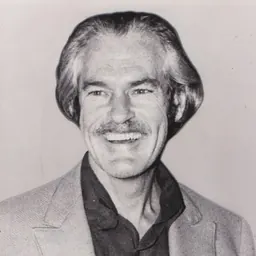
Desmond enjoyed reading works by thinkers of his generation, like Timothy Leary and Jack Kerouac who advocated or relied upon the use of recreational drugs and sometimes used LSD. He had several addictions, including Dewar's Scotch whisky and Pall Mall cigarettes. In the 1940s and 1950s, Desmond frequently took amphetamines, and in the 1970s, he was known to use cocaine.
Pristine, perfect. One of the great livers of our time. Awash in Dewar's and full of health. — Paul Desmond Desmond reportedly owned a Baldwin grand piano, which he lent to Bradley Cunningham, owner of Bradley's piano bar in Greenwich Village, provided that Cunningham move the large piano back to Desmond's Upper West Side apartment to become part of Desmond's estate. After this long and expensive process, Desmond willed the piano to Cunningham, a characteristic and final prank. The Paul Desmond Papers (and other Brubeck adjacent archival collections) are held at the Holt-Atherton Special Collections and Archives in the University of the Pacific Library.
Desmond was cremated and his ashes were scattered.
Style Desmond produced a light, melodic tone on the alto saxophone, trying to sound, he said, "like a dry martini." With a style that was similar to that of Lee Konitz, one of his influences, he quickly became one of the best-known saxophonists from the West Coast's cool school of jazz. Much of the success of the classic Brubeck quartet was due to the juxtaposition of his airy style over Brubeck's sometimes relatively heavy, polytonal piano work.
Desmond's improvisation is praised for its logical structure and lyricism. His gift for improvised counterpoint is perhaps most evident on his two albums with baritone saxophonist Gerry Mulligan (Gerry Mulligan – Paul Desmond Quartet and Two of a Mind). In his playing, Desmond was also notable for his ability to produce extremely high notes, the altissimo register, on his saxophone.
Desmond played a Selmer Super Balanced Action model alto saxophone with an M. C. Gregory model 4A-18M hard rubber mouthpiece, both dating from circa 1951, with a moderately stiff Rico 3 ½ reed.
Discography With Dave Brubeck
As bandleader
With Gerry Mulligan
With Chet Baker
Other
Don’t just read it —
keep it.
Full-length biographies made to live with: read them, listen on the way to work, watch them tonight.
- E-book
- Audio
- Video
Instant download · yours to keep · every purchase keeps this site free
Important facts
People in Paul Desmond's life
Named in this biography and alive at the same time
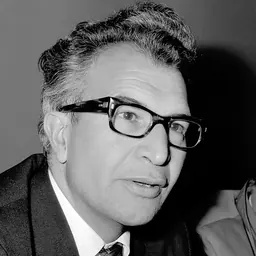


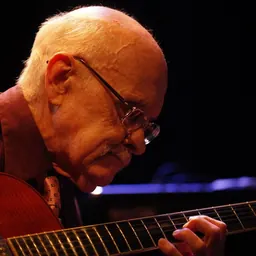

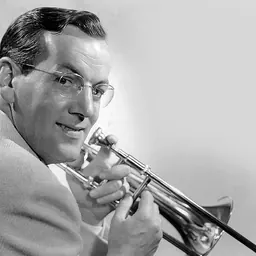
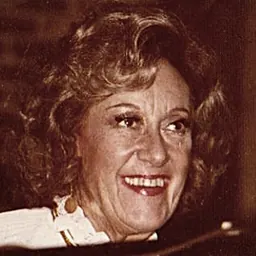
Related people
Same field, nearest in time

Contemporaries
People whose lives overlapped Paul Desmond's



Frequently asked questions
Who was Paul Desmond?
American jazz musician (1924-1977)
When was Paul Desmond born?
Paul Desmond was born on 25 November 1924 in San Francisco.
When did Paul Desmond die?
Paul Desmond died on 30 May 1977 in New York City.
What was Paul Desmond's occupation?
Paul Desmond was a composer, saxophonist, jazz musician, recording artist and musician.
What nationality was Paul Desmond?
Paul Desmond was American.
Sources & further reading
Cite this page
APA: Biography.guide. (2026). Paul Desmond. https://biography.guide/paul-desmond/
MLA: "Paul Desmond." Biography.guide, https://biography.guide/paul-desmond/.
Chicago: "Paul Desmond." Biography.guide. https://biography.guide/paul-desmond/.
Data last updated: 2026-09-25 · Spot an error? Report a correction.
Page generated 2026-09-27 05:10 UTC