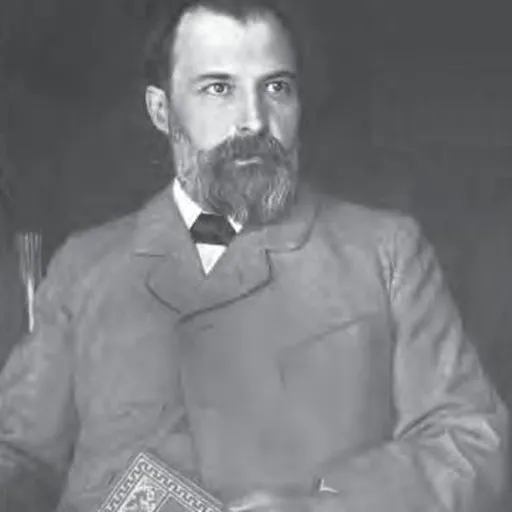
About Paul Carus
Lived 1852 – 1919 (aged 66). Paul Carus was an American linguist, translator, philosopher, publisher, theologian and writer.
Paul Carus (; 18 July 1852 – 11 February 1919) was a German-American author, editor, philosopher, and student of comparative religion.
Life and education Carus was born in Ilsenburg and attended the Stettin Gymnasium where he studied mathematics under Hermann Grassmann. He later studied at the universities of Strassburg (then Germany, now France) and Tübingen, Germany. After obtaining his PhD from Tübingen in 1876 he served in the army and then taught school. He had been raised in a pious and orthodox Protestant home, but gradually moved away from this tradition.
He left Bismarck's Imperial Germany for the United States, "because of his liberal views". After he emigrated to the United States (in 1884) he lived in Chicago, and in LaSalle, Illinois. Paul Carus married Edward C. Hegeler's daughter, engineer Mary Hegeler (Marie) and the couple later moved into the Hegeler Carus Mansion, built by her father. They had seven children, the firstborn, Robert died at birth, but Edward (b. 1890), Gustave (b. 1892), Paula (b. 1894), Elisabeth or "Libby" (b. 1896), Herman (b. 1899), and Alwin (b. 1901) all lived long lives. Mary ran the family business, Matthiessen-Hegeler Zinc Company and the Open Court business and later took on the editorial role after Carus's death, alongside their daughter Elizabeth.
Career In the United States, Carus briefly edited a German-language journal and wrote several articles for the Index, the Free Religious Association organ.
He was introduced to Charles Sanders Peirce, the founder of American Pragmatism, by Judge Francis C. Russell of Chicago. Carus stayed abreast of Peirce's work and would eventually publish a number of his articles.
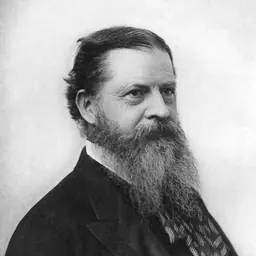
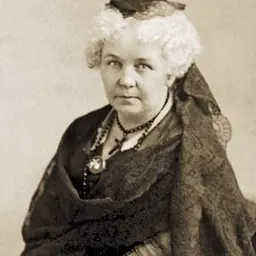
During his lifetime, Carus published 75 books and 1500 articles, mostly through Open Court Publishing Company. He wrote books and articles on history, politics, philosophy, religion, logic, mathematics, anthropology, science, and social issues of his day. In addition, Carus corresponded with many of the greatest minds of the late 19th and early 20th century, sending and receiving letters from Leo Tolstoy, Thomas Edison, Nikola Tesla, Booker T. Washington, Elizabeth Cady Stanton, Ernst Mach, Ernst Haeckel, John Dewey, and many more.
Carus died in La Salle, Illinois.
Philosophy Carus considered himself a theologian rather than a philosopher. He referred to himself as "an atheist who loved God".
Carus is proposed to be a pioneer in the promotion of interfaith dialogue. He explored the relationship of science and religion, and was instrumental in introducing Eastern traditions and ideas to the West.
Carus was a follower of Benedictus de Spinoza; he was of the opinion that Western thought had fallen into error early in its development in accepting the distinctions between body and mind and the material and the spiritual. (Kant's phenomenal and noumenal realms of knowledge; Christianity's views of the soul and the body, and the natural and the supernatural.) Carus rejected such dualisms, and wanted science to reestablish the unity of knowledge. The philosophical result he labeled Monism.
Legacy The legacy of Paul Carus is honored through the efforts of the Hegeler Carus Foundation, the Carus Lectures at the American Philosophical Association (APA), and the Paul Carus Award for Interreligious Understanding by the Council for a Parliament of the World's Religions (CPWR). Mary Hegeler Carus and their daughter Elizabeth Carus took on the editorial role after Carus's death. Eros and Psyche: A Fairy-Tale of Ancient Greece, Retold After Apuleius (1900)
Fundamental Problems; The Method of Philosophy as a Systematic Arrangement of Knowledge (1903) The Surd of Metaphysics (1903) The Nature of the State (1904) Kant and Spencer; A Study of the Fallacies of Agnosticism (1904) Karma: A Story of Buddhist Ethics (1903, republished 2004) Primer of Philosophy (1906) Story of Samson and Its Place in the Religious Development of Mankind (1907, republished 2003) The Rise of Man: A Sketch of the Origin of the Human Race (1907, republished 2004) The Bride of Christ: A Study In Christian Legend Lore (1908) The Foundations of Mathematics (1908, republished 2004) GOD: An Enquiry into the Nature of Man's Highest Ideal and a Solution of the Problem from the Standpoint of Science (1908, republished 2007) The Philosopher's Martyrdom; A Satire (1908) Godward; a Record of Religious Progress (1908) The Pleroma: An Essay on the Origin of Christianity (1909) Philosophy as a Science: A Synopsis of the Writings of Paul Carus (1909) Buddhist Hymns: Versified Translations from the Dhammapada and Various Other Sources (1911) The Philosophy of Form (1911, republished 2007) The Mechanistic Principle and the Non-Mechanical: An Inquiry into Fundamentals With Extracts from Representatives of Either Side (1913) The Principle of Relativity in the Light of the Philosophy of Science (1913, republished 2004) Nietzsche and Other Exponents of Individualism (1914, republished 2007) Goethe, with Special Consideration of His Philosophy (1915)
Don’t just read it —
keep it.
Full-length biographies made to live with: read them, listen on the way to work, watch them tonight.
- E-book
- Audio
- Video
Instant download · yours to keep · every purchase keeps this site free
Important facts
People in Paul Carus's life
Named in this biography and alive at the same time
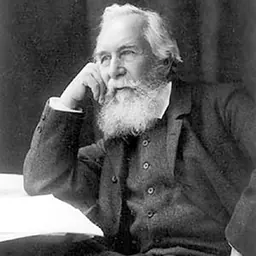

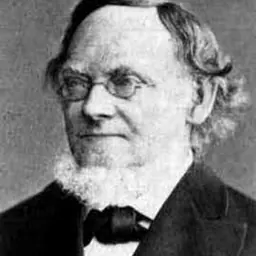

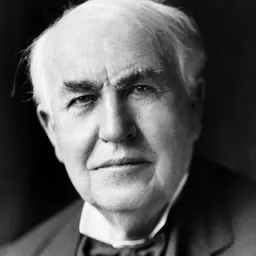

Related people
Same field, nearest in time

Contemporaries
People whose lives overlapped Paul Carus's

Frequently asked questions
Who was Paul Carus?
American philosopher (1852–1919)
When was Paul Carus born?
Paul Carus was born on 18 July 1852 in Ilsenburg.
When did Paul Carus die?
Paul Carus died on 11 February 1919 in LaSalle.
What was Paul Carus's occupation?
Paul Carus was a linguist, translator, philosopher, publisher, theologian and writer.
What nationality was Paul Carus?
Paul Carus was American.
Sources & further reading
Cite this page
APA: Biography.guide. (2026). Paul Carus. https://biography.guide/paul-carus/
MLA: "Paul Carus." Biography.guide, https://biography.guide/paul-carus/.
Chicago: "Paul Carus." Biography.guide. https://biography.guide/paul-carus/.
Data last updated: 2026-09-23 · Spot an error? Report a correction.
Portrait: Wikimedia Commons · author & licence
Page generated 2026-09-27 05:07 UTC