
About Paul Bender
Lived 1875 – 1947 (aged 72). Paul Bender was a German opera singer.
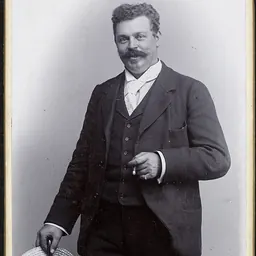
Paul Bender (28 July 1875 – 25 November 1947) was a German operatic bass.
Life Born in Driedorf, Westerwald, as the son of a Protestant minister, Bender began his vocal training while studying medicine in Berlin. His music instructors were Luise Ress and Baptist Hoffmann. Already by 1900, Bender made his stage debut at the Breslau Opera. In 1903 he moved to the Münchner Hofoper, where he remained for the rest of his life, in September 1943 celebrating his 40-year anniversary as a member of the ensemble. Altogether he trod the stage more than 2000 times.
In Munich, Bender sang practically all the important bass roles and also performed as a Heldenbariton. His repertory altogether included not fewer than 118 roles. He took part in many premieres, among them Le donne curiose in 1903 and I quatro rusteghi in 1906, both by Ermanno Wolf-Ferrari. He shone as Pope Pius V in the first performances of Hans Pfitzner's Palestrina in 1917 at the Prinzregententheater. Other premieres were Die Gespenstersonate by Julius Weismann (1930), Das Herz by Hans Pfitzner (1931) and Der Mond by Carl Orff (1939).
From 1902 Bender was a regular guest of the Richard-Wagner-Festspiele in Bayreuth. His reputation sealed by guest appearances at Théàtre de la Monnaie Brussels (1910), Théâtre des Champs-Élysées Paris (1914), the Vienna State Opera or Hofoper (1916–17), Covent Garden Opera London (1910–1914), and Stadttheater Zürich (1915), from 1922 to 1927 he was invited to the Metropolitan Opera in New York. In 1926 Bender was a guest at the Salzburger Festspiele, and in 1938 and 1939 performed in Der Ring des Nibelungen at La Scala.
Lieder and concert singing was also a great passion of Bender's, even before being named Royal Bavarian Kammersänger in 1907. As a singer of narrative ballads he was lauded as a successor to Eugen Gura. In neither opera nor concert singing did Bender rely on his impressive voice alone; for him the dramatic element was always important. The extent of his mimetic gift can be judged from his playing of a principal role in one of the most significant expressionistic silent films, 1919's Nerven by Robert Reinert. (This film dramatized the misery of the postwar era so powerfully that audiences became hysterical and the work was banned.)
The singer appeared on the stage till shortly before his death. In the 1930s and 40s he was primarily busy as a professor at the Münchner Akademie der Tonkunst (now part of the Hochschule für Musik und Theater). Among his pupils belong Josef Greindl and Hans Hopf. Bender married the soprano Paula Brand, who thereafter gave up her career. Bender died in Munich and his grave is in the Munich Waldfriedhof.
Selected roles
Die Zauberflöte (Wolfgang Amadeus Mozart): Sarastro Die Entführung aus dem Serail (Wolfgang Amadeus Mozart): Osmin Don Giovanni (Wolfgang Amadeus Mozart): Commendatore Das Rheingold (Richard Wagner): Fasolt; Fafner Götterdämmerung (Richard Wagner): Hagen Tristan und Isolde (Richard Wagner): König Marke Die Meistersinger von Nürnberg (Richard Wagner): Veit Pogner; Hans Sachs Parsifal (Richard Wagner): Gurnemanz; Amfortas Tannhäuser (Richard Wagner): Landgraf Der fliegende Holländer (Richard Wagner): Daland Der Barbier von Sevilla (Gioachino Rossini): Basilio Der Waffenschmied (Albert Lortzing): Hans Stadinger Martha (Friedrich von Flotow): Plumkett Der Barbier von Bagdad (Peter Cornelius): Barbier Der Rosenkavalier (Richard Strauss): Ochs von Lerchenau Don Quichotte (Jules Massenet): Don Quichotte Fidelio (Ludwig van Beethoven): Rocco Der Mond (Carl Orff): Petrus Palestrina (Hans Pfitzner): Papst Pius V
Discography Lebendige Vergangenheit – Paul Bender. CD, Preiser/Naxos, Wien 1999 Aus Münchens Operngeschichte, 4 CDs, Preiser/Naxos, Wien 1999 Sie sangen im Prinzregentheater, 3 CDs, Preiser/Naxos, Wien 2001 Symposium Opera Coll.10 – Paul Bender, CD, Symposium/Scherzando, 2006
Don’t just read it —
keep it.
Full-length biographies made to live with: read them, listen on the way to work, watch them tonight.
- E-book
- Audio
- Video
Instant download · yours to keep · every purchase keeps this site free
Important facts
People in Paul Bender's life
Named in this biography and alive at the same time
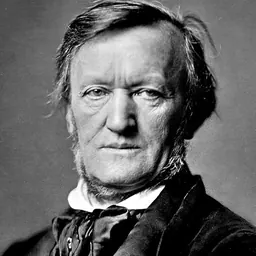


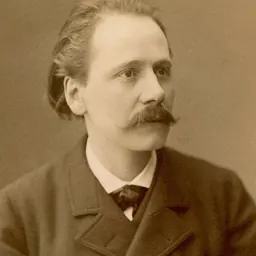
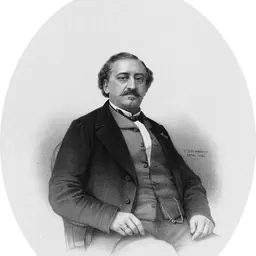
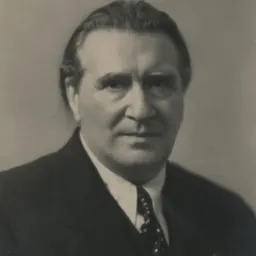

Related people
Same field, nearest in time

Contemporaries
People whose lives overlapped Paul Bender's
Frequently asked questions
Who was Paul Bender?
German opera singer (1875–1947)
When was Paul Bender born?
Paul Bender was born on 28 July 1875 in Driedorf.
When did Paul Bender die?
Paul Bender died on 27 November 1947 in Munich.
What was Paul Bender's occupation?
Paul Bender was an opera singer.
What nationality was Paul Bender?
Paul Bender was German.
Sources & further reading
Cite this page
APA: Biography.guide. (2026). Paul Bender. https://biography.guide/paul-bender-opera-singer/
MLA: "Paul Bender." Biography.guide, https://biography.guide/paul-bender-opera-singer/.
Chicago: "Paul Bender." Biography.guide. https://biography.guide/paul-bender-opera-singer/.
Data last updated: 2026-09-20 · Spot an error? Report a correction.
Page generated 2026-09-27 05:18 UTC