
About Patrick Stewart, 2nd Earl of Orkney
Lived 1560 – 1615 (aged 54–55). Patrick Stewart, 2nd Earl of Orkney was a politician.
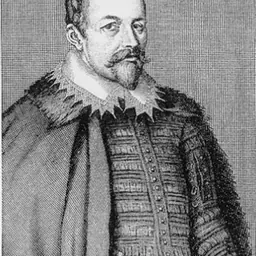
Coat of arms of Earl Patrick. The first and fourth quarters show the Scottish royal arms debruised by a ribbon, a symbol of bastardy, while the second and third quarters show the arms of the Earldom of Orkney Patrick Stewart, 2nd Earl of Orkney, Lord of Zetland (c. 1566 – 6 February 1615) was a Scottish nobleman, the son of Robert, Earl of Orkney, a bastard son of King James V. Infamous for his godless nature and tyrannical rule over the Scottish archipelagos of Orkney and Shetland, he was executed for treason in 1615.
Career Patrick was the second of five sons of Earl Robert and his wife Lady Jean Kennedy. On the death of his uncle Lord Robert in 1581, he was given the gift of the Priory of Whithorn. On the death of his elder brother Henry around 1588, he became heir to the Earldom of Orkney. Patrick spent some time with his brother-in-law Patrick Vans of Barnbarroch in Ayrshire. In March 1582 his father wrote to Barnbarroch discussing the possibility of sending him to Geneva for his education. The Earl asked Barnbarroch to send young Patrick to Kirkwall by the next available boat.
In his youth Patrick was a good friend of his cousin James VI; however, their relationship became strained in the 1590s after Patrick succeeded his father as Earl of Orkney. In June 1589 he wrote from Kirkwall to Patrick Vans of Barnbarroch with news of a pirate called Peterson who claimed to have a letter from Earl Robert to the Duke of Parma. Such a letter would be compromising to them, and Patrick hoped Barnbarroch could investigate and mitigate any danger to them. An early example of his rapacity occurs in 1594, when he was accused of spoiling a Danzig ship; however he was absolved of this crime. The same year he accused three of his younger brothers of conspiring to kill him, after he caught one of John's servitors with poison on him. The servitor was tortured and executed, along with Allison Balfour, a "witch" who supposedly aided in the conspiracy; the brothers, however, were later acquitted.
Patrick became a prominent figure at Court, and served as a "sewer" (assistant) to the King at the baptism of his son Prince Henry Frederick in 1594.
After the Union of the Crowns, on 5 May 1603, Patrick accompanied Anne of Denmark to Linlithgow Palace and Stirling Castle. The visit ended in conflict between Anne and the keepers of her son Prince Henry.
Earl Patrick's financial mismanagement and his brutality against the local population led to him being summoned before the Privy Council in 1609, and then imprisoned, firstly in Edinburgh Castle and then in Dumbarton Castle. Robert's execution evoked much sympathy from the people, owing to his young age, around twenty-two, and his "tall stature and comlie countenance". An envoy, Colonel Stewart, proposed the plan to the States to cement a league between Scotland and the Netherlands, but objections included the Earl's doubtful title to Orkney and Shetland, and that Emilia was unwilling to dwell so far from her home and family. Patrick had partly funded the Colonel's mission, which was resented by the Scottish resident ambassador-lieger and consul to the States General, Robert Denniston.
Patrick instead married Margaret Livingstone, the wealthy widow of Sir Lewis Bellenden and a daughter of the Lord Livingston and Agnes Fleming on 19 August 1596. Margaret was a gentlewoman in the households of Anne of Denmark and Prince Henry. After squandering her fortune, Patrick left her to die in poverty. They had no children, though Patrick did have several bastards: Robert Stewart, son of Marjorie Sinclair (who was present with her son at the siege of Kirkwall and was wounded in the hand) Mary Stewart Catherine Stewart, married John Sinclair of Ulbster
Ancestors
Don’t just read it —
keep it.
Full-length biographies made to live with: read them, listen on the way to work, watch them tonight.
- E-book
- Audio
- Video
Instant download · yours to keep · every purchase keeps this site free
Important facts
People in Patrick Stewart, 2nd Earl of Orkney's life
Named in this biography and alive at the same time



Related people
Same field, nearest in time


Contemporaries
People whose lives overlapped Patrick Stewart, 2nd Earl of Orkney's


Frequently asked questions
Who was Patrick Stewart, 2nd Earl of Orkney?
Earl of Orkney
When was Patrick Stewart, 2nd Earl of Orkney born?
Patrick Stewart, 2nd Earl of Orkney was born in 1560 in Kingdom of Scotland.
When did Patrick Stewart, 2nd Earl of Orkney die?
Patrick Stewart, 2nd Earl of Orkney died on 6 February 1615 in Edinburgh.
What was Patrick Stewart, 2nd Earl of Orkney's occupation?
Patrick Stewart, 2nd Earl of Orkney was a politician.
Sources & further reading
· Wikipedia: Patrick Stewart, 2nd Earl of Orkney
· DBpedia: Patrick Stewart, 2nd Earl of Orkney
Cite this page
APA: Biography.guide. (2026). Patrick Stewart, 2nd Earl of Orkney. https://biography.guide/patrick-stewart-2nd-earl-of-orkney/
MLA: "Patrick Stewart, 2nd Earl of Orkney." Biography.guide, https://biography.guide/patrick-stewart-2nd-earl-of-orkney/.
Chicago: "Patrick Stewart, 2nd Earl of Orkney." Biography.guide. https://biography.guide/patrick-stewart-2nd-earl-of-orkney/.
Data last updated: 2026-09-20 · Spot an error? Report a correction.
Page generated 2026-09-27 05:17 UTC