
Patricia Moberly
English teacher, Labour politician, and Anti-Apartheid activist
About Patricia Moberly
Lived 1938 – 2016 (aged 77). Patricia Moberly was a British.
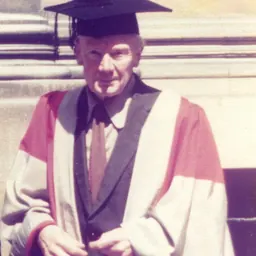
Patricia Jane Moberly (née Coney; 20 October 1938 – 2 September 2016) was a British public servant, Labour politician, activist, and teacher. She is best known for her work as Chair of Guy's and St Thomas' NHS Foundation Trust between 1999 and 2011, as well as her involvement in the Anti-Apartheid Movement.
Early life and education Moberly was born on 20 October 1938 in Fareham, Hampshire, England. She was the youngest child of Captain Gerald Coney, a Royal Navy officer, and Margaret Coney (née Jelf). Due to her father's career, the family moved around a lot: she had moved home 11 times by the age of ten. She was educated at six different schools before being sent to board at Sunny Hill School, a private school. Having received a scholarship, she studied English language and literature at the University of Liverpool, graduating with a first class honours Bachelor of Arts (BA Hons) degree. One of her lecturers was Kenneth Muir, the eminent Shakespeare scholar. Her father had not wanted her to attend university, stating that she was "fit only to be a cook". Her doctoral thesis concerned the work of Charlotte Mary Yonge, a 19th-century novelist with links to the Oxford Movement and the Pre-Raphaelite Brotherhood.
Career Teaching career In 1959, the then Patricia Coney married Richard Hamilton Moberly, a son of the philosopher and university administrator Walter Hamilton Moberly. Richard Moberly was an ordained Anglican priest and in 1963, she moved with him to Chingola, Northern Rhodesia, where he was posted as a rector. From 1964 to 1967, she taught at Chikola School, a local secondary school for black Africans. During her time in the country, that would soon become the independent Zambia, she taught at local schools and became involved in anti-racist politics. She became one of the few white women to join the United National Independence Party.
Political life During her time in Zambia, Moberly became opposed to racial oppression and the Apartheid of neighbouring South Africa. She joined the United National Independence Party, becoming one of its few white female members.
In the early 1970, Moberly was arrested after a demonstration outside Downing Street: the protest was against the British government's inaction over the war in Rhodesia. She had been accused of throwing a placard stating "No Peace Without Majority Rule" at a car containing the then prime minister, Ted Heath, leading to a conviction of a breach of the peace. Defended by the eminent barrister Dingle Foot,
Moberly served as a governor of Maudsley Hospital and Bethlem Royal Hospital, two psychiatric hospitals, from 1976 to 1978. She served as a governor of the United Medical and Dental Schools of Guy's and St Thomas' Hospitals (UMDS) from 1988 to 1990. When she arrived, there were clear issues with the trust: racial divisions meant that black nurses mainly worked on less prestigious wards such as elderly care, and consultant appointments were perceived as being affected Freemasonry membership. During her 12 years in charge, and having been "initially met with resistance from the predominantly white medical establishment", she strived for racial and gender diversity throughout trust.
Moberly's final public post was as a member of the Committee on Standards in Public Life, to which she was appointed on 17 May 2012. Due to her cancer diagnosis, she had stepped down from most of her other responsibilities, but also continued as a visitor at Brixton Prison.
Personal life Moberly and her husband had four children.
Don’t just read it —
keep it.
Full-length biographies made to live with: read them, listen on the way to work, watch them tonight.
- E-book
- Audio
- Video
Instant download · yours to keep · every purchase keeps this site free
Important facts
People in Patricia Moberly's life
Named in this biography and alive at the same time







Contemporaries
People whose lives overlapped Patricia Moberly's


Frequently asked questions
Who was Patricia Moberly?
English teacher, Labour politician, and Anti-Apartheid activist (1938–2016)
When was Patricia Moberly born?
Patricia Moberly was born on 20 October 1938.
When did Patricia Moberly die?
Patricia Moberly died on 2 September 2016.
What nationality was Patricia Moberly?
Patricia Moberly was British.
Sources & further reading
Cite this page
APA: Biography.guide. (2026). Patricia Moberly. https://biography.guide/patricia-moberly/
MLA: "Patricia Moberly." Biography.guide, https://biography.guide/patricia-moberly/.
Chicago: "Patricia Moberly." Biography.guide. https://biography.guide/patricia-moberly/.
Data last updated: 2026-09-20 · Spot an error? Report a correction.
Page generated 2026-09-27 05:32 UTC