
About Pat Sullivan
Lived 1887 – 1933 (aged 46). Pat Sullivan was an Australian comics artist, film producer, animator, boxer, screenwriter and film director.
Patrick Peter O'Sullivan (February 22, 1885 – February 15, 1933) was an Australian-American cartoonist, pioneer animator and film producer, best known for producing the first Felix the Cat silent cartoons.
Early life Patrick Peter O'Sullivan was born on Ivry Street in the Paddington suburb of Sydney, Australia on 22 February 1885. During this time Sullivan became acquainted with Pat Powers - the then treasurer of Universal Pictures - who was putting together a screen magazine for the studio. Powers convinced Sullivan to open his own animation studio, for which Universal would provide financial backing and distribute his films. The studio replaced the Sammy Johnsin series with several other short lived series including: Fearless Freddy and Willie Slate by Messmer, and Willie Winks, Boomer Bill, Boxcar Bill and Hardrock Doome by Sullivan and other members of the staff - as well as various one-shot cartoons.
By 1917, Sullivan began relegating the creative control and directorial duties of the films to Messmer and the other members of his staff, while he mainly concentrated on business affairs. In his personal life, Sullivan dated a variety of women, often entertaining them back at his apartment on 10 Manhattan Avenue - all while still maintaining his long-time relationship with Gallagher.
Charlie in Turkey (1919, animated film) starring the tramp Charlie (known from the Chaplin movies). After visiting a secondhand bookstore, Charlie dreams that he abducts the Queen of Sheba. But behind the veil of this Turkish lady awaits a surprise. In the Spring of 1917, Sullivan reached out to Charlie Chaplin, and offered to create a series of cartoons based on his popular film character of The Tramp. Chaplin had previously commissioned Tramp cartoons from John C. Terry's (brother of Paul Terry) Movca Film Studio in San Francisco, and from his own Essanay Studios, headed by cartoonist Wallace Carlson.
It is disputed whether this short and the character of Felix the Cat were created by Sullivan or Otto Messmer. During the height of Felix's popularity and until his death, Sullivan claimed sole credit for the character's creation. Beginning in May 1924, while on a six-week tour of England, Sullivan gave the first account of Felix's origin that he would frequently repeat:
On other occasions, he claimed that Felix had been inspired by Rudyard Kipling's The Cat that Walked by Himself. As Australian cartoonist, and Sullivan's friend, Kerwin Maegraith told The Sydney Mail in 1936, Sullivan decided to name the character Felix after Australia Felix; a term from Australian history and a title of a a popular 1917 novel by Henry Handel Richardson. Maegraith also stated that Sullivan decided to make Felix a black cat, after West-Indian-born Australian black boxer Peter Felix - who as Sullivan claimed "...used to frighten us kids in Sydney."
Beginning in 1967, Messmer claimed he had created the short Feline Follies almost entirely by himself. As he remembered, Sullivan almost turned down Hurd's offer since he was busy, but ultimately agreed, and told Messmer: "If you want to do it on the side, you can do any little thing to satisfy them." Messmer then animated the film by himself on nights and weekends in his home in New Jersey. To save himself time, he decided to make a film about a little black cat, and made him all-black "...because it saves making a lot of outlines, and solid black moves better." Australian cartoonist Gerald Carr noted that the comic-style effects in Feline Follies, and the lettering in the dialogue captions matches Sullivan's art-style and handwriting as opposed to Messmer's. In particular, Carr notes that towards the end of the cartoon, one of the cat's says "Alo Mum" - with the word for mother being spent the Australian-British way of 'M-U-M' as opposed to the American way of 'M-O-M'.
Dan and Lienors Torre also note that a Black cat character appeared in Sullivan's Chaplin cartoons that debuted when Messmer was away serving in World War I, and an add in Motion Picture World (most likely drawn by Sullivan) for the first entry in the series - How Charlie Captured the Kaiser - features a black cat reminiscent of the one in Feline Follies. However (as stated previously) production of the Chaplin series had begun in the Spring 1917 under Messmer's direction, prior Sullivan's arrest and the studio's temporary closure. After Sullivan's release from prison he told the press he had over 8,500 "completed drawings" (equating to roughly 17–20 minutes), meaning work on How Charlie Captured the Kaiser had already been largely been completed.
Outside of Australia, animation historians unanimously agree Messmer was the true creator of Felix the Cat: among them are Michael Barrier, Jerry Beck, John Canemaker, Donald Crafton, David Gerstein, Milt Gray, Mark Kausler, Leonard Maltin, and Charles Solomon.
During the height of Felix's popularity in the 1920s, neither Messmer nor any of the studio's other animators received any media publicity or screen credit on any of the Felix cartoons – which was exclusively reserved for Sullivan. As Messmer remembered: "Very few people in those days got credit. Most people in the industry knew that I was running the studio for him. But the public, all they got was 'by [Pat] Sullivan.'"
When Sullivan returned to the studio the next morning, he bragged to his staff how he had "screwed the dark one." George Clardey - Sullivan's former music hall partner in London turned animator - was determined "to get the girls away from [Sullivan] and his friends" and immediately took action. He arranged for the girls to speak to an acquaintance of his, a film actress by the name of Julia Siggins. Horrified by their story, she immediately found new lodgings for the girls on Seventh Avenue. Siggins also "noticed some suspicious stains on Alice's clothing", and it was later discovered that she contracted venereal disease from Sullivan.
Sullivan and Smythe were arrested on May 10, 1917. Smythe was charged with abduction, but was later lowered to "impairing morals" - while Sullivan was charged with the rape of an underage girl. On May 21, Sullivan was released on $2,500 bail, and hastily married his long-time girlfriend Marjorie Gallagher that same day at Manhattan's Municipal Building. The next day, Sullivan was indicted with the charge of rape in the second degree and arrested. After a trial, the jury found Sullivan guilty on June 21, with his sentencing scheduled for September 13. Between his indictment and his sentencing, Sullivan was detained in the The Tombs.
After the verdict, Sullivan hired a second lawyer, Harry Kopp, who filed a motion on August 29, 1917 to set aside the conviction judgement rendered against Sullivan on the ground of newly discovered evidence. This motion was denied, for "in the opinion of his court, the verdict of the jury was justified by the evidence" and the "alleged facts" made to support a new trial "would not, had they been presented at the trial, have changed the result." However Judge C. T. Crain took into consideration that Sullivan was "a man of very considerable ability... without a criminal record" and also acknowledged receiving a number of letters "from reputable people who speak well of you." One of these people was Sullivan's wife Marjorie, who the day before the sentencing wrote to the judge saying: "...if you will be as lenient with my husband's sentence (Pat Sullivan) as possible, for I know, if anyone knows, he's innocent of this crime. Justly you will listen to my plea and down in my heart I ask this only favor."
Judge Cain ultimately agreed that Sullivan had been "...punished by the imprisonment which you have undergone between the date of your conviction and this day... [and] although that confinement was really at your own request, [it] ought to be taken into consideration in the imposition of the sentence." While the maximum penalty for a person convicted of rape in the second degree at the time was 10 years in prison; Judge Crain sentenced Sullivan to Sing Sing Correctional Facility "...for not less than one year and not more than two."
Sullivan ultimately served a total of 9 months in prison. On July 6, 1919, Motion Picture World ran an article announcing Sullivan's return to producing animated cartoons, without mentioning where he was returning from or why he had left in the first place. Sullivan's then-distributor, Universal Pictures, welcomed his return and agreed to distribute his cartoons as part of their Nestor line.
Poor studio working conditions The Sullivan studio was reported to have extremely poor working conditions for its animators, and Pat Sullivan was reportedly abusive towards his staff. The studio's equipment was inadequate, with the cameraman using an old Bell & Howell 35 mm camera to photograph the animation drawings, that was stationary and unable to zoom in or out, and these shots had to be animated by hand causing extra work for the animators. As Al Eugster remembered: "Everything was set, and they [the animators] worked on one field, which was very confining."
Sullivan's animators staff were all underpaid. By the late-1920s Sullivan had become a millionaire, and according to a June 1927 article, Sullivan earning royalty checks of at least $1,500 per month. Meanwhile, Sullivan's top animators were paid only $25 a week, with lower ranking assistants being paid only $10 a week.
Al Eugster recalled that when a photograph was being taken of the staff, Sullivan forced all the animators to move down once seat so he could sit at the desk closest towards the camera - a seat that was usually reserved for Messmer. After being dismissed from Sullivan in 1929, Eugster went to work at Fleischer Studios, where he became life-long friends with Shamus Culhane. As Culhane wrote in his 1986 autobiography:
Racism Sullivan also reportedly carried a strong bias against African-Americans. According to Rudy Zamora, when he and Eddie Salter tested for positions at the Sullivan studio, they were bested by a young African-American boy. Zamora recalled that animator Dana Parker "took the black boy [aside] and told him that they'll call him when they needed him, [as they were] not hiring anyone that day. But they kept Eddie and I. That was lousy. Then they would have hired this black guy and myself. Ed was third." When Zamora complained about this to Parker, he was told, "The old man [Sullivan] didn't want any black guys."
Sound films and decline After Warner Bros. released The Jazz Singer on October 6, 1927, the film industry quickly began to transition to sound. In 1928, after loosing the rights to Oswald the Lucky Rabbit to Charles Mintz and Universal Pictures, Walt Disney collaborated with his lead animator, Ub Iwerks, to create Mickey Mouse. While Disney and Iwerks originally produced the first two Mickey cartoons – Plane Crazy and The Gallopin' Gaucho – as silent cartoons, they were unable to attract the interest of distributors. Therefore, Disney decided to produce the next Mickey cartoon in sound.
Otto Messmer – who had been acquainted with Disney through Margaret Winkler – caught wind of Disney's experiments with sound, and tried to convince Sullivan to follow suit. However Sullivan, who had been removed from the filmmaking process for many years and whose decision making was impaired by his alcoholism, refused by simply saying: "Why change?"
Marjorie Gallagher Sullivan was buried four days after her death, upon which she left Sullivan an estate of over $70,000. According to Harry Kopp, Sullivan subsequently spent much of this money on hiring prostitutes, "...and issuing a great number of checks without any consideration, a large number of which were returned for insufficient funds."
Throughout 1932, stricken with grief over the death of his wife, combined with his years of alcoholism and also possibly the final stage of syphilis that affects the brain, Sullivan's mental and physical health rapidly began to deteriorate. Messmer was Sullivan's only remaining employee and by this point his sole job was to write and draw the Felix comic strips under Sullivan's name. As he recalled towards the end of 1932 Sullivan was unable to recognize him, and his handwriting had become so eligible that Messmer had difficulty cashing his paychecks.
As Kerwin Maegraith, recalled in 1936: "...having returned from Miami, where he [Sullivan] had vainly tried to recover some of his lost health and spirits, he caught a severe chill; double pneumonia developed..."
Pat Sullivan died of "chronic alcoholism" and "terminal lobular pneumonia" in the Sherman Square Hospital, at 9:15 A.M. on February 15, 1933 at age 47.
According to Otto Messmer, Sullivan had promised to leave both the studio and the rights to Felix the Cat to him in his will, but upon his death it was revealed Sullivan had no will. Instead, Harry Kopp became the executor of Sullivan's estate, officially closed the studio and eventually arranged the rights to Felix the Cat to inherited by Sullivan's older brother, William J. O'Sullivan, in Australia. After Patrick O'Sullivan's death in 1971, Oriolo gained full ownership of the company and rights to Felix the Cat, and made a concerted effort to give Messmer the credit he had long been denied. In 2016, DreamWorks Animation was purchased by Comcast's NBCUniversal, who as of 2026, continue to own the trademark rights to Felix the Cat.
In popular culture
The Simpsons episode The Day the Violence Died is said to have been largely based on Pat Sullivan and Otto Messmer's relationship, and the dispute over who created Felix the Cat.
Character creations Roscoe Arbuckle holding Lasky Studio cat "Ethel" as model for Pat Sullivan to draw his Felix the Cat for the Paramount Magazine, on page 78 of the 12 March 1921 Exhibitors Herald. Felix the Cat (disputed) Great Idea Jerry Willing Waldo Old Pop Perkins Johnny Boston Beans Obliging Oliver
Don’t just read it —
keep it.
Full-length biographies made to live with: read them, listen on the way to work, watch them tonight.
- E-book
- Audio
- Video
Instant download · yours to keep · every purchase keeps this site free
Important facts
People in Pat Sullivan's life
Named in this biography and alive at the same time




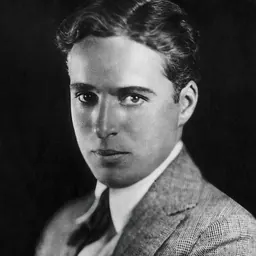
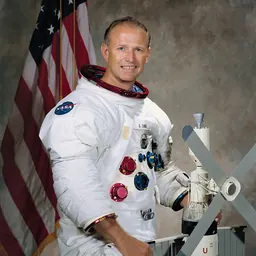
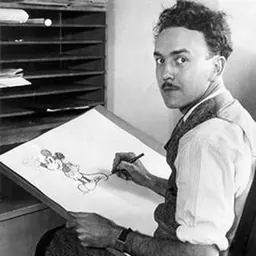
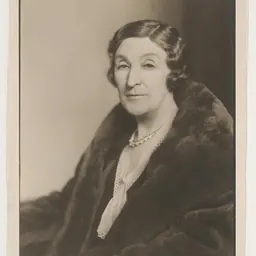
Related people
Same field, nearest in time
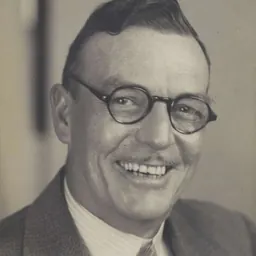
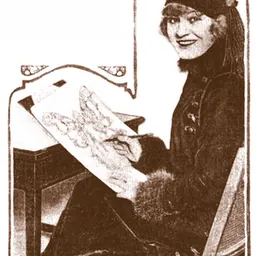
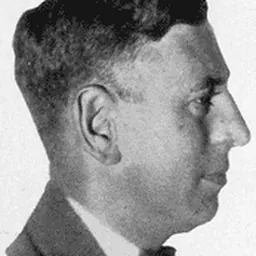


Contemporaries
People whose lives overlapped Pat Sullivan's


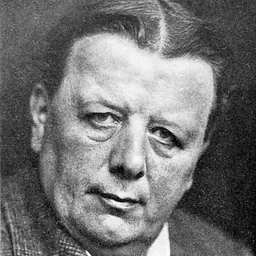

Frequently asked questions
Who was Pat Sullivan?
Australian animator (1887–1933)
When was Pat Sullivan born?
Pat Sullivan was born on 2 February 1887 in Paddington.
When did Pat Sullivan die?
Pat Sullivan died on 15 February 1933 in New York City.
What was Pat Sullivan's occupation?
Pat Sullivan was a comics artist, film producer, animator, boxer, screenwriter and film director.
What nationality was Pat Sullivan?
Pat Sullivan was Australian.
Sources & further reading
· DBpedia: Pat Sullivan (film producer)
Cite this page
APA: Biography.guide. (2026). Pat Sullivan. https://biography.guide/pat-sullivan-comics-artist/
MLA: "Pat Sullivan." Biography.guide, https://biography.guide/pat-sullivan-comics-artist/.
Chicago: "Pat Sullivan." Biography.guide. https://biography.guide/pat-sullivan-comics-artist/.
Data last updated: 2026-09-20 · Spot an error? Report a correction.
Page generated 2026-09-27 05:24 UTC