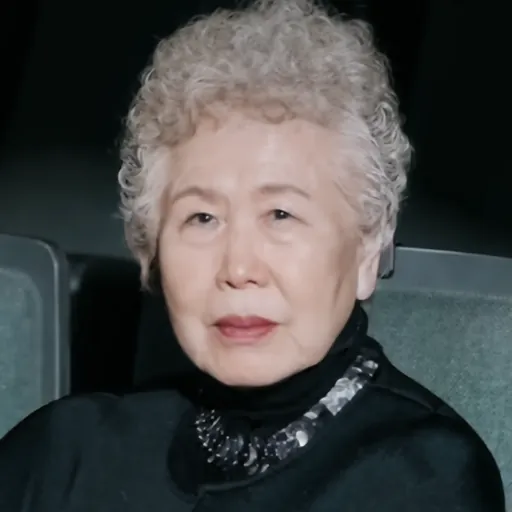
About Park Jeong-ja
Born 1942. Park Jeong-ja is a South Korean actor, film actor and stage actor.
Park Jeong-ja (, born March 12, 1942) is a South Korean actress. She made her debut as a theater actor in 1962. She became the first actress to receive the in 1997, a prominent Korean theater award.
Park Jeong-ja has also achieved significant recognition as a film actress. She received the Grand Bell Awards for Best Supporting Actress twice: in 1975 for director Kim Ki-young's The Promise of the Flesh, and in 1985 for director Jeong Jin-woo's The MA-NIM. Her other notable film appearances include Growing Generously, Anemone, and Widow's Dance.
Since its establishment in 2005, Park Jeong-ja has served as chairman of the board of directors for the Korea Activist Welfare Foundation, supporting medical and living expenses for theater practitioners.
Early life and education Park Jeong-ja, the youngest of five children, was born on March 12, 1942, in , Namdong District, Incheon, Korea, Empire of Japan. Her father was a native of Incheon, while her mother originated from Ganghwa Island. Her Japanese name was Masako (正子). Her father selected Chinese character "Baaljeong (正)" as the middle character for her name. Reflecting on her name, Park later commented, "It is uncommon for a woman's name to include the character 'Baaljeong.' However, I believe that 'brightness' has been a guiding force in my life, bringing me to where I am today." I saw my first play when I was nine years old (Korean Age). In April 1950, before the June 25 Incident occurred, at the theater now called Bumin-gwan. My brother appeared in a minor role in 'Wonsulang' written and directed by (柳致眞, 1905-1974). I was ecstatic. Even now, I still remember that scene. Kim Dong-hoon (金東勳) plays the lead role of Won-sullang, Kim Seon-yeong (金仙英) plays Jin Dal-rae, the girl who follows Won-sullang, and Baek Seong-hee (白星姬) plays the princess who is Won-sullang's fiancée. Kim Sun-young was a North Korean actress during the June 25 Uprising. She was short, had a sonorous voice, and was an impressively tall actress. Following the outbreak of the Korean War on June 25, on June 25, Park Jeong-ja's older brother fled to Daegu with the Shinhyup Theater Company. He enlisted locally and participated in consolation performances as a member of the military art corps. Meanwhile, her mother took her four young daughters to seek refuge in her hometown, Ganghwa Island. After the January 4, 1951, retreat, her family relocated again, this time to Jeju Island. Park distinctly recalls embarking on a US military ship, the LST, from Wolmido to Jeju Island. During their stay, her mother frequently traveled between Jeju, Daegu, and Mokpo, buying and selling various goods to make a living. These memories have led Park to consider Jongdal-ri, Gujwa-eup, Jeju, as another hometown. She occasionally visits to reminisce about those days, especially when she misses her mother.
After three years of war, an armistice was declared, and Park's family returned to Incheon. She transferred to the 4th grade at Parkmun Elementary School, continuing her education in her hometown until the beginning of the 6th grade. During her time at Parkmun Elementary School, each grade had only one class, and all students were female. The school was situated within Dapdong Cathedral, leading her to spend significant time in the church's front yard. She also appeared in a Sunday school play, which led her to wonder why such an enjoyable activity occurred only once a year on Christmas.
Starting in 1962, Park actively participated in three plays during her university years. The following year, she performed in The House of Bernarda Alba, directed by Heo Gyu (許珪, 1934-2000). She received rave reviews for her role as an 80-year-old woman, with one critic commenting that "college plays threaten established plays." These experiences laid a solid foundation for her career, largely due to the unique nature of The Ewha Womans University College of Liberal Arts Theater Department (이화여대 문리대 연극부). It functioned beyond a typical club or departmental project, embodying a "college of arts play" concept. Performances occurred at prestigious venues like the Drama Center and Myeongdong Art Theater, not just the university auditorium. Renowned professional directors guided the productions, resulting in significant acclaim.
In March 1966, they gathered at "Hyangwon," a renowned restaurant in Jingogae. Following the founding meeting, with Lee Byung-bok as the representative, Jayu Theater was officially established on April 29. Jayu's inaugural performance was The Feast of the Followers, an Italian farce by Eduardo De Filippo (original title: Poverty and Nobility) about poor servants disguising themselves as nobles. At Kim Jeong-ok's suggestion, Jayu Theater initially planned to stage Friedrich Dürrenmatt's The Physicists. However, due to its difficulty and philosophical nature, they changed the play to The Feast of the Followers. With less than a month until the performance date, they felt pressure and urgency. They rehearsed tirelessly in Lee Byung-bok's reception room in Jangchung-dong. Despite the challenging start, the performance was well-received, particularly for the actors' strong acting. This successful production marked the beginning of Jayu Theater's journey. In January 1986, Park won her second for her performance.
In 1986, Lim Young-woong planned Korean adaptations of Simone de Beauvoir's play Women in Crisis to commemorate the first anniversary of Sanullim Theater's opening. As CEO Lim sought an actress for the female lead, he asked Park for recommendations. Park suggested Kim Hye-ja and Kim Min-ja, but both were unavailable. Park then recommended herself. CEO Lim initially rejected the idea, expecting a more established actress, which wounded Park's pride. Eventually, CEO Lim approached her, handed her the script, and suggested she join the production.
The play was a success. From the VIP performance on March 30, the response was exceptional. Lee Byeong-bok, CEO of Jayu Theater Company, told director Lim, "Thank you for making Park Jeong-ja a woman." From the next day, housewife audiences flocked to Sanullim Small Theater. Audiences reacted strongly to lines spoken by Cho Myeong-nam, who played her husband, and when Park Jeong-ja's character complained, many housewives sobbed. The play's popularity was such that it was covered in the social section of newspapers rather than the cultural section. Park described it as a work that drew a large audience and marked a significant moment in Korean theater. For her role as Monique, Park received the , Baeksang Arts Award, and Seoul Drama Critics Group Award, achieving a triple crown in the theater industry.
However, that year coincided with the 20th anniversary of the Jayu Theater Company, which chose Where and How Shall We Meet?, based on Choi In-hoon's work, for its commemoration. A strained relationship developed between two prominent Korean theater directors, Kim Jeong-ok and Lim Young-woong, as neither wanted to relinquish Park. Park stated that the clash between the two directors made her feel trapped, marking it as the most challenging moment in her career. When asked about reprising this performance, Park humbly responds, "That's high praise. However, I have no plans to revisit play 'night, Mother. I don't believe I can surpass what I accomplished back then. Nevertheless, there are a few other works that offer similar depth and challenges."
In the same year, the "Flower Bouquet Society" was established with 17 members who appreciated Park's notable plays such as Mom Discovered the Sea at Fifty and Woman in Crisis. Twelve of these members had already formed a group as early as 1987. The members chose the name "Flower Bouquet" to symbolize the desire to spread the subtle and lasting fragrance of culture, akin to the scent of dried flowers in a sachet. Members pay an entrance fee of one million won and purchase four theater tickets per person for each of Park's performances, with attendance being mandatory. The collected entrance fees fund the Society's activities or are donated to other organizations in its name.
In 1992, Sanullim Theater relocated to Dongsung-dong. Its previous small theater in Unni-dong had to close as part of the Seoul Metropolitan Government's initiative to restore Daewongun's private residence. To celebrate the move, a performance of their popular experimental repertoire, Agnes of God, was staged in April. Park played the role of the head nun, while Son Sook portrayed Dr. Livingstone. Shin Ae-ra and Jung Soo-young alternated in playing the character of Agnes.
In 2003, Park Jeong-ja took on the role of Maude in the second encore performance of 19 and 80. Originally titled Harold and Maude by Colin Higgins, the play premiered in Korea in 1987 with Kim Hye-ja and Kim Joo-seung. Directed by Jang Doo-yi, the story follows Maude, an eccentric 80-year-old grandmother who dreams of becoming an astronaut, and her relationship with 19-year-old Harold, who helps her discover her own strength. Park performed in 19 and 80 five times (in 2003, 2004, 2006, 2008, and 2012), each time with different co-stars. The 2008 version was adapted into a musical. Park personally produced all five productions.
Personal life Park Jeong-ja met her future husband through her friend Lee Ji-seon, a reporter for Women Donga. Lee Ji-seon sought Park's help to organize a consolation performance for a military unit in Gangwon Province, where her brother, Lieutenant Lee Ji-song, was stationed. During Lieutenant Lee Ji-song's break from duty, Park and Lee Ji-seon met to discuss the upcoming performance. Alongside their colleagues Choo Song-woong and Ham Hyun-jin, members of the theater group Jayu, they passionately planned and performed the play Friendship. This collaboration and shared experience forged a deep bond, leading to a relationship between Park and Lieutenant Lee Ji-song.
English Korean
The Insect Woman 충녀 Madame supporting actor 1975 Promise of the Flesh 육체의 약속 Female prison guard Main Role
Io Island 이어도 Shaman 1977 The Reincarnation, Hanne's Moonlight 한네의 승천 1978 Yeo-su 여수 1978 The Guest in Room Guest and Mother 사랑방 손님과 어머니 Housekeeper, Ahn Seong-daek Main Role 1978 Once Upon a Long Time 옛날 옛적에 훠어이 훠이 Main Role 1978 Rainy Season 장마
1978 Soil 흙 1979 Paljunochopanambo 빨주노초파남보 Main Role 1981 Ban Geum-ryun 반금련 1981 Mandala 만다라 1982 Come Low Unto Us 낮은 데로 임하소서 Bit Role 1984 Widow Dancing 과부춤 Director of a marriage counseling center
1985 The MA-NIM 자녀목 Nomanim 1986 Lee Jang-ho's Foreign Team 이장호의 외인구단 Bit Role 1987 Flowers are blooming in a windy day 바람 부는 날에도 꽃은 피고 1987 Pillar of Mist 안개 기둥
1989 I Give You Everything 아낌없이 주련다 1993 Western Avenue 웨스턴 애비뉴 1995 Sea Anemone 말미잘 Main Role 2013 Applause 박수건달 Wang Mudang 2015 Invited 초대 Grandmother Short film 2016 Master 마스터 Shin Seon-saeng
2018 Herstory 허스토리 Mrs. Hong of the brothel
Love to See 보는 것을 사랑한다 My Role Television series
Radio program +Radio program Year Title Role Note 2015 EBS Book Reading Radio Reading Series Announcer EBS Korea Educational Broadcasting Corporation
Stage Concert
Creative musical Theater
Musical
Theater
Theater (2000-present)
Accolades Awards and nominations
State honors +Name of country, award ceremony, year given, and name of honorCountry Award CeremonyYearHonorSeoul Metropolitan City Seoul Metropolitan City Cultural Award 1998 Cultural Award — Theater South Korea Culture Day Ceremony 2007 Bogwan Order of Cultural Merit
Listicle
Don’t just read it —
keep it.
Full-length biographies made to live with: read them, listen on the way to work, watch them tonight.
- E-book
- Audio
- Video
Instant download · yours to keep · every purchase keeps this site free
Important facts
People in Park Jeong-ja's life
Named in this biography and alive at the same time




Related people
Same field, nearest in time
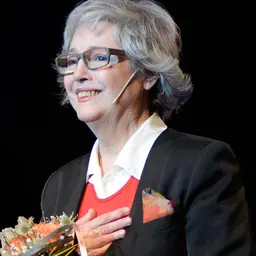



Contemporaries
People whose lives overlapped Park Jeong-ja's



Frequently asked questions
Who is Park Jeong-ja?
South Korean actress
When was Park Jeong-ja born?
Park Jeong-ja was born on 12 March 1942 in Seoul.
What is Park Jeong-ja's occupation?
Park Jeong-ja is an actor, film actor and stage actor.
What nationality is Park Jeong-ja?
Park Jeong-ja is South Korean.
Sources & further reading
· DBpedia: Park Jeong-ja (actress)
Cite this page
APA: Biography.guide. (2026). Park Jeong-ja. https://biography.guide/park-jeong-ja-actor/
MLA: "Park Jeong-ja." Biography.guide, https://biography.guide/park-jeong-ja-actor/.
Chicago: "Park Jeong-ja." Biography.guide. https://biography.guide/park-jeong-ja-actor/.
Data last updated: 2026-09-23 · Spot an error? Report a correction.
Portrait: Wikimedia Commons · author & licence
Page generated 2026-09-27 05:07 UTC