
About Pareherwenemef
Born 1150 BC. Pareherwenemef was an aristocrat.
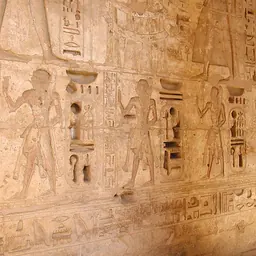
Pareherwenemef ("Re is with his left arm") was an ancient Egyptian prince of the Twentieth Dynasty, a son of pharaoh Ramesses III. He is depicted in his father's mortuary temple at Medinet Habu and was buried in QV42 in the Valley of the Queens.
Biography
Pareherwenemef was one of the sons of Ramesses III and, like several of his brothers, was named after a son of Ramesses II, whom Ramesses III sought to emulate. Both Pareherwenemef and his brother Khaemwaset are called firstborn sons of the king; they may therefore have been the firstborn sons of different wives of Ramesses III.
Pareherwenemef died at the age of 24, during the twentieth regnal year of his father. His mother may have been Minefer, since inscriptions on ushabtis found during excavations in QV42 in 1990-1991 suggest that Minefer was the owner of material found in the tomb and probably the mother of the prince. It has also been suggested that Pareherwenemef may have been married, because a princess's sarcophagus was found in his tomb.
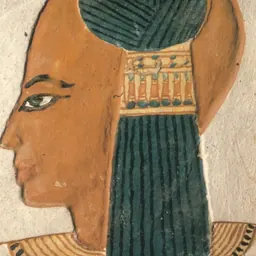
However, Minefer’s ushabtis were actually found in the debris deposit in front of the entrance to QV45, near several tombs. Although funerary items of Pareherwenemef were also recovered there, it cannot automatically be concluded that everything in that deposit came from his tomb. Nor can Minefer be directly linked to the unnamed queen's portrait in QV42. Moreover, since Minefer held the title of King's Mother, unless she was the mother of Ramesses VIII, she cannot have been a wife of Ramesses III. At the same time, Ramesses VIII could also have been the grandson of Ramesses III. The painting technique of the queen's portrait in QV42 is clearly different from that of the rest of the same tomb. This tomb may originally have belonged to this queen and later been usurped by Ramesses III and granted to his son, or the tomb may later have been usurped by this queen; the tomb certainly underwent multiple usurpations in its later history.
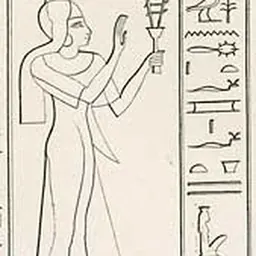
In his report on the excavations of the Italian Archaeological Mission, Ernesto Schiaparelli referred to the prince under the form Pirahiremnif and observed that, in the scenes of the tomb, the figure is not given the Osirian epithet, although he is called "justified". Schiaparelli recorded for him titles connected with the great stable of the king, the royal palace and the status of eldest king's son, but noted that conclusions about the succession of the princes depend on whether the title of eldest son was used in an actual or honorific sense.
Tomb
Pareherwenemef was buried in QV42, a tomb in the Valley of the Queens. The same archive preserves a photograph of the entrance taken during the excavations of Schiaparelli in 1904-1906, with a plaque commemorating the Italian excavations of 1904.
Don’t just read it —
keep it.
Full-length biographies made to live with: read them, listen on the way to work, watch them tonight.
- E-book
- Audio
- Video
Instant download · yours to keep · every purchase keeps this site free
Important facts
Related people
Same field, nearest in time



Frequently asked questions
Who was Pareherwenemef?
ancient Egyptian prince, son of Ramses III
When was Pareherwenemef born?
Pareherwenemef was born in 1150 BC.
What was Pareherwenemef's occupation?
Pareherwenemef was an aristocrat.
Sources & further reading
· DBpedia: Pareherwenemef (20th dynasty)
Cite this page
APA: Biography.guide. (2026). Pareherwenemef. https://biography.guide/pareherwenemef-aristocrat/
MLA: "Pareherwenemef." Biography.guide, https://biography.guide/pareherwenemef-aristocrat/.
Chicago: "Pareherwenemef." Biography.guide. https://biography.guide/pareherwenemef-aristocrat/.
Data last updated: 2026-09-20 · Spot an error? Report a correction.
Page generated 2026-09-27 05:23 UTC