
About Paolo Lanfranchi da Pistoia
Paolo Lanfranchi da Pistoia was an Italian troubadour and composer.
Paolo Lanfranchi da Pistoia (; fl. 1282–1295) was a noted Italian poet who wrote in both the Italian and Occitan languages. He is thus sometimes described as a troubadour. A native of Pistoia—he was a major cultural figure of the Duecento there—his sonnets have been praised for their originality.
Biography Paolo is first encountered in the records in Bologna in 1282. He was present for an act granted in favour of Pistoia on 1 February that year. He also testified alongside Forisio di Jacopo in a document of 13 October, and was still at Bologna on 21 January 1283, when he witnessed a mutuum contracted between two men of Pistoia, Gerardino Bruno and Pucino Pepi. In 1291 he was back in Pistoia, where he was sentenced as guilty for the crime of striking cum una spada malvagia vetita pro forma statutorum ("with a sword in malice") a certain Orellio Megliori on the head, ex dicta percussione multus sanguis extivit ("from which wound exited much blood").
Italian poetry Paolo wrote seven surviving sonnets in Italian. The first four are seen as an interrupted dream, while the last three are a contemplative response. The basic theme of Paolo's work is the question "How can man reconcile love of woman with love of God?" or, more generally, love of earthly with love of heavenly things. Paolo's solution tends towards complete division of Earth and Heaven, no reconciliation. As a lover, he ignores Reason and pursues his subconscious desires, but his "daydreaming" is interrupted the bells of Matins and thus he finds he cannot escape religious demands even in his mind.
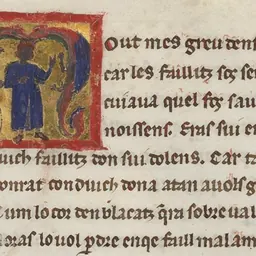
Paolo has usually been placed either within the school of Guittone d'Arezzo, the guittoniani, or in a transitional place between them and the Dolce Stil Novo. His style and language, however, are distinctly un-Guittonian. They have more in common with the Sicilian School, especially in their expression of raw emotion. that has come to find you and has left France With his two sons and that one of Artois; but they have not dealt a blow with sword or lance and many barons have left their country: but a day will come when they will have some to remember. Our Lord make yourself a company in order that you might fear nothing; that one who would appear to lose might win. Lord of the land and the sea, as whom the king of England and that of Spain are not worth as much, if you wish to help them. Several anonymous coblas that appear towards the end of MS P have been attributed to Paolo by nineteenth-century authors. One cobla, Mand qe iur e non periur was addressed al iuge de Galur, that is, the Judge of Gallura, then Nino Visconti. The cobla after it in the chansonnier is also addressed to Nino, but has not been assigned by any scholar to Paolo. The other anonymous cobla sometimes ascribed to Paolo was addressed to the "Count of Montfort". The anonymous author of both these coblas calls himself a jongleur.
Don’t just read it —
keep it.
Full-length biographies made to live with: read them, listen on the way to work, watch them tonight.
- E-book
- Audio
- Video
Instant download · yours to keep · every purchase keeps this site free
Important facts
Related people
Same field, nearest in time




Frequently asked questions
Who was Paolo Lanfranchi da Pistoia?
Italian poet
When was Paolo Lanfranchi da Pistoia born?
Paolo Lanfranchi da Pistoia was born in Pistoia.
What was Paolo Lanfranchi da Pistoia's occupation?
Paolo Lanfranchi da Pistoia was a troubadour and composer.
What nationality was Paolo Lanfranchi da Pistoia?
Paolo Lanfranchi da Pistoia was Italian.
Sources & further reading
· Wikipedia: Paolo Lanfranchi da Pistoia
· DBpedia: Paolo Lanfranchi da Pistoia
Cite this page
APA: Biography.guide. (2026). Paolo Lanfranchi da Pistoia. https://biography.guide/paolo-lanfranchi-da-pistoia/
MLA: "Paolo Lanfranchi da Pistoia." Biography.guide, https://biography.guide/paolo-lanfranchi-da-pistoia/.
Chicago: "Paolo Lanfranchi da Pistoia." Biography.guide. https://biography.guide/paolo-lanfranchi-da-pistoia/.
Data last updated: 2026-09-20 · Spot an error? Report a correction.
Page generated 2026-09-27 05:33 UTC