
About Pan Wenshi
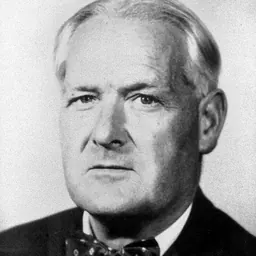
Born 1937. Pan Wenshi is a Chinese biologist, known for Chinese white dolphin, Giant panda and White-headed langur.
Pan Wenshi in Sanniang Bay of Qinzhou, Guangxi, China in 2013.
Pan Wenshi (; born 1937) is a Chinese biologist and Peking University professor. His research works on giant panda, white-headed langur and Chinese white dolphin in the last 36 years are internationally recognized contributions. Pan had authored and co-authored 40-50 treatises published on various domestic and international journals including National Geographic and Nature and he is renowned for his academic achievements on researching the three near-extinct contemporary species. He serves as the director of the Giant Panda and Wildlife Conservation Research Center at Peking University. His work proved that panda habitat needed to be protected for them to survive in the wild and that pandas are polygamous, where previously it was thought that a dominant male secured exclusive breeding rights.
Biography Pan was born in Bangkok, Thailand in 1937 where his family had lived for five generations. When he was three years old, he moved with his parents to Shantou in Guangdong province.
Pan studied biology at Peking University. His first experience with pandas was seeing the world's first captive-born panda at the Beijing zoo where he got to hold the infant panda.
He has also helped save the white-headed langur species through his work at the Nongguan Nature Reserve in Chongzuo, China. His work to save the langurs focused on both protecting the species, and improving the lives of the nearby villagers who were competing for resources with the langurs. The population of langurs declined from 2,000 in the late 1980s to just 96 when Pan began his work in 1996. Through Pan's efforts, the population has since climbed to over 500 in 2008.
Academic thoughts In his book The Natural Refuge of Giant Panda at Qinling co-authored with postgraduates under his supervision, researchers and other collaborators, Pan put forward for the first time arguments supporting “giant pandas in Qinling can survive living in natural conditions” which was acclaimed by international peers to be “significant contribution to the biological theory of giant panda”. Following that in his book Chance for Continual Survival Pan commented that “since the cause leading to the near-extinct of giant panda was human error, it must require human to rectify their acts in order giant pandas could have a chance for continual survival”. In the book The White Dolphins of Qinzhou Pan and his co-authors unveiled that Chinese white dolphin appeared in Beibu Gulf only from 6000 years ago and that in the Beibu Gulf population is preserved an ancient and rare genotype that is so far never found in populations in other territorial waters. In the book he as well suggested that the social developments of Qinzhou must be planned to optimize a win-win situation between its economy and nature conservation for that is the only way to achieve sustainable development. The Natural History of White-headed Langur is a live record of researches in wilderness. When Pan went into the Nongguan Mountains he noticed there the sustenance environment was almost totally devastated and that “human was suffering more miserably than the langurs there”. In view of which he suggested “the core issue of nature conservation in Nongguan Mountains is to improve the living conditions of the people there. Only after people’s lives been improved could white-headed langur conservation be anticipated”. 20 years practice of his words has proved his foresight; during the period the white-headed langur population in Nongguan Mountains has increased from the initial of about 100 individuals to about 820 individuals, and the people there have as well gradually improved their livings to well-off standard.
Awards
For his outstanding contributions in nature conservation over 30 years, Pan Wenshi was awarded more than ten China National Awards and seven international awards. Amongst them are:
Year 1992 National "May 1 Labor" Award Year 1994 China National Federation of Returned Overseas Chinese Patriot Dedication Year 1996 North America Grizzly Funds -Special Scientific Achievement Award (科學特別成就獎) October 1996 Zoological Society of San Diego "Conservation Medal" Year 1996 Prince Bernhard of Netherlands the "Golden Ark" Year 1999 World Wildlife Fund (WWF) "Paul Getty Award" Year 2008 Ford Motor Co. Environmental Conservation Prize "Contributions to Ecological Civilization Award" Year 2010 "Worldly Influential Chinese Award" Year 2014 City of Beijing "Metropolitan Prize" Special Honor
Don’t just read it —
keep it.
Full-length biographies made to live with: read them, listen on the way to work, watch them tonight.
- E-book
- Audio
- Video
Instant download · yours to keep · every purchase keeps this site free
Important facts
People in Pan Wenshi's life
Named in this biography and alive at the same time

Related people
Same field, nearest in time






Contemporaries
People whose lives overlapped Pan Wenshi's





Frequently asked questions
Who is Pan Wenshi?
Panda biologist
When was Pan Wenshi born?
Pan Wenshi was born in 1937 in Bangkok.
What is Pan Wenshi's occupation?
Pan Wenshi is a biologist.
What is Pan Wenshi known for?
Pan Wenshi is known for Chinese white dolphin, Giant panda and White-headed langur.
What nationality is Pan Wenshi?
Pan Wenshi is Chinese.
Sources & further reading
Cite this page
APA: Biography.guide. (2026). Pan Wenshi. https://biography.guide/pan-wenshi/
MLA: "Pan Wenshi." Biography.guide, https://biography.guide/pan-wenshi/.
Chicago: "Pan Wenshi." Biography.guide. https://biography.guide/pan-wenshi/.
Data last updated: 2026-09-20 · Spot an error? Report a correction.
Page generated 2026-09-27 05:27 UTC