
About Pablo Curatella Manes
Lived 1891 – 1962 (aged 70). Pablo Curatella Manes was an Argentine diplomat, painter and sculptor.
Pablo Curatella Manes (December 14, 1891 – November 14, 1962) was a prolific Argentine sculptor.
Life and work Born in La Plata in 1891 to Clara Manes, a Greek Argentine immigrant, and Antonio Curatella, from Italy, Curatella Manes first acquired an interest in sculpture during his frequent childhood visits to the newly inaugurated La Plata Fine Arts Museum. He entered the labor force in 1905 as a typographer in a printing house, though an accident some months later ended his career in that industry. Drawing on his childhood interest, he was taught the basics of sculpture by Arturo Dresco, who owned a local atelier.
The Curatellas relocated to Buenos Aires, where the young sculptor enrolled in the National Fine Arts School in 1907. A rebellious streak promptly led to his expulsion, though Curatella earned an apprenticeship in 1908 under Lucio Correa Morales, with whom he worked on a number of works commissioned by Public Parks Director Charles Thays. Following the 1910 elections, he created a commemorative gold medal for Vice President-elect Victorino de la Plaza, who secured a scholarship for Curatella that took him to Florence and Rome. Curatella traveled extensively in Italy, as well as much of western Europe, touring the region's museums and cathedrals. On his return to Argentina in 1912, National Fine Arts School director Ernesto de la Cárcova nearly ordered the funds' repayment, objecting to travel and activities not covered by the scholarship, desisting from the punishment after being shown a folio of Curatella's prolific work.
He married French painter Germaine Derbecqre in 1922 and in 1926, was given a post in the Argentine Embassy. Returning to Argentina in 1929, he exhibited Las Tres Gracias (The Three Graces), which marked a departure towards the Abstract which would typify his work in subsequent years. Commissioned to create wall reliefs for the Argentine Pavilion in the 1937 Paris Exhibition, Curatella returned to France and opened an atelier on rue Lauriston, in Paris. His monumental Tierra Argentina and Los Dos Hemisferios ("Argentina" and "The Two Hemispheres") earned him the honor of serving in the Paris Exhibition's sculpture jury, and following the event, he was made an Officer of the Légion d'honneur. Reappointed to the embassy in 1939 as a chargé d'affaires, Curatella oversaw the repatriation of Argentine nationals in France following the Nazi invasion of France in 1940. Following World War II, he oversaw the reopening of the Argentine Embassy, as well as the reconstruction of the Boulogne-Sur-Mer home where the hero of the Argentine War of Independence, General José de San Martín, died in 1850.
Curatella continued to sculpt during his diplomatic tenure, and was among those who in 1946 reinaugurated the Salon des Indépendants, an artists' society and exhibit series banned by the Vichy regime. He remained active in the salon until being transferred to the Embassy in Athens in 1949, upon which he donated thirty-one works to the Argentine government for the purpose of creating a museum of modern art (which were added to the National Museum of Fine Arts, instead). He contributed to Unesco festivals and was appointed to the organizing committee for Expo 58, while accepting a commission from architect Mario Roberto Álvarez for two reliefs, El Drama and La Comedia, for display in the public San Martín Theatre, inaugurated in 1960. Curatella returned to the diplomatic corps in 1958, as an official in the Argentine Embassy in Brussels, whereby he oversaw the Argentine pavilion at Expo 58 and was honored with the Order of Leopold. Invited as a commissioner of the 1961 Paris Biennale, he reopened his rue Lauriston atelier. His El Guitarrista and Torso Femenino were acquired by the Modern Art Museum of the City of Paris, but a sudden illness forced the noted sculptor to return to Buenos Aires, where he died in 1962, at age 70.
Don’t just read it —
keep it.
Full-length biographies made to live with: read them, listen on the way to work, watch them tonight.
- E-book
- Audio
- Video
Instant download · yours to keep · every purchase keeps this site free
Important facts
People in Pablo Curatella Manes's life
Named in this biography and alive at the same time

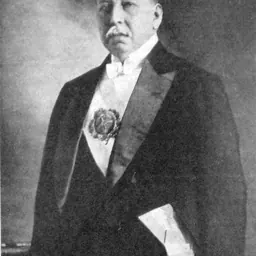

Related people
Same field, nearest in time

Contemporaries
People whose lives overlapped Pablo Curatella Manes's





Frequently asked questions
Who was Pablo Curatella Manes?
Argentine sculptor (1891-1962)
When was Pablo Curatella Manes born?
Pablo Curatella Manes was born on 14 December 1891 in La Plata.
When did Pablo Curatella Manes die?
Pablo Curatella Manes died on 14 November 1962 in Buenos Aires.
What was Pablo Curatella Manes's occupation?
Pablo Curatella Manes was a diplomat, painter and sculptor.
What nationality was Pablo Curatella Manes?
Pablo Curatella Manes was Argentine.
Sources & further reading
· Wikipedia: Pablo Curatella Manes
· DBpedia: Pablo Curatella Manes
Cite this page
APA: Biography.guide. (2026). Pablo Curatella Manes. https://biography.guide/pablo-curatella-manes/
MLA: "Pablo Curatella Manes." Biography.guide, https://biography.guide/pablo-curatella-manes/.
Chicago: "Pablo Curatella Manes." Biography.guide. https://biography.guide/pablo-curatella-manes/.
Data last updated: 2026-09-20 · Spot an error? Report a correction.
Page generated 2026-09-27 05:33 UTC