
About Pablo Antonio
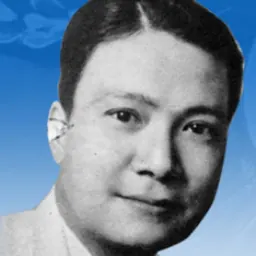
Lived 1901 – 1975 (aged 74). Pablo Antonio was a Filipino architect.
Pablo Sebero Antonio, Sr. (January 25, 1901 – June 14, 1975) was a Filipino architect. A pioneer of modern Philippine architecture, he was recognized in some quarters as the foremost Filipino modernist architect of his time.
Works The facade of the main building of the Far Eastern University, designed by Pablo S. Antonio, Sr. and Nicolas Reyes in the late 1930s Antonio first came into prominence in 1933 with the construction of the Ideal Theater along Avenida Rizal in Manila.
His work caught the eye of the Far Eastern University founder, Dr. Nicanor B. Reyes, Sr., who was looking to build a school campus that was modern in style. Between 1938 and 1950, he designed several buildings on the university campus in the Art Deco style. The FEU campus is considered as the largest ensemble of surviving Art Deco architecture in Manila. In 2005, it received an Honorable Mention citation from the UNESCO for the body's 2005 Asia-Pacific Heritage Awards for Culture Heritage Conservation.
Appreciation
Antonio's architecture and its adoption of Art Deco techniques was radical for its day, neoclassicism being the dominant motif of Philippine architecture when he began his career. His style was noted for its simplicity and clean structural design. He was cited for taking Philippine architecture into a new direction, with "clean lines, plain surfaces, and bold rectangular masses." Antonio strove to make each building unique, avoiding obvious trademarks.
Antonio was also conscious of adapting his buildings to the tropical climate of the Philippines. In order to highlight natural light and also avoid rain seepage, he utilized sunscreens, slanted windows and other devices.
Antonio himself has been quoted as stating that "buildings should be planned with austerity in mind and its stability forever as the aim of true architecture, that buildings must be progressive, simple in design but dignified, true to a purpose without resorting to an applied set of aesthetics and should eternally recreate truth" .
When he was named National Artist of the Philippines in 1976, he was only the second architect so honored, after his contemporary, Juan Nakpil. His eldest son, Architect Pablo Reyes Antonio Jr., restored some of his art deco buildings in the FEU campus.
Death Pablo Antonio died on June 14, 1975, in Manila, Philippines.
Don’t just read it —
keep it.
Full-length biographies made to live with: read them, listen on the way to work, watch them tonight.
- E-book
- Audio
- Video
Instant download · yours to keep · every purchase keeps this site free
Important facts
People in Pablo Antonio's life
Named in this biography and alive at the same time

Related people
Same field, nearest in time

Contemporaries
People whose lives overlapped Pablo Antonio's


Frequently asked questions
Who was Pablo Antonio?
Filipino architect (1901-1975)
When was Pablo Antonio born?
Pablo Antonio was born on 25 January 1901 in Binondo, Manila, Insular Government of the Philippine Islands.
When did Pablo Antonio die?
Pablo Antonio died on 14 June 1975 in Manila.
What was Pablo Antonio's occupation?
Pablo Antonio was an architect.
What nationality was Pablo Antonio?
Pablo Antonio was Filipino.
Sources & further reading
Cite this page
APA: Biography.guide. (2026). Pablo Antonio. https://biography.guide/pablo-antonio/
MLA: "Pablo Antonio." Biography.guide, https://biography.guide/pablo-antonio/.
Chicago: "Pablo Antonio." Biography.guide. https://biography.guide/pablo-antonio/.
Data last updated: 2026-09-25 · Spot an error? Report a correction.
Page generated 2026-09-27 05:12 UTC