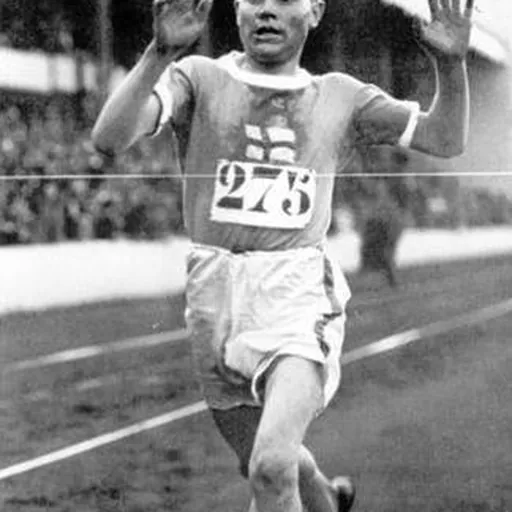
Paavo Nurmi
Finnish middle and long distance runner
About Paavo Nurmi
Lived 1897 – 1973 (aged 76). Paavo Nurmi was a Finnish long-distance runner, marathon runner, athletics competitor and athlete.
Early life
Nurmi was born in Turku, Finland, to carpenter Johan Fredrik Nurmi and his wife Matilda Wilhelmiina Laine. Nurmi's siblings, Siiri, Saara, Martti and Lahja, were born in 1898, 1902, 1905 and 1908, respectively. In 1903, the Nurmi family moved from Raunistula into a 40-square-meter apartment in central Turku, where Paavo Nurmi would live until 1932. By the age of eleven, Nurmi ran the 1500 metres in 5:02. He bought his first pair of sneakers a few days later. Two years later, he revised his training program to include walking, sprints and calisthenics. As the unit commander Hugo Österman was a known sports aficionado, Nurmi and a few other athletes were given free time to practice. the cross country race, beating Sweden's Eric Backman, and the cross country team event where he helped Heikki Liimatainen and Teodor Koskenniemi defeat the British and Swedish teams. Nurmi's success brought electric lighting and running water for his family in Turku. In the 1500 m final at the Olympics in Paris, Nurmi ran the first 800 m almost three seconds faster. The 5000 m final started in less than two hours, and Nurmi faced a tough challenge from countryman Ville Ritola, who had already won the 3000 m steeplechase and the 10,000 m. caused all but 15 of the 38 competitors to abandon the race. As of July 2024, this is the second-longest-standing world record for the men's 10,000 metres. Kenenia Bekele's world record set in August 2005 in Brussels stood for over 15 years. Nurmi now held the 1500 metres, the mile, the 3,000 metres, the 5,000 metres and the 10,000 metres world records simultaneously.
U.S. tour and 1928 Olympics Nurmi, right, and Joie Ray, left, with U.S. President Calvin Coolidge during Nurmi's 1925 U.S. tour In early 1925, Nurmi embarked on a widely publicised tour of the United States. He competed in 55 events (45 indoors) during a five-month period, starting at a sold-out Madison Square Garden on 6 January. His debut was a copy of his feats in Helsinki and Paris. Helffrich's victory ended Nurmi's 121-race, four-year win streak in individual scratch races at distances from 800 m upwards. Although he hated losing more than anything, Nurmi was the first to congratulate Helffrich. Nurmi left America fearing that he had competed too often and burned himself out.
Nurmi struggled to maintain motivation for running, heightened by his rheumatism and Achilles tendon problems. Before the 5000 m final, Nurmi injured himself in his qualifying heat for the 3000 m steeplechase. In January 1929, Nurmi started his second U.S. tour from Brooklyn. He suffered his first-ever defeat in the mile to Ray Conger at the indoor Wanamaker Mile. Nurmi was seven seconds slower than in his world record run in 1925, In 1930, he set a new world record for the 20 km. He was the first runner to complete the distance in less than nine minutes.
In April 1932, the executive council of the International Amateur Athletics Federation (IAAF) suspended Nurmi from international athletics events pending an investigation into his amateur status by the Finnish Athletics Federation. The Finnish authorities criticized the IAAF for acting without a hearing, and the Associated Press wrote that "there is little doubt that if the Finnish federation clears Nurmi the international body will accept its decision without question."
On 26 June 1932 Nurmi started his first marathon at the Olympic trials. Not drinking a drop of liquid, he ran the old-style 'short marathon' of in 2:22:03.8 – on the pace to finish in about 2:29:00, just under Albert Michelsen's marathon world record of 2:29:01.8. At the time, he led Armas Toivonen, the eventual Olympic bronze medalist, by six minutes. Nurmi's time was the new unofficial world record for the short marathon. Confident that he had done enough, Nurmi stopped and retired from the race owing to problems with his Achilles tendon. The Guardian reported that "some of his trial times were almost unbelievable," and Nurmi went on to train at the Olympic Village in Los Angeles despite his injury. Sigfrid Edström, the Swedish chairman of the Council of the International Association of Athletics Federations (s.o. the board of directors), pushed independently and without receiving the support of the rules of the International Association of Athletics Federations for a decision to ban Nurmi from participating in the Los Angeles Olympics at the IAAF board meeting without consulting the Finnish Sports Federation (SUL) and Nurmi on 3.4. and 30 July 1932. [The rules for disqualification of an athlete were made only after the Olympics at the Congress (General Assembly) of the International Sports Federation (IAAF), where Edström and Bo Ekelund, secretary of the council, represented Sweden. The report for Nurmi's ban came from Avery Brundage, president of the American Sports Federation.] Edström stated that the full congress of the IAAF, which was scheduled to start the next day, could not reinstate Nurmi for the Olympics but merely review the phases and political angles related to the case. Thousands protested against the action in Helsinki. Details of the case were not released to the press, but the evidence against Nurmi was believed be the sworn statements from German race promoters that Nurmi had received $250–500 per race when running in Germany in autumn 1931.
On the eve of the marathon, all the entrants of the race except for the Finns, whose positions were known, filed a petition asking Nurmi's entry to be accepted. Edström's right-hand man Bo Ekelund, secretary general of the IAAF and head of the Swedish Athletics Federation, approached the Finnish officials and stated that he might be able to arrange for Nurmi to participate in the marathon outside the competition. Nurmi stated he would have won the event by five minutes. However, due to the close vote, the matter was postponed until the 1934 meet in Stockholm. and ceased all athletic relations with Sweden. A year earlier, controversies on the track and in the press had led Finland to withdraw from the Finland-Sweden athletics international. After Nurmi's suspension, Finland did not agree to return to the event until 1939. and continued running as an amateur in Finland. The council then brought forward its resolution empowering it to suspend athletes that it finds in violation of the IAAF amateur code. In 1935, Nurmi along with the entire board of directors quit the federation after a heated 40–38 vote to resume athletic relations with Sweden. However, Nurmi returned to coaching three months later and the Finnish distance runners went on to take three gold medals, three silvers and a bronze at the Games. In 1936, Nurmi also opened a men's clothing store (haberdashery) in Helsinki. It became a popular tourist attraction, and Emil Zátopek was among those who visited the store trying to meet Nurmi. The Finn spent his time in the back room, running another new business venture; construction. Within five years, he was rated a millionaire.
In February 1940, during the Winter War between Finland and the Soviet Union, Nurmi returned to the United States with his protégé Taisto Mäki, who had become the first man to run the 10,000 m under 30 minutes, to raise funds and rally support to the Finnish cause. Hoover welcomed the two as "ambassadors of the greatest sporting nation in the world." While in San Francisco, Nurmi received news that one of his apprentices, 1936 Olympic champion Gunnar Höckert, had been killed in action. Nurmi left for Finland in late April, and later served in the Continuation War in a delivery company and as a trainer in the military staff. Before he was discharged in January 1942, Nurmi was promoted first to a staff sergeant (ylikersantti) and later to a sergeant first class (vääpeli). After lighting the flame in the Olympic Cauldron, Nurmi passed the torch to his idol Kolehmainen, who lighted the beacon in the tower. In the cancelled 1940 Summer Olympics, Nurmi had been planned to lead a group of fifty Finnish gold medal winners.
Nurmi felt that he got too much credit as an athlete and too little as a businessman, Nurmi ran for the last time on 18 February 1966 at the Madison Square Garden, invited by the New York Athletic Club. In 1962, Nurmi predicted that wealthier countries would start to struggle in the distance events: "The higher the standard of living in a country, the weaker the results often are in the events which call for work and trouble. I would like to warn this new generation: 'Do not let this comfortable life make you lazy. Do not let the new means of transport kill your instinct for physical exercise. Too many young people get used to driving in a car even for small distances.'" In 1966, he took the microphone in front of 300 sports club guests and criticised the state of distance running in Finland, reproaching the sports executives as publicity seekers and tourists, and demanding athletes sacrifice everything to accomplish something. Nurmi lived to see the renaissance of Finnish running in the 1970s, led by athletes such as the 1972 Olympic gold medalists Lasse Virén and Pekka Vasala. He had complimented the running style of Virén, and advised Vasala to concentrate on Kipchoge Keino. Nurmi lived a very secluded life until the late 1960s when he began granting some press interviews. On his 70th birthday, Nurmi agreed to an interview for Yle, Finland's national public-broadcasting company, only after learning that President Kekkonen would act as the interviewer. Suffering from health problems, with at least one heart attack, a stroke and failing eyesight, Nurmi at times spoke bitterly about sports, calling it a waste of time compared to science and art. He died in 1973 in Helsinki and was given a state funeral.
Personal life and public image
Nurmi was married to socialite Sylvi Laaksonen (1907–1968) from 1932 to 1935. Matti Nurmi did become a middle-distance runner, and later a "self-made" businessman. However, the kinship is not supported by official documents. He had a versatile diet, although he had practiced vegetarianism between the ages of 15 and 21. Nurmi was averse to publicity and the media, Some contemporary Finns nicknamed him Suuri vaikenija (The Great Silent One), and Ron Clarke noted that Nurmi's persona remained a mystery even to Finnish runners and journalists: "Even to them, he was never quite real. He was enigmatic, sphinx-like, a god in a cloud. It was as if he was all the time playing a role in a drama." Nurmi told Peltzer to forget his opponents: "Conquering yourself is the greatest challenge of an athlete." Regarding Nurmi's conduct on track, Peltzer found that "in his impenetrability he was a Buddha gliding on the track. Stopwatch in hand, lap after lap, he ran towards the tape, subject only to the laws of a mathematical table." Marathoner Johnny Kelley, who first met his idol at the 1936 Olympics, said that while Nurmi appeared cold to him at first, the two chatted for quite a while after Nurmi had asked for his name: "He grabbed ahold of me — he was so excited. I couldn't believe it!"
Nurmi's speed and elusive personality led to nicknames such as the "Phantom Finn", the "King of Runners" and "Peerless Paavo", while his mathematical prowess and use of a stopwatch led the press to characterize him as a running machine. One newspaperman dubbed Nurmi "a mechanical Frankenstein created to annihilate time." Phil Cousineau noted that "his own innovation—the tactic of pacing himself with a stopwatch—both inspired and troubled people in an era when the robot was becoming symbolic of the modern soulless human being." During the debate over his amateur status, Nurmi was joked to have "the lowest heartbeat and the highest asking price of any athlete in the world." He also set many more unofficial ones for a total of 58. Nurmi's record for most medals in the Olympic Games stood until Edoardo Mangiarotti won his 13th medal in fencing in 1960. Time selected Nurmi as the greatest Olympian of all time in 1996, and IAAF named him among the first twelve athletes to be inducted into the IAAF Hall of Fame in 2012.
Nurmi introduced the "even pace" strategy to running, pacing himself with a stopwatch and spreading his energy uniformly over the race. He reasoned that "when you race against time, you don't have to sprint. Others can't hold the pace if it is steady and hard all through to the tape." Nurmi was considered a pioneer also in regards to training; he developed a systematic all-year-round training program that included both long-distance work and interval running. Peter Lovesey wrote in The Kings of Distance: A Study of Five Great Runners that Nurmi "accelerated the progress of world records; developed and actually came to personify the analytic approach to running; and he was a profound influence not only in Finland, but throughout the world of athletics. Nurmi, his style, technique and tactics were held to be infallible, and really seemed so, as successive imitators in Finland steadily improved the records." Cordner Nelson, founder of Track & Field News, credited Nurmi for popularizing running as a spectator sport: "His imprint on the track world was greater than any man’s before or after. He, more than any man, raised track to the glory of a major sport in the eyes of international fans, and they honored him as one of the truly great athletes of all sports." He became the first man after Nurmi to win the 1500 m and the 5000 m at the same Games. In 1936, Ludwig Stubbendorf and his horse Nurmi won the individual and team gold medals in eventing. The original is held at the art museum Ateneum, but copies cast from the original mould exist in Turku, in Jyväskylä, in front of the Helsinki Olympic Stadium and at the Olympic Museum in Lausanne, Switzerland. Statues of Nurmi were also sculpted by Renée Sintenis in 1926 and by Carl Eldh, whose 1937 work Löpare (Runners) depicts a battle between Nurmi and Edvin Wide. while Finnair named its first DC-8 Paavo Nurmi in 1969. Nurmi's former rival Ville Ritola boarded the plane when he moved back to Finland in 1970. In Finland, another marathon bearing the name has been held in Nurmi's hometown of Turku since 1992, along with the athletics competition Paavo Nurmi Games that was started in 1957. Finlandia University, an American college with Finnish roots, named their athletic center after Nurmi. A ten-mark bill featuring a portrait of Nurmi was issued by the Bank of Finland in 1987. The other revised bills honored architect Alvar Aalto, composer Jean Sibelius, Enlightenment thinker Anders Chydenius and author Elias Lönnrot, respectively. In fiction, Nurmi appears in William Goldman's 1974 novel Marathon Man as the idol of the protagonist, who aims to become a greater runner than Nurmi. The opera on Nurmi, Paavo the Great. Great Race. Great Dream., written by Paavo Haavikko and composed by Tuomas Kantelinen, debuted at the Helsinki Olympic Stadium in 2000. In a 2005 episode of The Simpsons, Mr. Burns brags that he once outraced Nurmi in his antique motorcar. The NURMI Study, which aims to compare the athletic performance of vegetarian and vegan athletes to those with omnivorous diets, is named in honour of Paavo Nurmi.
Career summary (1920–34)
Seasons
The starts figure excludes heats, handicap races, relays, and events where Nurmi raced alone against relay teams. Season Distances Starts Wins Podiums 1920 1500 m – 10,000 m 14 13 14 0 1921 800 m – 10,000 m 17 15 16 0 1922 800 m – 4 miles 20 20 20 0 1923 800 m – 5000 m 23 23 23 0 1924 800 m – 10,000 m 25 25 25 0 1925 800 m – 10,000 m 58 56 57 1 1926 1000 m – 10,000 m 19 16 19 0 1927 1500 m – 5000 m 12 12 12 0 1928 1500 m – One hour run 15 12 15 0 1929 Mile – 6 miles 14 12 14 0 1930 1500 m – 20,000 m 11 11 11 0 1931 2 miles – 7 miles 16 14 14 2 1932 10,000 m – Marathon 3 2 2 1 1933 1500 m – 25,000 m 16 13 15 1 1934 3000 m – 10,000 m 8 8 8 0
Events The starts figure excludes heats, handicap races, relays, and events where Nurmi raced alone against relay teams. Event Years Starts Wins Podiums 800 m / 880 yd 1921–1925 8 6 8 0 1500 m 1920–1933 33 30 32 0 Mile 1920–1929 10 9 10 0 3000 m 1920–1934 29 27 29 0 2 miles 1922–1931 23 22 23 0 5000 m 1920–1934 71 67 69 2 10,000 m 1920–1934 17 17 17 0 Cross country 1920–1934 23 23 23 0
Olympics
Year Date Event Mark Result 1920 16 August 5000 m – heat 3 15:33.0 Q (2nd) 17 August 5000 m – final 15:00.5 2nd 19 August 10,000 m – heat 1 33:46.3 Q (2nd) 20 August 10,000 m – final 31:45.8 1st 22 August Individual cross country 27:15.0 1st Team cross country 10 pts 1st 1924 8 July 5000 m – heat 2 15:28.6 Q (1st) 9 July 1500 m – heat 3 4:07.6 Q (1st) 10 July 1500 m – final 3:53.6 (OR) 1st 5000 m – final 14:31.2 (OR) 1st 11 July 3000 m team race – heat 1 8:47.8 (1st) Q (1st) 12 July Individual cross country 32:54.8 1st Team cross country 11 pts 1st 13 July 3000 m team race – final 8:32.0 (1st) 1st 1928 29 July 10,000 m 30:18.8 (OR) 1st 31 July 5000 m – heat 3 15:08.0 Q (4th) 1 August 3000 m steeplechase – heat 2 9:58.8 Q (1st) 3 August 5000 m – final 14:40.0 2nd 4 August 3000 m steeplechase – final 9:31.2 2nd
World records
IAAF-ratified
Distance Mark Stockholm 3:56.2 New York City 4:13.5 Buffalo 5:33.0 New York City 5:30.2 Buffalo 8:27.8 Copenhagen 8:26.8 New York City 8:26.4 New York City 8:58.2 New York City 14:14.4 Kokkola 14:08.4 Stockholm 14:02.0 Helsinki 14:44.6 New York City 19:18.8 Kuopio 24:13.2 Kuopio 29:41.2 Stockholm 29:07.1 Kuopio 2:22:03.8 Viipuri
Don’t just read it —
keep it.
Full-length biographies made to live with: read them, listen on the way to work, watch them tonight.
- E-book
- Audio
- Video
Instant download · yours to keep · every purchase keeps this site free
Important facts
People in Paavo Nurmi's life
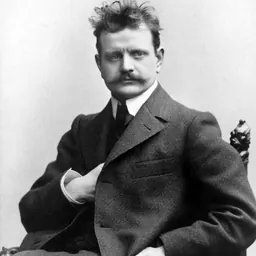
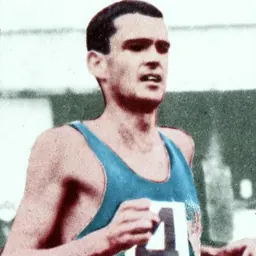
Named in this biography and alive at the same time



Related people
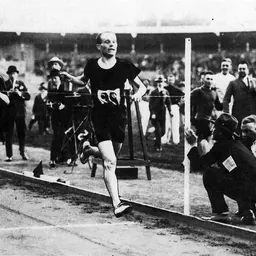
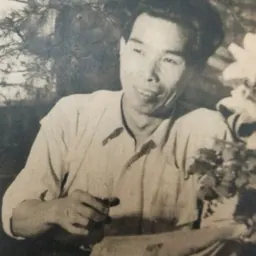
Same field, nearest in time


Contemporaries
People whose lives overlapped Paavo Nurmi's

Frequently asked questions
Who was Paavo Nurmi?
Finnish middle and long distance runner (1897–1973)
When was Paavo Nurmi born?
Paavo Nurmi was born on 13 June 1897 in Turku.
When did Paavo Nurmi die?
Paavo Nurmi died on 2 October 1973 in Helsinki.
What was Paavo Nurmi's occupation?
Paavo Nurmi was a long-distance runner, marathon runner, athletics competitor and athlete.
What nationality was Paavo Nurmi?
Paavo Nurmi was Finnish.
Sources & further reading
Cite this page
APA: Biography.guide. (2026). Paavo Nurmi. https://biography.guide/paavo-nurmi/
MLA: "Paavo Nurmi." Biography.guide, https://biography.guide/paavo-nurmi/.
Chicago: "Paavo Nurmi." Biography.guide. https://biography.guide/paavo-nurmi/.
Data last updated: 2026-09-23 · Spot an error? Report a correction.
Portrait: Wikimedia Commons · author & licence
Page generated 2026-09-27 05:07 UTC