
About P. K. Monnappa
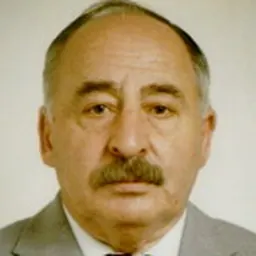
P. K. Monnappa was an Indian police officer.
Rao Bahadur Pemmanda K. Monnappa (P.K. Monappa, IPS) was Karnataka's first police chief. He served in three Southern states, Madras (before its disintegration), Hyderabad (Andhra Pradesh), and Mysore (Karnataka), at different times. However, he is to be best remembered for his contributions towards integrating Hyderabad into the Union. Monnappa had a career in Public Service reflected by his titles and medals.
Biography
P. K. Monnappa was born and brought up in Kodagu, India. Those days Andhra Pradesh was divided between the British Indian province of Madras and the princely state of Hyderabad. He was made Inspector-General of Police, the highest position in the police of Hyderabad State, after Operation Polo. He had served the regions of Kurnool and Guntur in Andhra Pradesh. Monnappa was instrumental in suppressing the Razakars rebellion in Andhra Pradesh as the Inspector-General of Police. The then Union Home Minister, Sardar Vallabbhai Patel, had chosen Monnappa to quell the mutiny in Hyderabad.
He became the Inspector-General of Andhra state in 1953 and of Mysore from 1956.
During the British Raj, Mr. Monnappa became a police inspector, was made an officer of the IP (Imperial Police) cadre, and eventually, he became the Director General of Police of Madras State.
Within the Nizam's realm, Razakars led by Kasim Razvi, had stepped up their campaign. On 16 September, faced with imminent defeat, the Nizam summoned Prime Minister Mir Laik Ali and requested his resignation by the morning of the following day. The resignation was delivered along with the resignations of the entire cabinet. On the noon of 17 September, a messenger brought a personal note from the Nizam to India's Agent General to Hyderabad, K.M. Munshi summoning him to the Nizam's office at 1600 hours. At the meeting, the Nizam stated "The vultures have resigned. I don't know what to do". Munshi advised the Nizam to secure the safety of the citizens of Hyderabad by issuing appropriate orders to the Commander of the Hyderabad State Army, Major General El Edroos. Munshi also suggested that the Nizam might make a broadcast welcoming the Indian "Police action" and withdrawing his complaint to the Security Council. Munshi explained and offered to help draft the speech. The speech was in English. Nobody bothered to translate it into Urdu. After the broadcast, the Nizam drove back to King Kothi Palace to brood. Major General El Edroos offered his surrender of the Hyderabad State Forces to Major General (later General and Army Chief) Joyanto Nath Chaudhuri at Secunderabad. Within five days the "police action", actually a military operation, was all but over. The Nizam received the ceremonial post of Rajpramukh (equivalent to a governor) in 1950 but resigned from this office when the states were re-organized in 1956.
Following the escape of Mir Laiq Ali after his resignation and Hyderabad's surrender, PK Monnappa, IP, then Inspector-General of Police from Madras State, had been specially brought in to replace BBS Jetley. Later he quelled the unrest that followed in the aftermath of Operation Polo when landlords who supported the Nizam terrorised the common people in Nalgonda in Hyderabad in around 1950 as police chief of Hyderabad under Home Minister Sardar Patel's command. He had also been the first Police Chief of the States of Madras and Hyderabad before his tenure in Mysore (Karnataka).
Legacy
His residence was in Bangalore when he retired in 1958.
Legend has it that during his recruitment interview, which he attended dressed in the traditional Kodava-robed costume (the Kuppya Chele), the British officers were awed by his personality. In 1959-60, after his retirement, he served as President of the Kodava Samaja. Along with Field Marshal K.M. Cariappa he was instrumental in setting up the present Kodava Samaja, the forum of the Kodava (Coorg) community, building in Bangalore.
Later his son Pemmanda Monnappa Belliappa (P. M. Belliappa) became an IAS officer and was posted as a district officer in Tamil Nadu. He has settled down in Madras. He established the Pemmanda Monnappa scholarship fund in 2010 for South Indians studying at Cambridge University. For 2011, P. M. Belliappa was honored as Coorg person of the year. The daughter is Seethama (Lilly) Madappa married to Shri K.C.Madappa (I.A.S.) the first Kodava Secretary to the President of India under Dr.Neelam Sanjeeva Reddy. Ref: (kcmadappaias in Google)
Don’t just read it —
keep it.
Full-length biographies made to live with: read them, listen on the way to work, watch them tonight.
- E-book
- Audio
- Video
Instant download · yours to keep · every purchase keeps this site free
Important facts
Related people
Same field, nearest in time




Frequently asked questions
Who was P. K. Monnappa?
Indian police officer
When was P. K. Monnappa born?
P. K. Monnappa was born in Kodagu district.
What was P. K. Monnappa's occupation?
P. K. Monnappa was a police officer.
What nationality was P. K. Monnappa?
P. K. Monnappa was Indian.
Sources & further reading
Cite this page
APA: Biography.guide. (2026). P. K. Monnappa. https://biography.guide/p-k-monnappa/
MLA: "P. K. Monnappa." Biography.guide, https://biography.guide/p-k-monnappa/.
Chicago: "P. K. Monnappa." Biography.guide. https://biography.guide/p-k-monnappa/.
Data last updated: 2026-09-20 · Spot an error? Report a correction.
Page generated 2026-09-27 05:19 UTC