
About Ozzie Smith
Born 1954. Ozzie Smith is an American baseball player and shortstop.
Osborne Earl Smith (born December 26, 1954) is an American former professional baseball player. Nicknamed "the Wizard of Oz", Smith played shortstop for the San Diego Padres and St. Louis Cardinals in Major League Baseball (MLB). Renowned for his acrobatic athletic ability, Smith is now widely regarded as one of the greatest defensive players of all time, winning the National League (NL) Gold Glove Award for defensive play at shortstop for 13 consecutive seasons. He was also a 15-time All-Star, accumulated 2,460 hits and 580 stolen bases during his career, and won the National League Silver Slugger Award as the best hitter at shortstop in 1987.
Smith was born in Mobile, Alabama; his family moved to Watts, Los Angeles, when he was six years old. While participating in childhood athletic activities, Smith possessed quick reflexes; he went on to play baseball at Locke High School in Los Angeles, then at California Polytechnic State University, San Luis Obispo. Drafted as an amateur player by the Padres, Smith made his major league debut in 1978. He quickly established himself as an outstanding fielder, and later became known for performing backflips on special occasions while taking his position at the beginning of a game. Smith won his first Gold Glove Award in 1980 and made his first All-Star Game appearance in 1981.
When Smith clashed with the Padres' owners, Cardinals manager Whitey Herzog flew to San Diego to persuade the shortstop that he would be an appreciated and core component of the St. Louis team. Herzog's overture worked; Smith waived his contract's no-trade clause and was traded to the Cardinals for shortstop Garry Templeton in 1982. Upon joining the Cardinals, Smith helped the team win the 1982 World Series. Three years later, his game-winning home run during Game 5 of the 1985 National League Championship Series prompted broadcaster Jack Buck's "Go crazy, folks!" play-by-play call. Despite a rotator cuff injury during the 1985 season, Smith posted career highs in multiple offensive categories in 1987. Smith continued to earn Gold Gloves and All-Star appearances annually until 1993. During the 1995 season, Smith had shoulder surgery and was out nearly three months. After tension with his new manager Tony La Russa developed in 1996, Smith retired at season's end, and his uniform number (No. 1) was subsequently retired by the Cardinals. Smith served as host of the television show This Week in Baseball from 1997 to 1998.
Smith was elected to the Baseball Hall of Fame in his first year of eligibility in 2002. He was also elected to the St. Louis Cardinals Hall of Fame in the inaugural class of 2014.
Early life Smith was born in Mobile, Alabama, the second of Clovi and Marvella Smith's six children (five boys and one girl). His father worked as a sandblaster at Brookley Air Force Base. When Smith was six, his family moved to the Watts section of Los Angeles.
Smith played a variety of sports in his youth, though considered baseball to be his favorite. He developed quick reflexes through various athletic and leisure activities, such as bouncing a ball off the concrete steps in front of his house, moving in closer to reduce reaction time with each throw. When not at the local YMCA or playing sports, Smith sometimes went with friends to the neighborhood lumberyard, springboarding off inner tubes and doing flips into sawdust piles (a precursor to his famous backflips). In 1965, at age 10, he endured the Watts Riots with his family, recalling, "We had to sleep on the floor because of all the sniping and looting going on."
While Smith was attending junior high school, his parents divorced. Continuing to pursue his interest in baseball, he would ride the bus for nearly an hour to reach Dodger Stadium, cheering for the Los Angeles Dodgers at about 25 games a year. After high school, Smith attended Cal Poly San Luis Obispo in 1974 on a partial academic scholarship, and managed to walk on to the baseball team. He learned to switch-hit from Cal Poly coach Berdy Harr. When Cal Poly's starting shortstop broke his leg midway through the 1974 season, Smith took over the starting role.
Professional baseball career San Diego Padres (1978–1981) Smith was playing semi-professional baseball in Clarinda, Iowa, when in June 1976 he was selected in the seventh round of the amateur entry draft by the Detroit Tigers. Smith returned to Cal Poly for his senior year, then in the 1977 draft was selected in the fourth round by the San Diego Padres, ultimately agreeing to a contract that included a $5,000 signing bonus ($ today).
"And that's driven to deep right field, back goes Marshall ... gone! — NBC's Vin Scully Facing the Los Angeles Dodgers in the now best-of-seven NLCS, a split of the first four games set the stage for Game 5 at Busch Stadium. With the score tied at two runs apiece in the bottom of the ninth inning, Dodgers manager Tommy Lasorda called upon closer Tom Niedenfuer to pitch. Smith batted left-handed against Niedenfuer with one out. Smith, who had never hit a home run in his previous 2,967 left-handed major league at-bats, Smith said, "I was trying to get an extra-base hit and get into scoring position. Fortunately, I was able to get the ball up."
After Smith's teammate Jack Clark hit a late-inning home run of his own in Game 6 to defeat the Dodgers, the Cardinals moved on to face the Kansas City Royals in the 1985 World Series. Once again sportswriters were quick to draw attention to Smith's outstanding defensive play instead of his 2 for 23 effort at the plate. After the Cardinals took a three-games-to-two advantage, a controversial Game 6 call by umpire Don Denkinger overshadowed the remainder of the Series (which the Royals won in seven games).
What was not publicly known during the regular season and playoffs was that Smith had torn his rotator cuff after suffering an impingement in his right shoulder during the July 11–14 homestand against the Padres. After suffering the impingement diving back into first base on a pickoff throw, Smith altered his throwing motion to such a degree that the rotator cuff tear subsequently developed.
Because of his injury, Smith let his then four-year-old son Nikko perform his traditional Opening Day backflip before the Cardinals' first home game of the 1986 season. Smith made an "eye-popping" play later that season on August 4, during a game against the Philadelphia Phillies at Busch Stadium. Running with his back to home plate, Smith dove forward, simultaneously catching the ball while parallel to the ground and flying over the diving Ford, avoiding a collision by inches.
1987–1990
"The thing about Ozzie is, if he misses a ball, you assume it's uncatchable. If any other shortstop misses a ball, your first thought is, 'Would Ozzie have had it?'" — Former New York Mets shortstop Bud Harrelson in 1987 Over the course of the year, Smith accrued a .303 batting average, 43 stolen bases, 75 RBIs, 104 runs scored, and 40 doubles, good enough to earn him the Silver Slugger Award at shortstop. The Cardinals earned a postseason berth with 95 wins, and subsequently faced the San Francisco Giants in the 1987 National League Championship Series. Smith contributed a triple during the series, and the Cardinals won the contest in seven games.
The 1987 World Series matched the Cardinals against the American League champion Minnesota Twins. The home team won every game of the contest, as Minnesota won the series. In 28 at-bats during the Series, Smith scored three runs and had two RBIs. Following the 1987 season, Smith was awarded the largest contract in the National League at $2.34 million.
While the team did not see the postseason for the remainder of the decade, Smith continued to rack up All-Star appearances and Gold Gloves. Combined with the attention he received from his contract, Smith continued to be a national figure. Known as a savvy dresser, he made the April 1988 cover of GQ magazine. Smith was witness to change within the Cardinal organization when owner Gussie Busch died in 1989 and Herzog quit as manager during the 1990 season.
1990–1995
"No one paid attention to my offense. So having 2,000 hits is one of the things that is an accomplishment." — Ozzie Smith, from the 1993 St. Louis Cardinals Yearbook While the Cardinals celebrated their 100th anniversary in 1992, Smith marked milestones of his own, stealing his 500th career base on April 26, then notching a triple on May 26 in front of the home crowd for his 2,000th hit. St. Louis had a one-game lead in the National League East division on June 1, 1992, but injuries took their toll on the team, including Smith's two-week illness in late July after contracting chicken pox for the first time. As a testament to his national visibility during this time, Smith appeared in a 1992 episode of The Simpsons titled "Homer at the Bat". Smith became a free agent for the first time in his career on November 2, 1992, only to re-sign with the Cardinals on December 6.
Smith won his final Gold Glove in 1992, and his 13 consecutive Gold Gloves at shortstop in the National League has yet to be matched. The 1993 season marked the only time between 1981 and 1996 where Smith failed to make the All-Star team, and Smith finished the 1993 season with a .288 batting average and .974 fielding percentage. Smith was recognized for his community service efforts with the 1994 Branch Rickey Award and the 1995 Roberto Clemente Award. In February 1994, Smith took on the role of honorary chairman and official spokesman for the Missouri Governor's Council on Physical Fitness and Health.
1996 As Smith entered the 1996 season, he finalized a divorce from his wife Denise during the first half of the year. Meanwhile, manager Tony La Russa began his first season with the Cardinals in tandem with a new ownership group. After General Manager Walt Jocketty acquired shortstop Royce Clayton during the offseason, La Russa emphasized an open competition for the spot that would give the Cardinals the best chance to win. When spring training concluded, Smith had amassed a .288 batting average and zero errors in the field, and Clayton batted .190 with eight errors. La Russa said, I think it's fair to say he misunderstood how he compared to Royce in spring training ... When I and the coaches evaluated the play in spring training—the whole game—Royce started very slowly offensively and you could see him start to get better. By what he was able to do defensively and on the bases, Royce deserved to play the majority of the games.
Smith missed the first month of the season with a hamstring injury, and continued to harbor ill feelings toward La Russa that had developed after spring training ended. In a closed-door meeting in mid-May, La Russa asked Smith if he would like to be traded.
As Smith made his final tour of the National League, he was honored by many teams, and received a standing ovation at the 1996 All-Star Game in Philadelphia. On September 2 Smith tied a career high by scoring four runs, one of which was a home run, and another on a close play at home plate in the bottom of the 10th inning against division leader Houston. The victory moved the Cardinals to within a half game of Houston in the National League Central Division, and the Cardinals went on to win the division by six games. The Cardinals held a special ceremony at Busch Stadium on September 28, 1996, before a game against the Cincinnati Reds, honoring Smith by retiring his uniform number. Noted for his ritual backflip before Opening Days, All-Star Games, and postseason games, Smith chose this occasion to perform it for one of the last times. The Cardinals then swept the series by winning Game 3 in San Diego.
The Cardinals faced the Atlanta Braves in the 1996 National League Championship Series. Smith started Game 1 and subsequently registered three putouts and one assist in the field, but went hitless in four at-bats in the Cardinals' 4–2 loss. The Cardinals then won Games 2, 3, and 4, contests in which Smith did not appear. Upon receiving the start in Game 5, Smith nearly duplicated his Game 1 performance with four putouts, one assist, and no hits in four at-bats as part of another Cardinals defeat. The Cardinals also failed to win Game 6 or Game 7 in Atlanta, ending their season. When the Cardinals were trailing by 10 runs during Game 7 on October 17, Smith flied out to right field while pinch-hitting in the sixth inning, marking the end of his playing career.
Smith finished his career with distinctions ranging from the accumulation of more than 27.5 million votes in All-Star balloting, to holding the record for the most MLB at-bats without hitting a grand slam.
Post-playing career Upon retirement, Smith took over from Mel Allen as the host of the television series This Week in Baseball (TWIB) in 1997. Smith also became color commentator for the local broadcast of Cardinals games on KPLR-TV from 1997 to 1999. When his stint on This Week in Baseball concluded, Smith then moved on to do work for CNN-SI beginning in 1999. After La Russa retired as manager of the Cardinals in 2011, Smith became active in the organization again, starting with his stint as a special instructor for the team's 2012 spring training camp.
On January 8, 2002, Smith learned via a phone call he had been elected to the Baseball Hall of Fame on his first ballot by receiving 91.7% of the votes cast. As it happened, the Olympic torch was passing through St. Louis on its way to Salt Lake City for the 2002 Winter Olympics, and Smith served as a torchbearer in a ceremony with St. Louis Rams' quarterback Kurt Warner that evening. Smith was inducted into the Hall of Fame during ceremonies on July 28, 2002. During his speech, he compared his baseball experiences with the characters from the novel The Wonderful Wizard of Oz, after which his son Dustin presented his Hall of Fame plaque. Days later on August 11, Smith was back at Busch Memorial Stadium for the unveiling of a statue in his likeness made by sculptor Harry Weber. Weber chose to emphasize Smith's defensive skills by showing Smith stretched horizontal to the ground while fielding a baseball. Of those businesses the youth academy remains in operation, with the restaurant having closed in 2010 after changing ownership and locations once. Aside from appearing in numerous radio and television commercials in the St. Louis area since retiring from baseball, Smith authored a children's book in 2006 and launched his own brand of salad dressing in 2008.
Besides the National Baseball Hall of Fame, Smith has also been inducted or honored in other halls of fame and recognitions. In 1999, he ranked number 87 on The Sporting News''' list of the 100 Greatest Baseball Players, and finished third in voting at shortstop for the Major League Baseball All-Century Team. He was honored with induction into the Missouri Sports Hall of Fame, Alabama Sports Hall of Fame and the St. Louis Walk of Fame, and received an honorary Doctor of Humane Letters degree from Cal Poly. In January 2014, the Cardinals announced Smith among 22 former players and personnel to be inducted into the St. Louis Cardinals Hall of Fame and Museum for the inaugural class of 2014.
In March 2023, Smith returned to his alma mater, as his statue in Baggett Stadium was rededicated as part of Ozzie Smith Plaza at the facility's entrance.
Smith, who has served as president of the Gateway PGA REACH Foundation in St. Louis since 2010, has been helping grow the game of golf - especially with youth. The Golf Course Superintendents Association of America honored Smith with its highest honor in 2025, the Old Tom Morris Award.
Career MLB statistics Hitting
Fielding
Category G PO A E CH DP FP RF/9 Innings
Statistic In 2012, Smith made news headlines again, when he sold all of his Gold Gloves at auction together for more than $500,000.
Smith still lives in and remains a visible figure around St. Louis, making varied appearances like playing the role of the Wizard in the St. Louis Municipal Opera's summer 2001 production of The Wizard of Oz''. He is the host of Cardinals Insider, a weekly news magazine television show about the club. Since 2016, he has opened five regenerative medicine clinics around Missouri.
Don’t just read it —
keep it.
Full-length biographies made to live with: read them, listen on the way to work, watch them tonight.
- E-book
- Audio
- Video
Instant download · yours to keep · every purchase keeps this site free
Important facts
People in Ozzie Smith's life
Named in this biography and alive at the same time


Related people
Same field, nearest in time


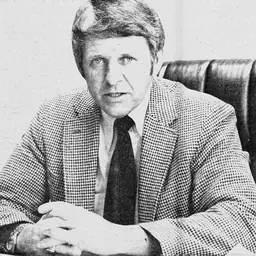
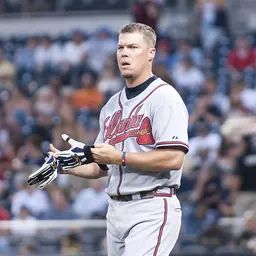
Contemporaries
People whose lives overlapped Ozzie Smith's

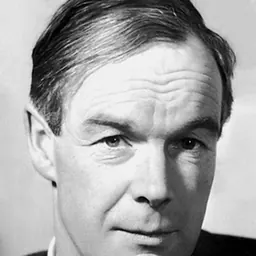



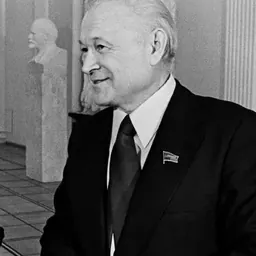
Frequently asked questions
Who is Ozzie Smith?
American professional baseball player, shortstop
When was Ozzie Smith born?
Ozzie Smith was born on 26 December 1954 in Mobile.
What is Ozzie Smith's occupation?
Ozzie Smith is a baseball player and shortstop.
What nationality is Ozzie Smith?
Ozzie Smith is American.
Sources & further reading
Cite this page
APA: Biography.guide. (2026). Ozzie Smith. https://biography.guide/ozzie-smith/
MLA: "Ozzie Smith." Biography.guide, https://biography.guide/ozzie-smith/.
Chicago: "Ozzie Smith." Biography.guide. https://biography.guide/ozzie-smith/.
Data last updated: 2026-09-20 · Spot an error? Report a correction.
Page generated 2026-09-27 05:29 UTC