
About Owen Williams
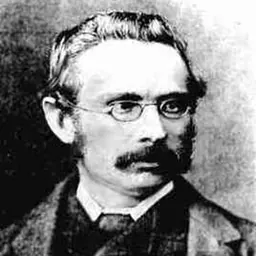
Lived 1890 – 1969 (aged 79). Owen Williams was a British civil engineer, engineer and architect.
Sir Evan Owen Williams (20 March 1890 – 23 May 1969) was a British engineer and architect, known for being the principal engineer for the original Wembley Stadium, and later Gravelly Hill Interchange (known popularly as Spaghetti Junction) as well as a number of key modernist buildings, including the Express Building in Manchester and the D10 and D6 Buildings at the Boots Factory Site in Nottingham.
Career
Williams was born at 16 Caroline Terrace in Tottenham, London, England, on 20 March 1890. He was the son of Evan Owen Williams, a Welsh-born grocer and Mary Roberts. Originally both farmers, they moved to London some years before Owen was born. Williams had two sisters and two brothers. Mary Kate died young, but the second born, Elizabeth Maud, became an author. Owen had an older brother, Robert Osian, who was a successful banker and came out of retirement to manage the finances of his brother's engineering practice which was launched in 1940. Williams attended Tottenham Grammar School and excelled in mathematics. He was apprenticed to the Electrical Tramways Co. in London in 1907 and at the same time did an engineering degree at the University of London. Seven years later, he started his own consulting firm, Williams Concrete Structures.
He was then appointed chief consulting civil engineer to the British Empire Exhibition which included the old Wembley Stadium. The commission also included the Palace of Industry building in Brent, the first building in the United Kingdom to use concrete as the exterior.
The building was listed in 1997 in recognition of this but was delisted in 2004 after an appeal by a property developer. Williams was recognised for his achievements and received a knighthood in 1923 or 1924.
Through the exhibition, Williams met its architect, Maxwell Ayrton, and they worked together on the design of Williams's bridges in Scotland.
Williams designed his buildings as functional structures sheathed in decorative facades. More an engineer than an architect, he produced a series of reinforced concrete buildings during the period between the wars. After World War II he worked on developing the first plan for Britain's motorway system. His other works include the Dorchester Hotel, buildings at the Boots Factory Site in Beeston, Nottinghamshire, the M1 motorway and the Pioneer Health Centre in Peckham, south London.
In the 1940s, the company expanded and became Sir Owen Williams and Partners. This followed the building of the Daily Express Building, Manchester, which Williams designed. Contrary to popular belief, the Manchester building was the only one of the three Express Buildings which Williams designed – the others in Glasgow and London were designed by Ellis and Clark.
Although Williams was more of an engineer than an architect, the Express Building in Manchester was lauded for its architecture and demonstrated his proficiency as an architect. Owen Williams' grandson, Richard Williams, was chief executive of the Owen Williams Group until its acquisition by Amey in 2006.
List of works (Including bridges)
1913–14 – Resident engineer for Trussed Concrete Steel Company at Patent Fuel Works, Swansea Docks 1914–16 – Chief estimating engineer, Trussed Concrete Steel Company 1916–17 – Assistant aeroplane designer, Wells Aviation 1917–18 – Various ships and slipways, Poole, Dorset 1921–24 – British Empire Exhibition buildings at Wembley Park with Maxwell Ayrton (included Palace of Industry Building which was listed in 1997 and delisted in 2004) 1921–24 – Wembley Stadium with Maxwell Ayrton 1924–25 – Lea Valley Viaduct and Bridge with Maxwell Ayrton 1924–25 – Parc des Attractions, Paris 1924–26 – Findhorn Bridge with Maxwell Ayrton 1924–27 – Road Bridge, Shepherd Leys Wood 1924–29 – Bournemouth Pavilion with Home & Knight 1925–26 – Spey Bridge, Newtonmore ... architect: Maxwell Ayrton 1925–26 – Crubenmore and Loch Alvie Bridges ... architect: Maxwell Ayrton 1925–26 – Duntocher Bridge ... architect: Maxwell Ayrton 1925–26 – Belfast Water Tower, Northern Ireland 1925–26 – Wansford Bridge, Huntingdonshire with Maxwell Ayrton 1926–28 – Dalnamein Bridge with Maxwell Ayrton 1926–28 – Carr Bridge (demolished) with Maxwell Ayrton 1926–28 – Lochy Bridge with Maxwell Ayrton 1927–28 – Brora Bridge 1927-28 – Clapton Stadium 1927–30 – Montrose Bridge 1928–29 – Pont-Rhyd-Owen Bridge 1928–30 – Wadham Road Viaduct 1928–30 – Harnham Bridge, Wiltshire 1928–30 – Pilkington's Warehouse, London 1929–30 – The Dorchester Hotel proposal 1929–31 – Wakefield Bridge 1929–31 – Llechryd Bridge proposal 1929–31 – Daily Express, London as engineer with architects H. O. Ellis & Clarke 1930–32 – Boots Packed Wet Goods Factory (D10 Building) 1931–33 – Sainsburys Factory and warehouse 1932–34 – Cumberland Garage and Car Park 1933–34 – Empire Pool, Wembley Park 1933–35 – Pioneer Health Centre, London 1933–36 – Residential flats, Stanmore 1935–37 – Provincial Newspaper office, London 1935–38 – Odhams Printing Works 1935–38 – Boots Packed Dry Goods Factory (D6 Building) 1935–39 – Daily Express Building, Manchester 1936–37 – Lilley & Skinner office and warehouse extension 1936–38 – Dollis Hill Synagogue 1936–39 – Scottish Daily Express Building, Glasgow 1938–39 – Daily News Garage, London 1939–41 – Vickers-Armstrong Aircraft Factory completed by Oscar Faber & Partners 1944–45 – Wilvan Houses 1944–45 – Mobile home 1945–67 – Newport By-pass (present-day M4) 1950–55 – BOAC Maintenance Headquarters, Heathrow 1951–59 – M1 Motorway phase one (with James Price as chief resident engineer) 1953–66 – Port Talbot By-pass 1954–56 – BOAC Wing Hangars, Heathrow 1955–61 – Daily Mirror Building (now demolished) 1956–67 – M1 Motorway phase two (with James Price as chief resident engineer)
Don’t just read it —
keep it.
Full-length biographies made to live with: read them, listen on the way to work, watch them tonight.
- E-book
- Audio
- Video
Instant download · yours to keep · every purchase keeps this site free
Important facts
more
Evan Owen WilliamsPeople in Owen Williams's life
Named in this biography and alive at the same time




Related people
Same field, nearest in time




Contemporaries
People whose lives overlapped Owen Williams's



Frequently asked questions
Who was Owen Williams?
British civil engineer and architect (1890–1969)
When was Owen Williams born?
Owen Williams was born on 20 March 1890 in Tottenham.
When did Owen Williams die?
Owen Williams died on 23 May 1969 in Hemel Hempstead.
What was Owen Williams's occupation?
Owen Williams was a civil engineer, engineer and architect.
What nationality was Owen Williams?
Owen Williams was British.
Sources & further reading
· DBpedia: Owen Williams (engineer)
Cite this page
APA: Biography.guide. (2026). Owen Williams. https://biography.guide/owen-williams-civil-engineer/
MLA: "Owen Williams." Biography.guide, https://biography.guide/owen-williams-civil-engineer/.
Chicago: "Owen Williams." Biography.guide. https://biography.guide/owen-williams-civil-engineer/.
Data last updated: 2026-09-20 · Spot an error? Report a correction.
Page generated 2026-09-27 05:33 UTC