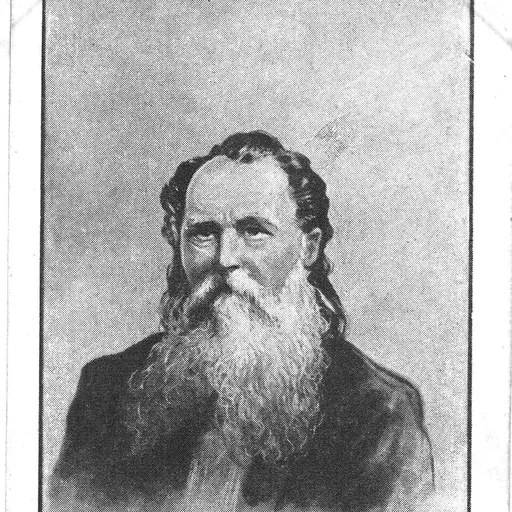
Ottó Herman
Hungarian archaeologist, ethnographer, biologist, politician
About Ottó Herman
Lived 1835 – 1914 (aged 79). Ottó Herman was a Hungarian ornithologist, zoologist, politician, ichthyologist, archaeologist and arachnologist.
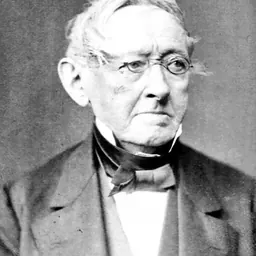
Ottó Herman born Herrmann Károly Ottó (26 June 1835 – 27 December 1914) was a Hungarian zoologist, ethnographer, archaeologist, journalist and politician. A polymath recognized as a pioneer of Hungarian natural history research, he made numerous studies on Hungarian spiders, birds, and fishes, and founded the journal Natural History Notebooks and the ornithological journal Aquila. He is called "the Father of the birds" in Hungary. A member of several learned societies including the Royal Hungarian Society of Natural History, Hungarian Linguistics Society, Hungarian Society of Ethnography, he was elected to the Hungarian Parliament. The Ottó Herman Museum of Miskolc was named after him.
Biography Herrman was born in Breznóbánya, Kingdom of Hungary (now Brezno, Slovakia) into a Zipser German family. His father Károly Herrmann was a surgeon in the mines and his mother Franciska Ganzstuck was from Hammersberg. He started his schooling at the Lutheran Gymnasium in Miskolc where a major influence was Károly Máday. He worked as an apprentice to a locksmith in Miskolc and then in Korompán. He studied engineering in Vienna, however, due to the death of his father he couldn't finish his studies. At age 14 he wanted to join the Hungarian revolutionaries of 1848 but was sent home because he couldn't provide a letter of his father's consent. He dropped Karoly from his name and dropped the German spelling of Herrmann in favour of Herman.
His father had already been interested in ornithology and was in touch with C. L. Brehm, Naumann and Salamon János Petényi. Even as a child he enjoyed the forest and studying birds, often going into the beech forests of Bükk. He often suffered from colds and earaches and began to lose his hearing from an early age. In 1853 he sought to join the polytechnic in Vienna but the death of his father led to his discontinuation.
Scientific work In 1864 Herman applied for a conservator position at the Transylvanian Museum Association. The association operated under modest circumstances; the aging head of the Department of Natural Sciences, Sámuel Brassai, managed the collection in Kolozsvár (now Cluj-Napoca) with a single employee. He offered one third of his annual salary of 1000 Forints to hire a conservator. Herman submitted a prepared abino skylark and a stuffed ermine, accompanied by a letter of support from Kálmán Chernel. On 6 April 1864, Brassai announced that he hired an individual from Kőszeg at his own expense.
Herman's multifaceted scientific work and political engagement began with the period 1864–1872 in Kolozsvár. He produced his first major scientific work here on the Eurasian hobby, which was published in 1865 under the title "Falco subbuteo Linné". He wrote a number of popular works in Kolozsvár, for example, "The Art of the Spider" appeared in the 1866 Kolozsvár Almanach. Brassai and Herman had were almost identical in appearance. both wearing shoulder length hair and long beards. The striking exterior masked people who wanted to know and experience everything, especially the life of animals in natural surroundings. However, the two scientists did not share the same character: Brassai loved to spend time on the details, while Herman sought out great generalizations, delving into details only to support his arguments. Herman wrote to the newspapers Ellenzék and Magyar Polgár for some time contributing even to the theatre column. One of his friends was Mari Jászai. This monograph on spiders, appeared in 1875, 1877, and 1878 along with his own illustrations. The three-volume work was all the more popular abroad as the first and the second volumes were written in both Hungarian and German. The third volume was written in Hungarian only, with a German summary in the appendix. The bilingualism of the work was of great importance, since until then most scientific treatises were published in German. These results allowed the Hungarian publications to be read abroad, while serving to establish Hungarian as a language of scientific discourse. In 1891 he was involved in organizing the 2nd International Ornithological Congress in Budapest.
His former home built in 1890 in Lillafüred, which he called "Pele-house", was a tourist hut bearing his name, and is now known as Ottó Herman Memorial House. It is now the home of two permanent exhibitions presenting the scientist's life, as well as the wildlife of the Bükk Mountains. In accordance with Herman's will, his remains were moved from Budapest to Miskolc in 1965 and placed in the Hámori cemetery. His tomb is marked by Miklós Varga's sculpture. In remembrance of his accomplishment, the Ottó Herman National Biology competition is held biannually in Hungary. The City Council of Miskolc has created the Ottó Herman Scientific Award, which is presented annually as part of a celebrations of the City of Miskolc. The first honoree in 2001 was museum curator Lászlo Kárpáti. The year 2014 marked the 100th anniversary of Herman's death; the National Environment Institute organized Herman Otto Commemorative Year at the national level, to honour the scientist and his work. As part of the anniversary celebration, the City Council of Miskolc posthumously awarded honorary citizenship to Herman.
Herman's nephew Jenő Vadas established forestry research in Hungary.
Starting December 2014, Duna Television broadcast a four-part documentary about the life of the scientist, entitled Ottó Herman, the Last Hungarian Polymath.
Don’t just read it —
keep it.
Full-length biographies made to live with: read them, listen on the way to work, watch them tonight.
- E-book
- Audio
- Video
Instant download · yours to keep · every purchase keeps this site free
Important facts
People in Ottó Herman's life
Named in this biography and alive at the same time


Related people
Same field, nearest in time


Contemporaries
People whose lives overlapped Ottó Herman's





Frequently asked questions
Who was Ottó Herman?
Hungarian archaeologist, ethnographer, biologist, politician (1835–1914)
When was Ottó Herman born?
Ottó Herman was born on 26 June 1835 in Brezno.
When did Ottó Herman die?
Ottó Herman died on 27 December 1914 in Budapest.
What was Ottó Herman's occupation?
Ottó Herman was an ornithologist, zoologist, politician, ichthyologist, archaeologist and arachnologist.
What nationality was Ottó Herman?
Ottó Herman was Hungarian.
Sources & further reading
Cite this page
APA: Biography.guide. (2026). Ottó Herman. https://biography.guide/otto-herman/
MLA: "Ottó Herman." Biography.guide, https://biography.guide/otto-herman/.
Chicago: "Ottó Herman." Biography.guide. https://biography.guide/otto-herman/.
Data last updated: 2026-09-21 · Spot an error? Report a correction.
Portrait: Wikimedia Commons · author & licence
Page generated 2026-09-27 04:59 UTC