
About Otis Taylor
Lived 1942 – 2023 (aged 80). Otis Taylor was an American american football player.
Otis Taylor Jr. (August 11, 1942 – March 9, 2023) was an American professional football wide receiver who played in the American Football League (AFL). He played college football for the Prairie View A&M Panthers and was selected by the Kansas City Chiefs in the fourth round of the 1965 AFL draft. He was also selected in the 15th round of the 1965 NFL draft by the Philadelphia Eagles, but he chose to play in the AFL for the Chiefs where he would spend his entire career.
Early life Taylor was born on August 11, 1942, in Houston to Lillian Lee and Otis Taylor Sr. He was raised by his mother and older sister, Florence (Odell). Odell would care for him in later life during a long period of illness and decline. Taylor attended Evan E. Worthing High School, where he was the football team's quarterback, played basketball, and ran track.
College career Taylor attended Prairie View A&M University on a basketball scholarship, but became a star receiver on its football team. Taylor was originally the team's quarterback until his sophomore year, when he was replaced by Jim Kearney, who would go on to play safety in the AFL and National Football League (NFL) as Taylor's teammate in Kansas City.
In 1963, the football team won the Southwestern Athletic Conference (SWAC), and was runner up in the 1963 National Association of Intercollegiate Athletics (NAIA) championship game. Prairie View was the first HBCU team to participate in the NAIA playoffs. It was undefeated in the regular season and first playoff game (10–0), before reaching the final game against St. Johns University of Minnesota, losing 33–27 in the Camellia Bowl.
Taylor had 42 touchdown catches in four years, and as a senior he was named an NAIA first-team All-American. The Pittsburgh Courier selected him to its second-team All American squad. A year earlier, Taylor was selected as an NAIA District 6B All-American. and played him even. In 1972, the school retired his number 17, a first in Prairie View's history. In 2016, he was inducted into the Black College Football Hall of Fame.
Future Hall of Fame Chiefs' coach Hank Stram brought Taylor along slowly as a rookie, until he had to start Taylor for an injured Chris Burford in the season's last three games. He had played mainly on special teams before that. Taylor caught 16 of his 26 receptions that year in those last three games. He had five touchdown catches overall, and averaged 17.2 yards per reception, fourth best in the AFL. He was second among all rookies in receptions, three behind George Sauer Jr., who started 11 games compared to Taylor's four.
He followed that up in 1966 by leading the AFL with a 22.4 yards per reception average, finishing second in total receiving yards (1,297), as well as having the longest pass reception of the season (89 yards). At season's end, he was voted first-team All-AFL by the Associated Press (AP), Newspaper Enterprise Association (NEA) and United Press International (UPI), and was selected for the 1966 AFL All-Star team. After the AFL-NFL merger, he led the NFL in receiving yards in 1971 with 1,110. He made the AFC-NFC Pro Bowl twice and in 1971 was named Consensus All-Pro by the AP, NEA, the Pro Football Writers Association (PFWA) and Pro Football Weekly. He was also an excellent downfield blocker.
Arguably Taylor's most memorable highlight from that season came in the fourth and final AFL-NFL World Championship Game on January 11, 1970, Super Bowl IV. After the Vikings scored for the first time and made it a 16–7 game, Taylor caught a quick pass from Len Dawson, escaped a tackle attempt by Earsell Mackbee, faked out Karl Kassulke, and ran down the sidelines for a 46-yard touchdown to close out the scoring with 82 seconds remaining in the third quarter.
Taylor suffered a car accident in June of 1974 that saw him suffer a muscle strain of his neck and lower back. Taylor was plagued by trouble with his knees by 1975, right down to having excess fluid in preseason camp that made him unable to run. He appeared in the season opener but on October 11, he was placed on injured reserve, ending his season. In May of 1976, with the team seeking to get younger, he was traded to the Houston Oilers (despite his wish to be traded to be traded to the New Orleans Saints, where teammate Buck Buchanan was an assistant to Hank Stram). He was cut by the team, having never played a down for the team.
"Otis made my job easy," Chiefs quarterback and Hall of Famer Len Dawson said. "If you got the pass to Otis, you knew he'd catch it." By 1971, Taylor had felt he was not particularly appreciated for his accomplishments as a player, noting that as "a black man, I can't talk. I can't express myself. I can't do anything." He also noted that he had not been asked to endorse anything, not even a dog food commercial (he also noted himself as someone would be so happy to do one that he would "eat the dog food"). When he retired in 1975, Taylor was tied for 17th all-time in receiving touchdowns and one of 31 players with 50 receiving touchdowns in NFL history.
The Professional Football Researchers Association named Taylor to the PFRA Hall of Very Good Class of 2006. He was inducted into the Chiefs Ring of Honor in 1982.
Ben Davidson incident On November 1, 1970, the Chiefs led the Oakland Raiders 17–14 late in the fourth quarter, and a long run for a first-down run by Dawson apparently sealed victory for the Chiefs in the final minute when Dawson, as he lay on the ground, was speared by Raiders' defensive end Ben Davidson, who dove into Dawson with his helmet, provoking Taylor to attack Davidson.
After a bench-clearing brawl, offsetting penalties were called, nullifying the first down under the rules in effect at that time. The Chiefs were obliged to punt, and the Raiders tied the game on a George Blanda field goal with eight seconds to play. The very next season, the rule for offsetting personal foul penalties was changed to separate penalties during the play, and penalties after the play. The rule change was largely due to this play.
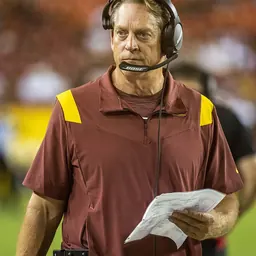
Jack Del Rio incident After his time as a player had come to a close, Taylor became a scout for the Kansas City Chiefs. During the 1987 NFL Player's strike, Taylor was arriving at Arrowhead Stadium and was assaulted by Jack Del Rio, who was a new player to the organization in 1987 and was striking with his teammates. Del Rio mistook Taylor for a replacement player and was told Taylor was actually a Chiefs legend and retired player by fans who had come upon the assault. He later pressed charges against Del Rio and the two settled out of court.
NFL/AFL career statistics Legend Won the Super Bowl Won the AFL championship Led the league Bold Career high
Regular season Year Team Games Receiving GP GS Rec Yds Avg Lng TD 1965 KAN 14 4 26 446 17.2 48 5 1966 KAN 14 14 58 1,297 22.4 89 8 1967 KAN 14 13 59 958 16.2 71 11 1968 KAN 11 5 20 420 21.0 67 4 1969 KAN 11 7 41 696 17.0 79 7 1970 KAN 13 10 34 618 18.2 59 3 1971 KAN 14 14 57 1,110 19.5 82 7 1972 KAN 14 12 57 821 14.4 44 6 1973 KAN 14 14 34 565 16.6 46 4 1974 KAN 10 9 24 375 15.6 64 2 1975 KAN 1 0 0 0 0.0 0 0 130 102 410 7,306 17.8 89 57
Playoffs Year Team Games Receiving GP GS Rec Yds Avg Lng TD 1966 KAN 2 2 9 135 15.0 31 1 1968 KAN 1 1 4 117 29.3 55 0 1969 KAN 3 3 11 217 19.7 61 1 1971 KAN 1 1 3 12 4.0 6 0 7 7 27 481 17.8 61 2
Personal life Taylor and his wife of 35 years, Regina (Hill) Taylor, had a son, Otis Taylor III. Taylor provided support and leadership to ensure Thomas's mission continued.
Starting in 2007, the Otis Taylor Award, as part of the Thomas A. Simone Awards, has been presented annually to the best wide receiver or tight end in Kansas City-area high school football.
Failing health and death In 1969, Taylor began experiencing seizures. In 1990, he was diagnosed with Parkinson's disease dementia, which eroded his health over the following decades, until he was bedbound and largely incommunicative in his last years. His family filed a lawsuit against the NFL in 2012, believing that his medical conditions were caused by injuries he received during his playing career. Taylor's sister Odell, a nurse, along with his wife and son, oversaw Taylor's healthcare for over a decade. He died on March 9, 2023, at the age of 80.
Don’t just read it —
keep it.
Full-length biographies made to live with: read them, listen on the way to work, watch them tonight.
- E-book
- Audio
- Video
Instant download · yours to keep · every purchase keeps this site free
Important facts
People in Otis Taylor's life
Named in this biography and alive at the same time




Related people
Same field, nearest in time


Contemporaries
People whose lives overlapped Otis Taylor's



Frequently asked questions
Who was Otis Taylor?
American football player (1942–2023)
When was Otis Taylor born?
Otis Taylor was born on 11 August 1942 in Houston.
When did Otis Taylor die?
Otis Taylor died on 9 March 2023.
What was Otis Taylor's occupation?
Otis Taylor was an american football player.
What nationality was Otis Taylor?
Otis Taylor was American.
Sources & further reading
· DBpedia: Otis Taylor (American football)
Cite this page
APA: Biography.guide. (2026). Otis Taylor. https://biography.guide/otis-taylor-american-football-player/
MLA: "Otis Taylor." Biography.guide, https://biography.guide/otis-taylor-american-football-player/.
Chicago: "Otis Taylor." Biography.guide. https://biography.guide/otis-taylor-american-football-player/.
Data last updated: 2026-09-20 · Spot an error? Report a correction.
Page generated 2026-09-27 05:27 UTC