
About Osro Cobb
Lived 1904 – 1996 (aged 91). Osro Cobb was an American lawyer, politician, judge and businessperson.
Osro Cobb (May 28, 1904 – January 18, 1996) was a Republican lawyer who worked to establish a two-party system in the US state of Arkansas. In 1926, he was elected to the Arkansas House of Representatives from Montgomery County and served as the only Republican member in the chamber for two two-year terms. He was the United States attorney for the United States District Court for the Eastern District of Arkansas during the Little Rock Crisis of 1957–1958. He served a year on the Arkansas Supreme Court in 1966 as a temporary appointee of Democratic Governor Orval Faubus.
Background Cobb was born near Hatton in Polk County, Arkansas, to the lumberman Philander Cobb (born 1869), who in 1916 was an active supporter of the Republican nominee, Charles Evans Hughes, who narrowly lost the election to US President Woodrow Wilson. Cobb's mother was the former Ida Sublette, a songwriter, playwright, poet, and the author of four books. In his memoirs, Cobb recalls that his mother "always made me feel that I was destined to do great things and make a meaningful contribution to my state and country of which she would be proud. She instilled in me the belief that by doing my very best, almost any objective I might seek would be within my grasp. She was right."
Reared mostly in Caddo Gap in Montgomery County, Arkansas, Cobb as a child often accompanied his father to work and hence developed an interest in the family business and later in the law.
College years Because Cobb graduated from high school at the age of sixteen, he enrolled in 1920 at Henderson State University in Arkadelphia, formerly known as Arkadelphia Methodist College or as Henderson Brown College. Cobb refers to Henderson as "a small Methodist college ideally suited to my needs. It took only a short time for me to establish my identity and to make numerous friends among my fellow students and with faculty members." He lettered in baseball and was a member of the debate team and reports that he was falsely accused of plagiarism by an English professor regarding an article he wrote about moonshiners in Montgomery County.
At Henderson, Cobb became an advocate of two-party competition as a potential solution to Arkansas' lagging national standing both politically and economically. He graduated from Henderson in 1925 with two bachelor's degrees. Cobb reports having read:
the comparative annual ratings of the various states in education [and] per capita income ... and noted to my dismay that Arkansas and Mississippi always seemed to be the last two states. I also observed that most of the outstanding graduates of our colleges were leaving Arkansas for greater opportunities; Arkansas was at a standstill. It became my obsession to help Arkansas throw off its shackles.
The major factors contributing to the state's problems were:
(1) Arkansas manufacturers had to pay three times the rates to ship their goods east as eastern merchants had to pay to send the same goods west to Arkansas.
(2) In those days, Arkansas was a rock-ribbed, solid, yellow-dog Democrat state. ... political machines were spawned in various counties and they corrupted the elections by any means deemed necessary. .... The Republican Party had to be convinced that it must really work in Arkansas and across the South to help establish a viable, competitive two-party system. There was no chance for Arkansas to move forward until it could become a doubtful state in presidential elections.
Cobb left Henderson for a year when the family lumber mill at Caddo Gap burned—a $100,000 loss. In the summer of 1924, he went to Union County in south Arkansas to work in the oil boom in an office at Norphlet near Smackover. He recalls a bizarre murder case there. A barber in Norphlet offered Cobb some cake that the man's wife had mailed to him from Oklahoma. The cake was, however, saturated with poison, and the barber quickly died of eating it. On an errand, Cobb delayed eating the cake and later reflected that he "felt the Lord had intervened to take care of me. In fact, I have been spared on several occasions, and I feel there has been a Divine Protector looking after me."
Cobb applied for a Rhodes scholarship, but the 1925 appointment went to J. William Fulbright, a student at the University of Arkansas at Fayetteville, who later became the UA president and a long-term US senator. Cobb organized a Republican club at Henderson, having received encouragement from some faculty members. He became acquainted with Harmon L. Remmel of Little Rock, the Republican national committeeman during much of the 1920s and arranged to have his older friend Remmel deliver the 1925 commencement address at Henderson.
Political career While serving in the Arkansas House, Cobb began studying for an LLB degree at what is now the William H. Bowen School of Law at the University of Arkansas at Little Rock. In 1929, Cobb was admitted to practice law before the Arkansas Supreme Court. Several senior partners in the law firm where he was employed, Campbell, Mallory, and Throgmorton in the capital city of Little Rock, were Republicans.
As the only Republican in the Arkansas House, Cobb was invited to meet with US President Calvin Coolidge in what turned out to have been a failed effort to persuade Coolidge to sign into law a bill to create a national park in the Ouachita National Forest. The state, however, already had the health resort, Hot Springs National Park. Cobb met with Coolidge for more than an hour and found him not silent at all but talkative; it turned out that the president had wished that day to delay another appointment and used Cobb to fill in missing time. Coolidge also pocket-vetoed the national park bill, which had the support of Democratic US Senator Joseph T. Robinson of Arkansas, his party's 1928 vice-presidential candidate on the Al Smith ticket.
In 1932, Cobb became chairman of the Arkansas Republican Party, a position that he retained for twenty-three years until 1955,
In the late 1930s, Cobb formed the Cobb, Cazort, and Holt law firm in Little Rock, which was dissolved at the start of World War II. In 1942, Cobb joined the United States Army Air Corps, the forerunner of the Air Force at the rank of first lieutenant. He was promoted to lieutenant colonel and was a judge advocate at Berry Field in Nashville, Tennessee, and thereafter at Rosecrans Field in St. Joseph, Missouri. At Wright-Patterson Field in Dayton, Ohio, he worked on contracts to procure aircraft parts for the Army Air Corps. As a delegate to the 1952 Republican National Convention in Chicago, Cobb and the Arkansas delegation voted for US Senator Robert A. Taft of Ohio but quickly joined with the majority to endorse Dwight D. Eisenhower. Invited to meet with Eisenhower after the nomination, Cobb advised him not to concede a single southern state to the Democratic nominee, later Governor Adlai Stevenson II of Illinois. Cobb writes in his memoirs that Eisenhower "did not need to be sold on campaigning in the South because he already was convinced that it would be successful."
In 1954, Eisenhower appointed Cobb as US attorney for the Eastern District of Arkansas, a highly visible position during the desegregation of Central High School. In the fall of 1957, Cobb was in communication with the Federal Bureau of Investigation, the United States Department of Justice, and the White House regarding late developments. With United States Attorney General Herbert Brownell Jr., Cobb represented in federal court the US government's case against Governor Faubus, who attempted without success to thwart desegregation. Cobb reached the conclusion that Faubus had exaggerated the likelihood that segregationists would engage in violence in a vain bid to block desegregation.
Cobb, Faubus, and Rockefeller Late in 1965, Faubus asked Cobb to fill a vacancy on the Arkansas Supreme Court after Justice Sam Robinson retired. On January 11, 1966, Cobb took the position and served for the remainder of the year.
However, in 1966, Cobb endorsed Rockefeller as Faubus' successor. Rockefeller defeated the Democrat James D. Johnson of Conway, a former member of the Arkansas State Senate and the Arkansas Supreme Court who had been aligned with the segregationists in the Little Rock Crisis. Cobb writes of the changed scenario in his memoirs, "Arkansas Republicans were eager to work with Winthrop Rockefeller on another race for governor if he could be led to run as a true Republican to help build the party in the state. I liked him personally. He showed me many courtesies, and I still thought [despite feelings in 1964] that he would make a good governor and could be elected on the Republican ticket.... He had learned a lesson. And he won his next two races for governor.... His service contributed greatly to the enormous benefits of two-party government in Arkansas."
Personal life From the late 1960s until his retirement, Cobb focused on his petroleum and timber interests. In 1938, Cobb married the oil heiress Audrey Umsted, whom he had met while he played golf. Her father, Sydney Albert Umsted, had in 1924 drilled the Discovery oil well in the Smackover field but was subsequently fatally injured in a train accident in Mississippi and had died in a hospital in Memphis, Tennessee. The Cobbs adopted one son, John Cobb. Audrey Cobb died in 1976; the next year he married his neighbor, Martha Jane Rebsamen, Shortly before the second marriage, two armed robbers wearing masks broke into Martha Jane's home and locked her, Cobb, and her housekeeper in a closet. The intruders left with Cobb's Cadillac but called police to tell them of the three people trapped in the closet.
In 1989 and 1990, with assistance from the journalist-editor Carol M. Griffee (1937-2011), then of Little Rock, Cobb published two editions of his autobiography entitled Osro Cobb of Arkansas: Memoirs of Historical Significance.
Cobb died in Little Rock at the age of ninety-one. His papers are located in Special Collections of the Torreyson Library at the University of Central Arkansas in Conway.
Don’t just read it —
keep it.
Full-length biographies made to live with: read them, listen on the way to work, watch them tonight.
- E-book
- Audio
- Video
Instant download · yours to keep · every purchase keeps this site free
Important facts
People in Osro Cobb's life
Named in this biography and alive at the same time

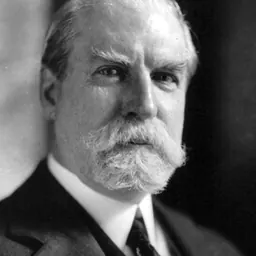


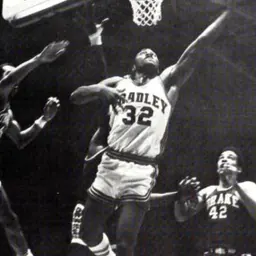

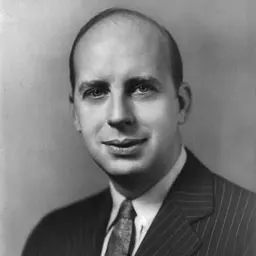
Related people
Same field, nearest in time


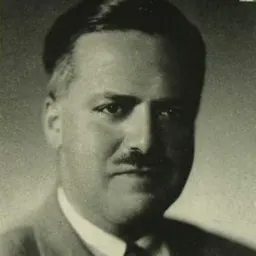

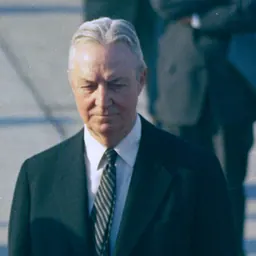
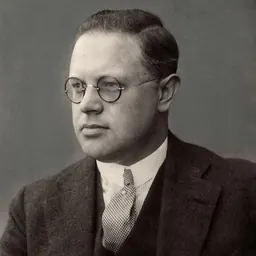
Contemporaries
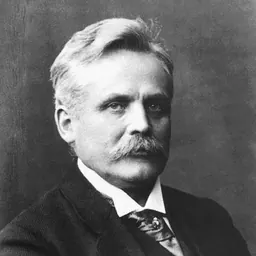
People whose lives overlapped Osro Cobb's





Frequently asked questions
Who was Osro Cobb?
Arkansas lawyer and Republican politician
When was Osro Cobb born?
Osro Cobb was born on 28 May 1904 in Hatton.
When did Osro Cobb die?
Osro Cobb died on 18 January 1996 in Little Rock.
What was Osro Cobb's occupation?
Osro Cobb was a lawyer, politician, judge and businessperson.
What nationality was Osro Cobb?
Osro Cobb was American.
Sources & further reading
Cite this page
APA: Biography.guide. (2026). Osro Cobb. https://biography.guide/osro-cobb/
MLA: "Osro Cobb." Biography.guide, https://biography.guide/osro-cobb/.
Chicago: "Osro Cobb." Biography.guide. https://biography.guide/osro-cobb/.
Data last updated: 2026-09-20 · Spot an error? Report a correction.
Page generated 2026-09-27 05:16 UTC