
About Oso Kuka
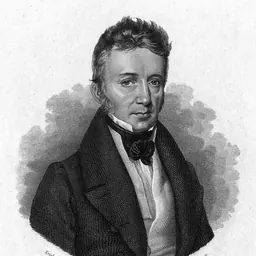
Lived 1820 – 1862 (aged 41–42). Oso Kuka was an Albanian and Turkish military personnel.
The drawing shows Montenegrin soldiers surrounding Oso Kuka and his men in the gunpowder tower.
Osman Bejtullah Agë Kuka, also known as Oso Kuka (c. 1812/1820–1862), was an Albanian border guard on the Albanian-Montenegrin border under the Ottoman Empire. Surrounded by Montenegrin soldiers in an Albanian tower on the island of Vranjina in Albania, he blew it up, killing himself in order to kill the Montenegrin soldiers. In the following decades, he became a rallying figure of the Albanian independence movement and a much-celebrated character in multiple important works in Albanian literature.
Background Two decades earlier, several battles had been fought over the possession of the island, primarily between Ottoman forces (joined by Albanians) and Montenegrins. Between 1835 and 1844, various rebellions among Albanian highlanders against the Porte led to the enforcement of Montenegrin interests. On October 16, 1843, Albanian forces numbering 12,000, led by the Governor of Shkodër, invested the island. The Albanians arrived at the lake with 50-60 cannons and opened fire against the Montenegrin troops in the tower. The Ottomans blew up the tower, killing 7 and wounding 18, who were captured. The Ottomans also seized the tower of Lesendra with 10,000 to 12,000 troops. The Montenegrins, numbering 200, fled and were met with harsh criticism by their countrymen. They tried to reclaim the island several times under Petar II Petrović-Njegoš, but failed. In 1844, Albanian highlanders from Shkodër sailed with 4 ships to the island of Vranjina to build barracks in order to resist Montenegrin forces.
Life Osa Kuka was born around 1812 or 1820
Oso Kuka himself had formed a 24-man band (çetë) that was active in the city. At the head of a small group, Oso Kuka arrived on the battlefield where 8,000 Montenegrin soldiers had been besieging the fort of Vranjina. Kuka and his group were defending a secondary tower in front of the main tower. When it was surrounded, instead of surrendering, Kuka planted explosives in the tower. He then activated them when the tower was stormed by the Montenegrins, thereby killing hundreds of Montenegrin soldiers along with his group. Ndre Zadeja also wrote a melodrama titled Oso Kuka, based on his life.
His residence in Shkodër houses the city's historical museum, while the Slavic-speaking population of the small village in Vranjina (modern-day Montenegro) show to visitors the so-called "house of Oso Kuka."
Don’t just read it —
keep it.
Full-length biographies made to live with: read them, listen on the way to work, watch them tonight.
- E-book
- Audio
- Video
Instant download · yours to keep · every purchase keeps this site free
Important facts
Related people
Same field, nearest in time

Contemporaries
People whose lives overlapped Oso Kuka's





Frequently asked questions
Who was Oso Kuka?
Albanian military commander
When was Oso Kuka born?
Oso Kuka was born in 1820 in Shkodër.
When did Oso Kuka die?
Oso Kuka died in 1862 in Vranjina.
What was Oso Kuka's occupation?
Oso Kuka was a military personnel.
What nationality was Oso Kuka?
Oso Kuka was Albanian and Turkish.
Sources & further reading
Cite this page
APA: Biography.guide. (2026). Oso Kuka. https://biography.guide/oso-kuka/
MLA: "Oso Kuka." Biography.guide, https://biography.guide/oso-kuka/.
Chicago: "Oso Kuka." Biography.guide. https://biography.guide/oso-kuka/.
Data last updated: 2026-09-22 · Spot an error? Report a correction.
Page generated 2026-09-27 05:23 UTC