
About Osman Hadi
Lived 1993 – 2025 (aged 31–32). Osman Hadi was a Bangladeshi politician, university teacher and writer.
Sharif Osman Bin Hadi (born Osman Goni; He was the co-founder and spokesperson of Inqilab Moncho. After the July Uprising, he became a prominent figure in youth-led movements, noted for his opposition to what he termed "Indian hegemony in Bangladesh", his advocacy regarding the July martyrs, and his participation in the Awami League ban protests.
On 12 December 2025, Hadi was shot in the Paltan area of Dhaka. He was airlifted to the Singapore General Hospital on 15 December, where he died three days later. His assassination sent shockwaves throughout Bangladesh, leading to widespread national mourning and cementing his legacy as a martyr among the youth and activist communities. The intense public grief over his murder also sparked significant nationwide unrest, underscoring his profound impact and popularity across the country.
Early life Sharif Osman Bin Hadi was born on January 1, 1993 in Nalchity Upazila, Jhalokathi District to Maulana Abdul Hadi and Taslima Hadi. His father was a madrasa teacher and a local imam. The youngest of six siblings, he grew up in a religious environment.
Activism July Uprising
During the July Uprising, Hadi was a resident of Rampura in Dhaka. He participated in local organizational activities and was a coordinator for the Rampura area. He served as the founding spokesman. The organization aimed to oppose all forms of domination and establish a justice-based state that protects freedom and sovereignty. Democratic participation, justice, and political accountability were presented as the central principles underpinning the platform.
Inqilab Moncho under Hadi's leadership joined a broader network of youth platforms and alliances calling for accountability for protest-related killings and for a ban on the Awami League. Several reports have identified Inqilab Moncho as part of the "July Unity coalition", a grouping of youth and civil society platforms formed in the aftermath of the July protests. The organization in Bangladesh was outspoken critic of neighboring country India.
Hadi was an active participant in the July Uprising and after the protests, he emerged as one of the visible young organisers demanding accountability for protest-related deaths. He accused certain opposition groups of attempting to dominate the movement and criticised what he characterised as corruption among some youth political leaders.
Awami League ban protests
Hadi and Inqilab Moncho repeatedly called for the Awami League to be banned "constitutionally" from politics, arguing that the party had been responsible for repression and protest-related killings. At a "martyrs' assembly" in Shahbagh, he urged political parties to include the trial and banning of the Awami League in their election manifestos and announced plans for a "March for Bangladesh" towards the Bangladesh Secretariat if their demands were not met within 100 days. In clashes during the National Citizen Party's March to Gopalganj campaign, Hadi used profanities criticising the situation and called for the dissolution of Gopalganj District. Later, amid criticism, he said that his outburst was an 'epic of liberation' and expressed his regret to anyone who may have been offended.
Positions on other political parties Hadi commented on wider opposition politics. In a televised discussion he said that "politics is essentially about bargaining" in the context of reported talks between the National Citizen Party and Gono Odhikar Parishad on a possible merger. Hadi publicly criticised other opposition platforms including the National Citizen Party, alleging that they have tried to "monopolise" the July uprising and that some leaders have become corrupt. At a press conference held at the Madhur Canteen of the University of Dhaka in July 2025, Hadi stated that if the Bangladesh Nationalist Party returned to power while continuing what he described as 'old-style' politics, the party would not remain in office for even two years.
Public statements and media coverage Hadi frequently uses social media and public speeches to comment on political developments. In July 2025, he demanded the arrest of activist Lucky Akter and called for investigations into alleged massacres.
Influence on anti-Indian hegemony Hadi's influence on the discourse of anti-Indian influence in Bangladesh was primarily channeled through his role as the spokesperson of Inqilab Moncho after the 2024 July Revolution. Hadi framed the struggle for democracy in Bangladesh as being intrinsically linked to the removal of perceived external dominance, specifically from India, which he characterized as "Indian hegemony". He argued that the political stability of the previous Awami League administration had been maintained through the strategic support of New Delhi, and he advocated for a "generational rupture" from these established power dynamics.
Under Hadi's leadership, Inqilab Moncho campaigned for the formal banning of the Awami League and demanded the restructuring of bilateral treaties with India to ensure what he termed "justice-based sovereignty" (Insaf). His activism often utilized nationalist and religious motifs to call for total independence from Indian diplomatic and security influence. Hadi gained significant international attention after reportedly releasing a map depicting a "Greater Bangladesh" that included Indian territories in the Northeast and West Bengal, a move that drew sharp criticism from Indian officials while solidifying his status as a radical critic of regional geopolitics in reports of Indian media outlets. After being assassinated in December 2025, his work has become a focal point for renewed anti-India sentiment. Supporters viewed him as being a "martyr of sovereignty", leading to widespread protests and diplomatic tensions between Dhaka and New Delhi.
Political career In preparation for the 2026 Bangladeshi general election, Hadi announced his candidacy for the Dhaka-8 constituency as an independent politician. He engaged in local campaigning including "consultation meetings" in many neighborhoods. Hadi had previously reported receiving death threats.
Hadi was initially treated at Dhaka Medical College Hospital and later transferred to Evercare Hospital Dhaka. On 15 December, he was airlifted to Singapore, to be treated at Singapore General Hospital, where he died on 18 December. Several arrests were made in connection with the case. On 8 March 2026, Faisal Karim Masud (also known as Daud Khan) and Alamgir Hossain, who were allegedly involved in the plot to assassinate Hadi, were detained by the Special Task Force of the West Bengal Police from a village in West Bengal, near the Bangladesh-India border.
Aftermath
A day of state mourning was declared by the Government of Bangladesh after his passing. Following the announcement of Hadi's death, unrest broke out in Dhaka. This included attacks on the headquarters of Prothom Alo and The Daily Star, where staff were briefly trapped by arson. The Chhayanaut Sangskriti Bhaban and the remains of the Bangabandhu Memorial Museum were also vandalized.
The violence included anti-Indian sentiment; the National Citizen Party (NCP) demanded the closure of the Indian High Commission. Protests in Chittagong and Rajshahi targeted Indian diplomatic missions, leading Indian authorities to temporarily close visa centers in Rajshahi and Khulna.
On 22 December, Inqilab Moncho warned it would oust the interim government over alleged inaction. Hadi's brother, Omar Hadi, claimed that the authorities were attempting to use the murder to "sabotage" the election, asserting that such efforts would not succeed. He stated that "the interim government cannot avoid responsibility."
On 21 January 2026, the interim government announced plan to provide a total of Tk 20 million to Hadi’s family. Of this amount, Tk 10 million will be allocated by the Ministry of Finance for the purchase of a flat, while the remaining Tk 10 million will be provided from the Chief Adviser’s fund to support the family’s livelihood.
Reactions
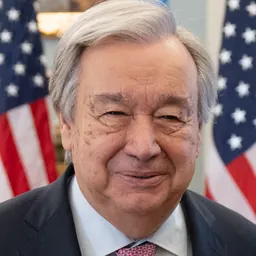
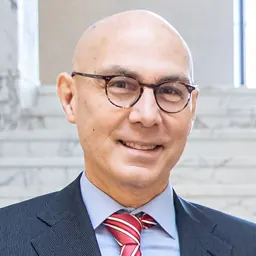
On 19 December, the European Union and the United States Embassy in Dhaka issued a statement via social media expressing its condolences following the death of Hadi. Pakistan's High Commission Bangladesh also released a statement expressing sorrow and extending condolences on Hadi's death. United Nations Secretary General António Guterres strongly condemned Hadi's assassination and extended condolences to his family, while UN High Commissioner for Human Rights Volker Türk urged calm and called for proper investigations into the killing. The United Nations Human Rights Office expressed concern and called for an impartial investigation.
His funeral prayer was held at the South Plaza of Jatiya Sangsad Bhaban, which was attended by tens of thousands of people. Hundreds of Bangladeshis in Singapore gathered outside Angullia Mosque after at least three Bangladeshi news sites claimed that funeral prayers would be held at the mosque. Both the Bangladeshi High Commission in Singapore and the mosque later issued separate statements on social media to clarify that no such arrangements were made due to "a lack of clearance" and "inaccurate".
Hadi was laid to rest on 20 December, following a Funeral prayer held at the South Plaza of the National Parliament. He was buried at the Mausoleum of Kazi Nazrul Islam, near Dhaka University Central Mosque.
Controversy After clashes during the National Citizen Party's March to Gopalganj campaign on 16 July 2025, Hadi sharply criticized the situation using profanity, and called for the dissolution of Gopalganj District, which generated widespread controversy and debate among many supporters of the former Awami League government.
Don’t just read it —
keep it.
Full-length biographies made to live with: read them, listen on the way to work, watch them tonight.
- E-book
- Audio
- Video
Instant download · yours to keep · every purchase keeps this site free
Important facts
People in Osman Hadi's life
Named in this biography and alive at the same time



Related people
Same field, nearest in time

Contemporaries
People whose lives overlapped Osman Hadi's



Frequently asked questions
Who was Osman Hadi?
Bangladeshi politician and activist (1993–2025)
When was Osman Hadi born?
Osman Hadi was born in 1993 in Nalchity Upazila.
When did Osman Hadi die?
Osman Hadi died on 18 December 2025 in Singapore General Hospital.
What was Osman Hadi's occupation?
Osman Hadi was a politician, university teacher and writer.
What nationality was Osman Hadi?
Osman Hadi was Bangladeshi.
Sources & further reading
Cite this page
APA: Biography.guide. (2026). Osman Hadi. https://biography.guide/osman-hadi/
MLA: "Osman Hadi." Biography.guide, https://biography.guide/osman-hadi/.
Chicago: "Osman Hadi." Biography.guide. https://biography.guide/osman-hadi/.
Data last updated: 2026-09-26 · Spot an error? Report a correction.
Page generated 2026-09-27 05:13 UTC