
About Oskar Davičo
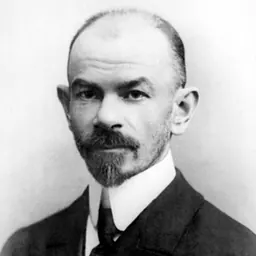
Lived 1909 – 1989 (aged 80). Oskar Davičo was a Yugoslav writer, poet, political commissar and journalist.
Oskar Davičo (; 18 January 1909 – 30 September 1989) was a Serbian novelist and poet. A leading literary figure of his generation,
Biography
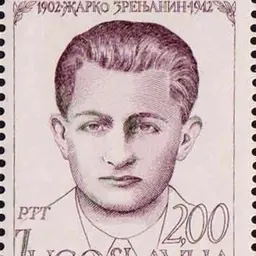
Early life Oskar Davičo was born on 18 January 1909 in Šabac to a Sephardic Jewish family. His father was an atheist Jewish accountant and a socialist. During World War I in Serbia, Šabac was the scene of heavy fighting, so the whole family moved temporarily to Negotin. Davičo was arrested on 31 May 1932 after being betrayed by one of the members of the CPY, and the court sentenced him to five years in prison. He started writing poetry in 1925, while in gymnasium. His early poetry is experimental and strongly surrealist. In the late 1930s, he added social and leftist elements to his poetry. Although mainly social, his 1938 poetry book "Pesme" (Poems) also contains humor, word play, and eroticism. His next two poetry books, "Hana" (1939) and "Višnja za zidom" (1950) are thematically linked to "Pesme" and they form a poetic trilogy. The main theme of "Hana" is love, while the theme of "Višnja za zidom" is revolutionary. Similar theme is explored in the poem "Zrenjanin" (1949) about the life and death of Partisan leader Žarko Zrenjanin. The climax of Davičo's surrealist poetry is reached in the poem "Čovekov čovek" (1953). After "Čovekov čovek", Davičo published a dozen more poetry books, which were poorly received with both critic and readers.
Davičo started writing novels during and after the World War II. Novels are the most important part of his work after the poetry. In the novels "Ćutnje" (1963), "Gladi" (1963) "Tajne" (1964), and "Bekstva" (1966), he wrote about the prison life of Yugoslavian Communists in the interwar period. In "Pesma" (1952) and "Gospodar zaborava" (1981), he writes about the World War II in Yugoslavia and the people's liberation movement. Finally, in "Beton i svici" (1956) and "Radni naslov beskraja" (1958), Davičo writes about the post-war build-up of Yugoslavia. The main characters of his novels are usually young revolutionary communists.
For his literary work, Davičo received numerous awards. He was the only author to be awarded the NIN Award for the novel of the year three times: in 1956 for "Beton i svici", in 1963 for "Gladi", and in 1964 for "Tajne".
Novels "Pesma" (Poem), 1952 "Beton i svici" (Concrete and Fireflies), 1955 "Radni naslov beskraja" (Working Title of the Eternity), 1958 "Generalbas", 1962 "Ćutnje" (Silences), 1963 "Gladi" (Hungers), 1963 "Tajne" (Secrets), 1964 "Bekstva" (The Escapes), 1966 "Zavičaji" (Homelands), 1971 "Gospodar zaborava" (The Master of Oblivion), 1980
Poetry "Anatomija" (Anatomy), 1930 "Pesme" (Poems), 1938 "Hana", 1939 "Zrenjanin", 1949 "Višnja za zidom" (A Cherry Tree Behind a Wall), 1950 "Čovekov čovek" (A Man's Man), 1953 "Nastanjene oči" (Occupied Eyes), 1954 "Flora", 1955 "Pesme" (Poems), 1958 "Kairos", 1959 "Tropi" (Tropics), 1959 "Sunovrati" (Downfalls), 1963 "Snimci" (Recordings), 1963 "Pročitani jezik" (A Language Read), 1972 "Telo telu" (Body to Body), 1975 "Veverice-leptiri ili nadopis obojenog žbuna" (Squirrel-butterflies, or By-writing of the Colored Bush), 1976 "Misterije dana" (Mysteries of a Day), 1979
Other "Među Markosovim partizanima" (Amongst Markos' Partisans), a travel novel, 1947 "Poezija i otpori" (Poetry and Resistance), an essay, 1952 "Pre podne" (Ante meridiem), an essay, 1960 "Crno na belo" (Black on White), a reportage, 1962 "Trg M" (M Square), a poem, 1968 "Ritual umiranja jezika" (The Ritual of Language Dying), an essay, 1971 "Reči na delu" (Words on Work), a poem, 1977 "Pod-tekst" (Sub-text), essays and polemics, 1979
Don’t just read it —
keep it.
Full-length biographies made to live with: read them, listen on the way to work, watch them tonight.
- E-book
- Audio
- Video
Instant download · yours to keep · every purchase keeps this site free
Important facts
People in Oskar Davičo's life
Named in this biography and alive at the same time

Related people
Same field, nearest in time


Contemporaries
People whose lives overlapped Oskar Davičo's



Frequently asked questions
Who was Oskar Davičo?
Serbian writer (1909–1989)
When was Oskar Davičo born?
Oskar Davičo was born on 18 January 1909 in Šabac.
When did Oskar Davičo die?
Oskar Davičo died on 30 September 1989 in Belgrade.
What was Oskar Davičo's occupation?
Oskar Davičo was a writer, poet, political commissar and journalist.
What nationality was Oskar Davičo?
Oskar Davičo was Yugoslav.
Sources & further reading
Cite this page
APA: Biography.guide. (2026). Oskar Davičo. https://biography.guide/oskar-davico/
MLA: "Oskar Davičo." Biography.guide, https://biography.guide/oskar-davico/.
Chicago: "Oskar Davičo." Biography.guide. https://biography.guide/oskar-davico/.
Data last updated: 2026-09-20 · Spot an error? Report a correction.
Page generated 2026-09-27 05:27 UTC