
About Oscar Wiesel
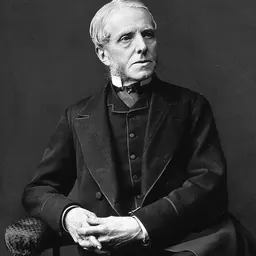
Lived 1864 – 1918 (aged 54). Oscar Wiesel was a Russian diplomat.
Oscar Wiesel (; August 20, 1864 – September 27, 1918) was a Russian diplomat. He was also a researcher of Norway, the founder of the Saami collection of the Russian Museum of Ethnography, and acting state councillor.
Family Wiesel descended from the German-Austrian Wiesel family.
His father, Oskar Borisovich Wiesel (Wiesel Oscar Sigismund), was born in Russia in 1826. He graduated from Prince Bezborodko's Gymnasium of Higher Learning in Nezhin. He worked in the Ministry of Finance and visited Berlin, Amsterdam, and Paris many times on behalf of the Emperors Alexander II and Alexander III. He also served as acting state councillor.
Wiesel's mother, Marie Christine de Pointin, was born in 1835. Her father, Fransois de Pointin, had family roots in the French province of Picardy. Pointin was born at Louis XVIII's court while in exile in Warsaw. He was known for building the silver iconostasis of the Kazan Cathedral (St. Petersburg) and was awarded the Order of St. Anna by graf Yuliy Pompeevich Litte (ital., Giulio Renato de Litta Visconti Arese).
Wiesel's wife, Marianna Pavlovna Kosagovskaya, was the daughter of Pavel Pavlovich Kosogovski, who was the governor of Vitebsk, Odessa, Kursk and Poltava.
Wiesel's brother, Emil Anton Joseph Wiesel (March 1, 1866 in Saint Petersburg – May 2, 1943 in Leningrad), was a painter, museum curator and a board member of the Imperial Academy of Arts, Russia (since 1914), organizer of international art exhibitions, a councillor of the Hermitage and the Russian Museum, and a Legion of Honour holder. During soviet times, he was an expert in Russian and Western fine arts and sculpture in the Glavnauka (central administrative board of science, science-artistic and museum institutions) museum department.
Diplomatic career Oscar Wiesel graduated from the Second Saint Petersburg Gymnasium in 1883 with an honours degree (the silver medal). He represented Russia in European countries as an official of the Ministry of Foreign Affairs.
From 1896 to 1901, he worked in Hamburg (Germany) as a vice-consul with ranks from titular councillor to collegiate assessor.
From 1901 to 1913, he worked in Hammerfest (Norway) as a consul with ranks from court councillor to state councillor.
From 1913 to 1916, he worked in Vevey and Geneva (Switzerland) as a general consul, with the rank of state councillor.
In 1917, he was the general consul, actual state councillor, in Naples, Italy.
Oscar Wiesel's articles were published in official consulate reports at the beginning of the 20th century. These articles included information about Germany's non-European investments and colonial German policy (1900), reports on demonstrations in Northern Norway, rumours about the "Russian threat", and large cases of Norwegian treason to the benefit of Russia.
In 1909, the Second Department of the Ministry of Foreign Affairs published Wiesel's "The Compilation of Norwegian Laws, Concerning Trade and Handicraft of Russian Citizens in Northern Norway". The compilation was built on 25 years of old documents by A. Teterman. Wiesel reformed the law part, added information about local taxes in Tromsø, Hammerfest and Vardø, included information about thenNorwegian metric system, and summarized the most important Norwegian laws, which could influence Russian citizens.
Norwegian Sami During Wiesel's diplomatic years in Norway, he was interested in researching the Sami people, a local ethnic group. In 1904 and 1914, he presented two collections to the Russian Museum of Ethnography in Saint Petersburg, consisting of more than 100 pieces, which would become the core part of the Saami collection of the museum. It included items such as clothing, shoes, jewellery, household items, harnesses, fishing tackles, and boats. Some items had earlier been presented to Wiesel by the well-known Saami researcher Konstantin Shekoldin, the Archpriest of the Saint Boris and Gleb Church.
Russian Revolution Following the Russian Revolution, Oscar Wiesel was appointed general consul in Naples. He was a member of the Union of Renaissance of Russia in cooperation with allies in Rome.
Literature
Don’t just read it —
keep it.
Full-length biographies made to live with: read them, listen on the way to work, watch them tonight.
- E-book
- Audio
- Video
Instant download · yours to keep · every purchase keeps this site free
Important facts
Related people
Same field, nearest in time

Contemporaries
People whose lives overlapped Oscar Wiesel's




Frequently asked questions
Who was Oscar Wiesel?
Russian diplomat (1864–1918)
When was Oscar Wiesel born?
Oscar Wiesel was born on 20 August 1864 in Saint Petersburg.
When did Oscar Wiesel die?
Oscar Wiesel died on 27 September 1918.
What was Oscar Wiesel's occupation?
Oscar Wiesel was a diplomat.
What nationality was Oscar Wiesel?
Oscar Wiesel was Russian.
Sources & further reading
Cite this page
APA: Biography.guide. (2026). Oscar Wiesel. https://biography.guide/oscar-wiesel/
MLA: "Oscar Wiesel." Biography.guide, https://biography.guide/oscar-wiesel/.
Chicago: "Oscar Wiesel." Biography.guide. https://biography.guide/oscar-wiesel/.
Data last updated: 2026-09-20 · Spot an error? Report a correction.
Page generated 2026-09-27 05:31 UTC