
About Oscar Blumenthal
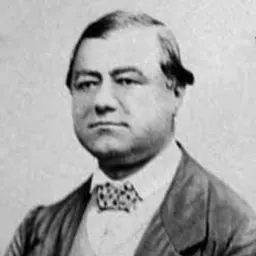
Lived 1852 – 1917 (aged 65). Oscar Blumenthal was a German writer, playwright, chess player, chess composer, theatre manager and poet.
Oscar Blumenthal (or Oskar Blumenthal; 13 March 1852 – 24 April 1917) was a German playwright and drama critic.
Biography Blumenthal was educated at the gymnasium and the university of his native town in Berlin, and at Leipzig University, where he received a Doctor of Philosophy in 1872. After having been editor of the Deutsche Dichterhalle in Leipzig, in 1873 he founded the Neue Monatshefte für Dichtkunst und Kritik. In 1875, Blumenthal moved to Berlin, where he became theatrical critic of the Berliner Tageblatt, holding this position until 1887, when he opened the Lessing Theater, of which he was director till 1898. From 1894 to 1895 he was also director of the . From 1898 he was engaged exclusively in literary work.
Blumenthal was well known as a critic and playwright. His critiques in the feuilletons of the newspapers sparkle with humour, at the same time doing justice to authors and actors. Because of their sharpness he was sometimes called "bloody Oscar". His plays were successful, and many of them were well received at the leading German theatres. Together with Gustav Kadelburg he wrote several comedies like the famous The White Horse Inn. As a researcher in literature, he became famous for editing and annotating works of Christian Dietrich Grabbe. He also was successful as a theatrical manager.
Blumenthal is also known for his humorous aphorisms, for example:
Das ist ein hässliches Gebrechen, Wenn Menschen wie die Bücher sprechen. Doch reich und fruchtbar sind für jeden Die Bücher, die wie Menschen reden.
(It is a terrible flaw When people speak like books, But good and useful for everyone Are books that speak like people).
Works Blumenthal was the author of many plays and novels, among which may be mentioned:
Allerhand Ungezogenheiten, Leipzig, 1874, 5th ed., 1877; Für alle Wagen- und Menschenklassen, ib. 1875; Bummelbriefe, Danzig, 1880; Merkzettel, 1898; Verbotene Stücke, 1900; Gesammelte Epigramme, 1890
Plays
Der Probepfeil (1883) Frau Venus (with Ernst Pasqué, 1883) Die grosse Glocke (1884) Ein Tropfen Gift (1885) Der schwarze Schleier (1886) Anton Antony (1887) Der Zaungast (1889) Das zweite Gesicht (1890) (with Gustav Kadelburg, 1891) (produced in English by Augustin Daly as A Test Case: Or, Grass Versus Granite; modern title: A Marriage Contract) Heute und Gestern (1891) Die Orientreise (with Gustav Kadelburg, 1892) (produced in English by Augustin Daly as The Orient Express, translated by F. C. Burnand) Mauerblümchen (with Gustav Kadelburg, 1893) Paulas Geheimnis (1893) Zwei Wappen (with Gustav Kadelburg, 1894) (English adaptation: The Two Escutcheons, by Sydney Rosenfeld) Gräfin Fritzi (1895) Das Einmaleins (1896) Hans Huckebein (with Gustav Kadelburg, 1897) (English adaptation: Number 9 – The Lady of Ostend, by F. C. Burnand) Matthias Gollinger (with Max Bernstein, 1898) The White Horse Inn (with Gustav Kadelburg, 1898) (First English adaptation: At the White Horse Tavern, by Sydney Rosenfeld) Auf der Sonnenseite (with Gustav Kadelburg, 1898) Als ich wiederkam (with Gustav Kadelburg, 1899, sequel to The White Horse Inn) (English adaptation: Twelve Months Later) Die strengen Herren (with Gustav Kadelburg, 1900) Die Fee Caprice (1901) Das Theaterdorf (with Gustav Kadelburg, 1902) Der blinde Passagier (with Gustav Kadelburg, 1902) Der letzte Funke (with Gustav Kadelburg, 1906) Die Tür ins Freie (with Gustav Kadelburg, 1908) (English adaptation: Is Matrimony a Failure?, 1909, by Leo Ditrichstein) Die große Pause (with Max Bernstein, 1915) Die Schöne vom Strand (with Gustav Kadelburg, 1915, musical version of Hans Huckebein, music by )
Films based on his works
Is Matrimony a Failure?, directed by James Cruze (1922, based on the play Die Tür ins Freie) The White Horse Inn, directed by Richard Oswald (1926, based on the play The White Horse Inn) When I Came Back, directed by Richard Oswald (1926, based on the play Als ich wiederkam) The Long Intermission, directed by Carl Froelich (1927, based on the play Die große Pause) The White Horse Inn, directed by Karel Lamač (1935, based on the operetta The White Horse Inn) White Horse Inn, directed by Benito Perojo (Argentina, 1948, based on the operetta The White Horse Inn) The White Horse Inn, directed by Willi Forst (1952, based on the operetta The White Horse Inn) The White Horse Inn, directed by Werner Jacobs (1960, based on the operetta The White Horse Inn) Summer in Tyrol, directed by Erik Balling (Denmark, 1964, based on the operetta The White Horse Inn) , directed by (2013, based on the operetta The White Horse Inn)
Don’t just read it —
keep it.
Full-length biographies made to live with: read them, listen on the way to work, watch them tonight.
- E-book
- Audio
- Video
Instant download · yours to keep · every purchase keeps this site free
Important facts
People in Oscar Blumenthal's life
Named in this biography and alive at the same time



Related people
Same field, nearest in time

Contemporaries
People whose lives overlapped Oscar Blumenthal's


Frequently asked questions
Who was Oscar Blumenthal?
German playwright and drama critic (1852–1917)
When was Oscar Blumenthal born?
Oscar Blumenthal was born on 13 March 1852 in Berlin.
When did Oscar Blumenthal die?
Oscar Blumenthal died on 24 April 1917 in Berlin.
What was Oscar Blumenthal's occupation?
Oscar Blumenthal was a writer, playwright, chess player, chess composer, theatre manager and poet.
What nationality was Oscar Blumenthal?
Oscar Blumenthal was German.
Sources & further reading
Cite this page
APA: Biography.guide. (2026). Oscar Blumenthal. https://biography.guide/oscar-blumenthal/
MLA: "Oscar Blumenthal." Biography.guide, https://biography.guide/oscar-blumenthal/.
Chicago: "Oscar Blumenthal." Biography.guide. https://biography.guide/oscar-blumenthal/.
Data last updated: 2026-09-26 · Spot an error? Report a correction.
Page generated 2026-09-27 05:15 UTC