
Osbert Lancaster
British cartoonist, theatre designer and art critic
About Osbert Lancaster
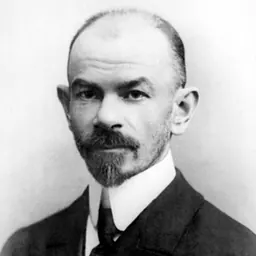
Lived 1908 – 1986 (aged 77). Osbert Lancaster was a British cartoonist, theatre designer, art critic, artist and illustrator.
Sir Osbert Lancaster (4 August 1908 – 27 July 1986) was an English cartoonist, architectural historian, stage designer and author. He was known for his cartoons in the British press, and for his lifelong work to inform the general public about good buildings and architectural heritage.
The only child of a prosperous family, Lancaster was educated at Charterhouse School and Lincoln College, Oxford; at both he was an undistinguished scholar. From an early age he was determined to be a professional artist and designer, and studied at leading art colleges in Oxford and London. While working as a contributor to The Architectural Review in the mid-1930s, Lancaster published the first of a series of books on architecture, aiming to simultaneously amuse the general reader and demystify the subject. Several of the terms he coined as labels for architectural styles have gained common usage, including "Pont Street Dutch" and "Stockbroker's Tudor", and his books have continued to be regarded as important works of reference on the subject.
In 1938 Lancaster was invited to contribute topical cartoons to The Daily Express. He introduced the single column-width cartoon popular in the French press but not until then seen in British papers. Between 1939 and his retirement in 1981 he drew about 10,000 of these "pocket cartoons", which made him a nationally known figure. He developed a cast of regular characters, led by his best-known creation, Maudie Littlehampton, through whom he expressed his views on the fashions, fads and political events of the day.
From his youth, Lancaster wanted to design for the theatre, and in 1951 he was commissioned to create costumes and scenery for a new ballet, Pineapple Poll. Between then and the early 1970s he designed new productions for the Royal Ballet, Glyndebourne, D'Oyly Carte, the Old Vic and the West End. His productivity declined in his later years, when his health began to fail. He died at his London home in Chelsea, aged 77. His diverse career, honoured by a knighthood in 1975, was celebrated by an exhibition at the Wallace Collection marking the centenary of his birth and titled Cartoons and Coronets: The Genius of Osbert Lancaster.
Life and career
Early years Lancaster was born at 79 Elgin Crescent in London in 1908, the only child of Robert Lancaster (1880–1917) and his wife, Clare Bracebridge, née Manger. His paternal grandfather, Sir William Lancaster, rose from modest beginnings to become the chief executive of the Prudential Assurance Company, Lord of the manor of East Winch, Norfolk, and a philanthropist in the field of education. Osbert's mother was an artist, known for her paintings of flowers, who had exhibited regularly at the Royal Academy; his father was a publisher, who volunteered for the army on the outbreak of the First World War, was commissioned as a second lieutenant in the Norfolk Regiment, and was killed at the Battle of Arras in April 1917.
Elgin Crescent, Notting Hill, where Lancaster was born and raised, was an upper-middle class area. The family maintained a staff of servants, including a cook and a nurse. Such was the mixed nature of London in the early years of the 20th century that a short distance away were the deprived and dangerous Notting Dale and the Portobello Road, where, as Lancaster recalled in his 1953 memoirs, it was said to be impossible for a well-dressed man to walk and emerge intact. From an early age Lancaster was aware of the variety of classes, nationalities, and social attitudes around him.
In 1918 Lancaster was sent to St Ronan's preparatory school, Worthing. The régime at the school leaned heavily towards sport, in which he was neither interested nor proficient. The headmaster, Stanley Harris, was a celebrated amateur footballer and occasional first class cricketer, but he was reasonably tolerant of Lancaster's disdain for games, and on the whole Lancaster enjoyed his time at the school. His education there was, he later commented, of more importance to him than anything he learned later in his school and university career. He left St Ronan's in 1921, aged thirteen, and went to Charterhouse, where his father and uncles had all been sent. There he was shocked by the bullying and bad language, but in addition to its sporty, philistine "bloods", the school had an intellectual and aesthetic tradition. The art master, P.J.("Purple")Johnson, encouraged Lancaster, insisting that a sound technique was a prerequisite for effective self-expression in drawing or painting; in that respect the boy's time at the school was valuable, though otherwise the headmaster found him "irretrievably gauche... a sad disappointment". Lancaster shared Beerbohm's view that being an old boy of the school was more pleasurable than being a pupil there. |group= n
At the age of seventeen Lancaster passed his final school examinations and gained entrance to Lincoln College, Oxford, to study history. He persuaded his mother to allow him to leave Charterhouse at once, giving him several months between school and university, during which he enrolled on a course of life classes at the Byam Shaw School of Art in London. In October 1926 he started at Oxford. There, as at Charterhouse, he found two camps in which some students chose to group themselves: the "hearties" presented themselves as aggressively heterosexual and anti-intellectual; the "aesthetes" had a largely homosexual membership. Lancaster followed his elder contemporary Kenneth Clark in being contentedly heterosexual but nonetheless one of the aesthetes, and he was accepted as a leading member of their set. He cultivated the image of an Edwardian dandy, with large moustache, a monocle and check suits, modelling his persona to a considerable degree on Beerbohm, whom he admired greatly. He also absorbed some characteristics of the Oxford don Maurice Bowra; Lancaster's friend James Lees-Milne commented, "Bowra's influence over Osbert was marked, to the extent that he adopted the guru's booming voice, explosive emphasis of certain words and phrases, and habit in conversation of regaling his audiences with rehearsed witticisms and gossip."
Lancaster tried rowing with the Oxford University Boat Club, but quickly discovered he was no more suited to that than he had been to field games at school. He joined the Oxford University Dramatic Society (OUDS), acted in supporting roles, designed programme covers, wrote, and choreographed. He contributed prose and drawings to Isis and Cherwell magazines, engaged in student pranks, staged an exhibition of his pictures, attended life classes, and became established as a major figure in the Oxonian social scene. All these diversions led him to neglect his academic work. He had made things more difficult for himself by switching from the history course to English after his first year, a decision he regretted once confronted with the rigours of compulsory Anglo-Saxon, which he found incomprehensible. Making a belated effort, he extended his studies from the usual three years to four, and graduated with a fourth-class degree in 1930.
1930s
Lancaster's family believed that art was a suitable hobby but an unacceptable profession; they agreed that the best career for him would be the law.
At the Slade, Lancaster enjoyed most of his classes, but particularly those in stage design run by Vladimir Polunin, who had been Diaghilev's chief scene-painter and had worked with Picasso. Among Polunin's students was Karen Harris, daughter of the banker Sir Austin Harris. Lancaster fell in love with her; his feelings were reciprocated, but she was only seventeen and her parents thought her too young to marry. At first they were cautious about Lancaster's suitability as a husband and provider, but they came to approve of him. They had two children: Cara (born 1934) and William (born 1938); the former became a stage manager, the latter, an anthropologist.
Lancaster earned a living as a freelance artist, producing advertising posters, Christmas cards, book illustrations and a series of murals for a hotel. In 1934 he secured a regular post with The Architectural Review, which was owned by a family friend and of which Betjeman was assistant editor. The magazine had a reputation as "the mouthpiece of the modernist movement", employing leading proponents such as Ernő Goldfinger and Nikolaus Pevsner. Despite describing the Bauhaus style as "balls", Chief among his many activities for The Architectural Review was reviewing books, particularly those on art. His biographer James Knox comments that Lancaster's taste was already assured, appreciating the diverse gifts of contemporary artists including Edward Burra, Giorgio de Chirico, Edward Wadsworth and Paul Nash.
Knox singles out as Lancaster's most lasting contribution to the magazine a series of illustrated satires on planning and architecture, under the title Progress at Pelvis Bay. The collected articles were turned into a book, under the same title, published in 1936. It lampooned greedy and philistine property development in a typical seaside resort. Reviewing the book in The Observer, Simon Harcourt-Smith wrote, "Mr Lancaster spares us no horrifying detail of the borough's development... [his] admirable drawings complete the picture of progress and desolation. I hope that every local authority and real-estate developer will be compelled to read this ghoulish little book." Lancaster followed this with Pillar to Post (1938), a lighthearted book with roughly equal amounts of text and drawings, aiming to demystify architecture for the intelligent lay person. The architectural scholar Christopher Hussey remarked on the author's inventive coinage of terms for period styles such as "Banker's Georgian", "Stockbroker's Tudor" and "By-pass Variegated", and described the book as both perceptive and shrewd.
In 1938 Lancaster agreed to help Betjeman write a series of articles for The Daily Express. He became friendly with the paper's features editor, John Rayner, who responded positively to Lancaster's praise of "the little column-width cartoons" popular in the French press but not, so far, seen in British papers. Rayner dubbed them "pocket cartoons" after the pocket battleships then much in the news, and invited Lancaster to contribute some. |group= n The early cartoons accompanied the "William Hickey" gossip column; later they were promoted to a front-page slot, where they remained a regular feature, with only brief interruptions, for more than forty years, totalling about 10,000. The popularity of Lancaster's cartoons led to attempts by other papers, including The Times, to lure him away from the Express, but he resisted them. Although he thought the Express's proprietor, Lord Beaverbrook, "an old brute" and "a bastard", he found him "an ideal employer as far as I was concerned: he left one's work absolutely alone".
Second World War Shortly after the outbreak of war, Lancaster joined the Ministry of Information. He spoke good French and German, and because of that and his journalistic experience, he was recruited by the section handling British propaganda overseas. Several other prominent figures were members of the section and there were many clashes of egos and few tangible achievements. In July 1941, Lancaster was transferred to the Foreign Office's news department. His duties included giving daily news briefings to other public servants and the British press, monitoring German propaganda broadcasts, and drawing caricatures for leaflets in German, Dutch and French for aerial drops in enemy-held territory.
In addition to his official duties Lancaster was art critic for The Observer between 1942 and 1944, and continued to contribute the pocket cartoons to the Express; from 1943 he also drew a large weekly cartoon for its sister newspaper, The Sunday Express, under the pen-name "Bunbury". |group= n Despite the wartime shortage of paper, the publisher John Murray produced a collection of the pocket cartoons every year from 1940 to 1944. When Papandreou's police fired on a civilian demonstration in full view of the world's press, British support for him came under international pressure. The British embassy, at which Lancaster arrived on 12 December, was the target for gunfire from various anti-government groups, and he joined the ambassador (Reginald Leeper), the British Minister Resident in the Mediterranean (Harold Macmillan) and a staff virtually under siege.
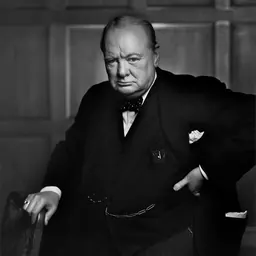
Following an initiative by Macmillan and the personal intervention of Winston Churchill, a new government took office in Athens acceptable to all sides, and peace was briefly restored, in January 1945. Lancaster's task was then to restore trust and good relations between Britain – its government, embassy and military – and the international press corps. In this he was generally thought to have succeeded. After that, he took the opportunity of travelling in the country beyond Athens during the months before civil strife returned in 1946. He explored Attica, Boeotia and Arcadia, and also visited Thessaly, Epirus and some of the islands. He fell in love with Greece, which he revisited repeatedly throughout the rest of his life. During his excursions in 1945 and 1946 he sketched continually, and the results were published with his accompanying text as Classical Landscape with Figures in 1947. Boston describes it as "an unflinching but lyrical account of the conditions of post-war Greece"; The Times called it "a fine work of scholarship" as well as "an outstanding picture book". In 1947–48 he was the Sydney Jones Lecturer in Art at Liverpool University, following earlier appointees including Sir Herbert Read, W. G. Constable, Frank Lambert and H. S. Goodhart-Rendel.
The 1951 Festival of Britain gave Lancaster new opportunities to expand his artistic scope. Despite the hostility to the festival shown by his main employer, Beaverbrook, Lancaster was a major contributor. He and his friend John Piper were commissioned to design the centrepiece of the Festival Gardens on the south bank of the Thames. Boston describes it as "a 250-yard succession of pavilions, arcades, towers, pagodas, terraces, gardens, lakes and fountains, in styles that included Brighton Regency, Gothic and Chinese". The main site of the festival, around the new Royal Festival Hall, was intended to convey the spirit of modernist architecture; the gardens were designed to evoke the atmosphere of Georgian pleasure gardens, such as Vauxhall and Ranelagh.
quote =It was to be a place of "elegant fun" with a dance hall, amusement park, shopping parade, restaurants, pubs and a wine garden. Osbert was ideally equipped to follow this brief. — James Knox on the Festival Gardens The Manchester Guardian called them "a masterpiece... fantasy on fantasy, red and gold and blue and green, a labyrinth of light-hearted absurdity".
Lancaster's association with Piper led to a second departure in his professional career: stage design. In connexion with the Festival of Britain, Sadler's Wells Ballet mounted a new work, Pineapple Poll by John Cranko, with music arranged by Sir Charles Mackerras from Arthur Sullivan's "Savoy Operas", with a story based on a poem by W.S. Gilbert, and approached Piper to design it. He could not take the commission and recommended his colleague. This was an opportunity Lancaster had keenly awaited since he was eleven, when his mother took him to see Diaghilev's production of The Sleeping Beauty. He recalled "the dazzling beauty of the Bakst sets and the intensity of my own response... There and then I formed an ambition that was not destined to be fulfilled for more than thirty years". Cranko's exuberant ballet was an immediate success – "the hit of the season", in Knox's phrase – and turned Lancaster into one of the country's most sought-after theatre designers. During the rest of the 1950s and the 1960s his costumes and scenery were seen in new productions at Covent Garden, Glyndebourne, the Old Vic, Aldeburgh and in the West End. He illustrated or designed covers for a wide range of books, both fiction and non-fiction. His commissions included drawings for works by friends such as Nancy Mitford, Alan Moorehead and Anthony Powell; for best-sellers including C.Northcote Parkinson and P.G.Wodehouse;
Later years: 1960–1986
In Osbert: A Portrait of Osbert Lancaster, Boston comments that after the dramatic events in Athens his subject's later life was uneventful and industrious with "a somewhat dismaying dearth of rows, intrigues, scandals or scrapes to report." The Lancasters had a Georgian house in Henley-on-Thames, and a flat in Chelsea, where they lived from Mondays to Fridays. He worked at home in the mornings, on illustrations, stage designs, book reviews and any other commissions, before joining his wife for a midday dry martini and finally dressing and going to one of his clubs for lunch. After that he would walk to the Express building in Fleet Street at about four in the afternoon. There he would gossip with his colleagues before sitting at his desk smoking furiously, producing the next day's pocket cartoon. By about half-past six he would have presented the cartoon to the editor and be ready for a drink at El Vino's across the road, and then the evening's social events.
Karen Lancaster died in 1964. They were markedly different in character, she quiet and home-loving, he extrovert and gregarious, but they were devoted to each other, and her death left him devastated. Three years later he married the journalist Anne Scott-James; they had known each other for many years, although at first she did not much like him, finding him "stagey" and "supercilious". After their marriage they kept his Chelsea flat, and lived at weekends in her house in the Berkshire village of Aldworth, the house in Henley having been sold.
Though generally a commentator rather than a campaigner, Lancaster made an exception for the protection of Britain's architectural heritage, where he became a leader of public opinion. The historian Jerry White has written that the demolition of the Euston Arch in London in 1962 alerted the general public that "without vigilance and sturdy resistance, London was in danger of losing its landmarks one by one, in the interests of either profit or a misconceived public weal". Lancaster had been pressing this point since before the war. They played a major role in defeating the Labour government's plans to demolish the front of the Tate Gallery.
In June 1975 Lancaster was knighted in the Queen's Birthday Honours. He and his wife collaborated on The Pleasure Garden (1977), a history of the British garden. Although great gardens such as Stowe were given full coverage, her text and his drawings did not neglect more modest efforts: "The suburban garden is the most important garden of the 20th century and there is no excuse other than ignorance for using the word 'suburban' in a derogatory sense". The following year Lancaster was made a Royal Designer for Industry (RDI) by the Royal Society of Arts, a distinction in which his predecessors had included the artist and architect Hugh Casson; the typographer Eric Gill; Charles Holden, London Transport's architect; Barnes Wallis, the wartime engineer; and a modernist architect with whom Lancaster had vigorously crossed swords, Sir Basil Spence. There would not be another theatre designer RDI until Stefanos Lazaridis in 2003. In 1978 Lancaster suffered the first of a series of strokes, and his health began a slow decline. He designed no more for the theatre, drew his last pocket cartoon for the Express in May 1981, and published his last collection, The Life and Times of Maudie Littlehampton the following year. A memorial service was held at St Paul's, Covent Garden in October 1986.
Works Architectural history and comment
In 2008 the architectural historian Gavin Stamp described Lancaster's Pillar to Post (1938) – later revised and combined with the sequel Homes Sweet Homes (1939) – as "one of the most influential books on architecture ever published – and certainly the funniest". Lancaster felt that architects and architectural writers had created a mystique that left the lay person confused, and in the two books he set out to demystify the subject, with, he said, "a small mass of information leavened by a large dose of personal prejudice." – Lancaster was conscious that the work of a political cartoonist is ephemeral, and he did not expect longevity for his topical drawings. His legacy as a pocket cartoonist has been the genre itself; But although theatre designs are less ephemeral than topical cartoons, in general they have a practical lifetime measured in years or at most a few decades. The survival of Lancaster's costumes and scenery for Pineapple Poll and La fille mal gardée into the 21st century is exceptional, and most of even his highest-praised productions for repertory works have been succeeded by new designs by artists from Hockney to Ultz.
Lancaster's prose style divided opinion. Betjeman teased him that it was "deliciously convoluted"; Boston and Knox both echo this view.
Lancaster's most enduring works have been his architectural books. Pillar to Post and its successors have been reissued in various editions, and at 2018 are in print as a boxed set entitled Cartoons, Columns and Curlicues, containing Pillar to Post, Homes Sweet Homes and Drayneflete Revealed. Reviewing the new edition in The Irish Times, Niall McGarrigle wrote, "The books are of their time, of course, but their legacy is part of the strong heritage culture that we rightly fight for today". Alan Powers wrote in The Financial Times, "At least old buildings are now cherished rather better, and the house fronts around Lancaster's birthplace in Notting Hill are jollied up in his favourite pinks and mauves... now we understand that the compact streets and houses of the past provide the best opportunity for social encounters and save energy, and that even bad buildings can make us smile. For both of these revelations, we owe Osbert Lancaster a lot."
Books by Lancaster
Autobiography
Architecture
Published in the US 1950 by Houghton and Mifflin, under the title There'll Always be a Drayneflete. Revised and expanded omnibus version of Pillar to Post and Homes Sweet Homes. Reissued 1975 as A Cartoon History of Architecture.
Boxed set containing reprints of Pillar to Post, Homes Sweet Homes and Drayneflete Revealed.
Cartoon collections
Other
(co-written with Anne Scott-James)
Omnibus edition of The Saracen's Head, Drayneflete Revealed and The Littlehampton Bequest. Reissued by Pimlico Press, 1992.
Stage designs by Lancaster
Pineapple Poll, Sadler's Wells, 1951 Bonne bouche, Covent Garden, 1952 Love in a Village, English Opera Group, 1952 High Spirits, Hippodrome, 1953 The Rake's Progress, Edinburgh (for Glyndebourne), 1953 All's Well That Ends Well, Old Vic, 1953 Don Pasquale, Sadler's Wells, 1954 Coppélia, Covent Garden, 1954 Napoli, Festival Ballet, 1954 Falstaff, Edinburgh (for Glyndebourne), 1955 Hotel Paradiso, Winter Garden, 1956 Zuleika, Saville, 1957 L'italiana in Algeri, Glyndebourne, 1957 Tiresias, English Opera Group, 1958 Candide, Saville, 1959 La fille mal gardée, Covent Garden, 1960 She Stoops to Conquer, Old Vic, 1960 La pietra del paragone, Glyndebourne, 1964 Peter Grimes, Bulgarian National Opera, Sofia, 1964 L'heure espagnole, Glyndebourne, 1966 The Rising of the Moon, Glyndebourne, 1970 The Sorcerer, D'Oyly Carte, 1971
Source: Who's Who
Notes, references and sources
Don’t just read it —
keep it.
Full-length biographies made to live with: read them, listen on the way to work, watch them tonight.
- E-book
- Audio
- Video
Instant download · yours to keep · every purchase keeps this site free
Important facts
People in Osbert Lancaster's life
Named in this biography and alive at the same time





Related people
Same field, nearest in time

Contemporaries
People whose lives overlapped Osbert Lancaster's

Frequently asked questions
Who was Osbert Lancaster?
British cartoonist, theatre designer and art critic (1908–1986)
When was Osbert Lancaster born?
Osbert Lancaster was born on 4 August 1908 in London.
When did Osbert Lancaster die?
Osbert Lancaster died on 27 July 1986 in Chelsea.
What was Osbert Lancaster's occupation?
Osbert Lancaster was a cartoonist, theatre designer, art critic, artist and illustrator.
What nationality was Osbert Lancaster?
Osbert Lancaster was British.
Sources & further reading
Cite this page
APA: Biography.guide. (2026). Osbert Lancaster. https://biography.guide/osbert-lancaster/
MLA: "Osbert Lancaster." Biography.guide, https://biography.guide/osbert-lancaster/.
Chicago: "Osbert Lancaster." Biography.guide. https://biography.guide/osbert-lancaster/.
Data last updated: 2026-09-20 · Spot an error? Report a correction.
Page generated 2026-09-27 05:04 UTC